
Desert Kingdom The Stone Wonder of Petra
Unveiling the Hidden City Carved in Stone by the Nabataeans

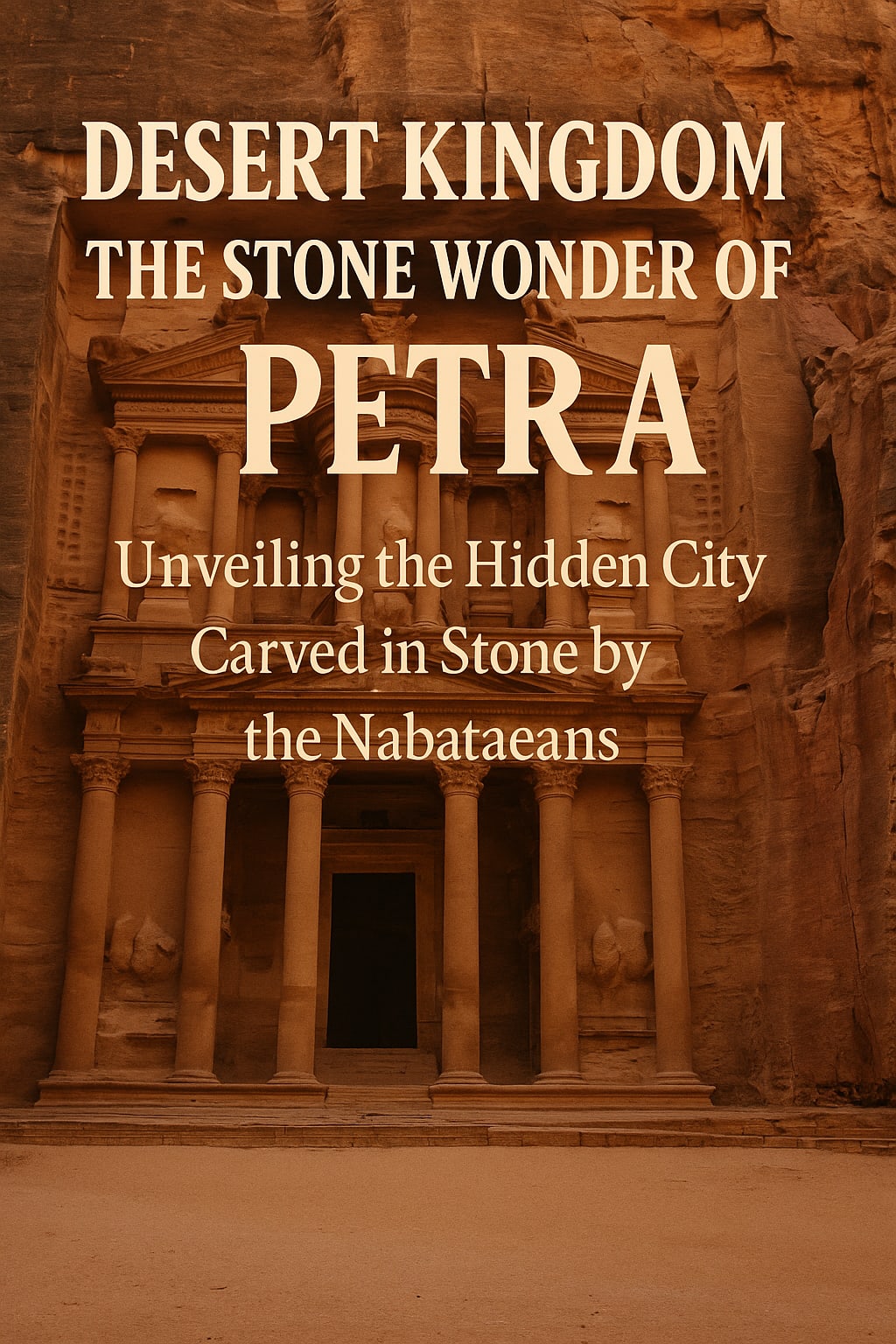
Desert Kingdom: The Stone Wonder of Petra
Unveiling the Hidden City Carved in Stone by the Nabataeans
Tucked deep within the rugged canyons and rose-red cliffs of southern Jordan lies Petra, a magnificent ancient city often hailed as one of the New Seven Wonders of the World. Dubbed the “Rose City” for the color of the stone from which it is hewn, Petra is not just an archaeological marvel but a testament to human ingenuity, resilience, and artistic brilliance. Carved almost entirely into rock faces, this city once thrived as the capital of the Nabataean Kingdom and served as a vital hub for trade, culture, and innovation.
Origins of a Stone Masterpiece
Petra was established as early as 312 BCE by the Nabataeans, a nomadic Arab people who became master traders and engineers. Recognizing the strategic position of Petra—nestled between the Red Sea and the Dead Sea—they transformed it into a key junction along ancient trade routes connecting Arabia, Egypt, and the Mediterranean. The city became immensely wealthy through the trade of frankincense, myrrh, spices, and silk.
But Petra was more than a marketplace—it was a cultural melting pot. Influences from Greek, Roman, Egyptian, and Mesopotamian architecture are evident throughout the city’s structures. What makes Petra unique is the way these styles were adapted to fit the local landscape, resulting in rock-cut facades that blend seamlessly into the mountainous terrain.
The Architectural Marvels of Petra
The first sight that greets visitors to Petra is the Siq, a narrow, winding gorge that stretches for over a kilometer. Flanked by towering cliffs up to 80 meters high, the Siq builds anticipation before suddenly revealing Petra’s most iconic structure—the Treasury (Al-Khazneh).
The Treasury is a 40-meter-high façade adorned with intricate carvings of mythological figures, columns, and Hellenistic designs. Though its name suggests it held treasures, it was most likely a royal tomb or temple. The level of detail and craftsmanship showcases the Nabataeans’ advanced stone-carving skills.
Beyond the Treasury, the city expands into a vast archaeological site filled with tombs, temples, a Roman-style amphitheater that seated over 8,000 spectators, and the Monastery (Ad Deir)—an even larger and more remote structure carved into a cliff face. To reach the Monastery, one must climb nearly 800 steps, but the view and the monument are well worth the effort.
Petra also features a sophisticated water management system, including dams, cisterns, and aqueducts, which allowed the Nabataeans to thrive in a desert environment. Their engineering feats ensured that Petra remained a flourishing urban center in an otherwise arid region.
Religion and Cultural Syncretism
The religious beliefs of Petra's inhabitants were equally diverse. The Nabataeans worshipped a pantheon of deities, many of which were borrowed or adapted from neighboring cultures. Their chief god, Dushara, was often represented by a simple block or stone, reflecting the Nabataeans’ minimalistic spiritual symbolism. Temples and sanctuaries dedicated to gods like Al-Uzza, Baal, and Isis dotted the city, further demonstrating the city’s cultural fusion.
Decline and Rediscovery
Petra’s golden age began to decline after the Roman Empire annexed the Nabataean Kingdom in 106 CE. While the city retained its importance for a time, trade routes gradually shifted, and devastating earthquakes in the 4th and 6th centuries caused much damage. By the early Islamic period, Petra was largely abandoned and fell into obscurity for centuries.
The city remained hidden from the Western world until 1812, when Swiss explorer Johann Ludwig Burckhardt disguised himself as an Arab scholar and was led to the site by local Bedouins. His discovery reignited global interest in Petra, and archaeological excavations have continued ever since.
Petra Today: A Living Legacy
Today, Petra is a UNESCO World Heritage Site and attracts nearly a million visitors annually. Its cinematic appearance in movies like Indiana Jones and the Last Crusade has helped cement its place in popular imagination. Yet despite its fame, many parts of Petra remain unexplored, buried under centuries of sand and sediment.
Modern-day efforts by the Jordanian government and international archaeological teams are working to preserve and protect Petra from threats like erosion, tourism, and climate change. The local Bedouin communities, who have deep-rooted connections to Petra, play a vital role in its guardianship and interpretation.
Conclusion
Petra is not just an ancient city—it is a symbol of endurance, innovation, and beauty. Every carved stone speaks of a people who adapted to their environment with remarkable creativity. From its rose-hued cliffs to its elaborate facades and mysterious tombs, Petra invites us to walk through time and witness the intersection of history, art, and natural wonder.
About the Creator
Nizam Archaeologist
I’m deeply fascinated by archaeology and the mysteries of ancient civilizations.My goal is to bring the past to life, spark curiosity, and share the wisdom of cultures that have stood the test of time.
Reader insights
Outstanding
Excellent work. Looking forward to reading more!
Top insight
Heartfelt and relatable
The story invoked strong personal emotions
Keep reading
More stories from Nizam Archaeologist and writers in History and other communities.
Story of Ancient Art and Architecture
Story of Ancient Art and Architecture Introduction The art and architecture of ancient civilizations are more than just remnants of the past—they are vivid reflections of human creativity, belief systems, and societal structure. These masterpieces, carved in stone or painted on walls, tell stories that transcend time. From the intricate carvings of Mesopotamia to the awe-inspiring pyramids of Egypt, ancient art and architecture form the foundation of human history, offering insight into how people lived, worshipped, and saw the world around them.
By Nizam Archaeologist6 months ago in History
Military Strength of Alexander the Great and the Chola Empire: A Historical Comparison
Though separated by more than a thousand years and operating in vastly different geographical and cultural contexts, both forces achieved extraordinary success through discipline, innovation, and strategic brilliance. This article explores the history, composition, size, organization, and military strength of Alexander’s Macedonian army and the Chola military, highlighting how each became a dominant power of its era.
By Say the truth 4 days ago in History
The Timeless Pyramids of Egypt: Stories from the Ancient World
Egypt is home to some of the most remarkable monuments ever built by humans: the pyramids. Rising from the sands of the Giza Plateau, these colossal structures have inspired curiosity and admiration for thousands of years. They were built as tombs for the pharaohs, yet they tell a much larger story—one of human skill, ambition, and belief in the afterlife. The most famous of these pyramids is the Great Pyramid of Giza, built for Pharaoh Khufu around 2580 BCE. Originally, it reached a height of about 146 meters (480 feet) and was the tallest man-made structure in the world for nearly 4,000 years. Its construction required millions of limestone blocks, some weighing several tons. Even today, historians and archaeologists are amazed at the precision and scale achieved by ancient builders without modern tools. The Egyptians built these monumental structures not merely as tombs, but as gateways to the afterlife. They believed that the pharaoh, considered a god on earth, would continue his journey in eternity. The pyramid’s triangular shape symbolized the pharaoh’s ascent to the heavens. Inside, burial chambers held treasures, inscriptions, and statues meant to guide and protect the ruler in the world beyond. How the pyramids were built remains a topic of debate. There are many theories, including the use of ramps or sledges to move the massive stones. Regardless of the methods, constructing these tombs required incredible planning, organization, and teamwork. Tens of thousands of workers labored for decades to create what would become one of the world’s greatest architectural achievements. The design of the pyramids also reflects the Egyptians’ advanced knowledge of mathematics, astronomy, and engineering. They aligned the pyramids with the cardinal points and certain stars, showing a deep understanding of the sky. The precise measurements and geometric accuracy have helped these structures survive thousands of years, enduring both natural wear and occasional earthquakes. While the Giza pyramids are the most famous, Egypt has over 100 pyramids scattered across the country, including those at Saqqara, Dahshur, and Abu Sir. Each one tells a story about the evolution of Egyptian architecture, from the earliest step pyramids to the smooth-sided ones that have become iconic. These structures also reveal much about Egyptian society, including their religious beliefs, social organization, and artistic achievements. The pyramids were not built in isolation. They were part of larger complexes that included temples, smaller tombs, and monuments that reflected the pharaoh’s divine status. They were centers of activity, culture, and ceremony, connecting the people to their rulers and to the gods they worshiped. Today, the pyramids continue to inspire awe. Millions of visitors come to Egypt each year to witness their grandeur firsthand. Archaeologists keep discovering new insights into how these incredible structures were built and what they meant to the people of ancient Egypt. Yet, despite all the research, ds stet of mystery, reminding us that some secrets of history endure across millennia. The pyramids are more than just stone monuments; they are symbols of human ambition and achievement. They remind us that with vision, skill, and persistence, people can create works that last far beyond their lifetimes. Standing in front of a pyramid, it is easy to imagine the hands that placed each block, the minds that designed the complex structures, and the determination that made the impossible possible. In the end, the Egyptian pyramids are timeless. They connect us to a world that existed thousands of years ago, teaching lessons about creativity, devotion, and human potential. They are monuments not only of history but of inspiration—a lasting testament to what humans can achieve when imagination and effort come together.
By Binan Mooon3 days ago in History



Comments (1)
Great article