
The River of Riches: Unveiling the True Net Worth of the Nile
The Nile River, stretching across 11 African countries, is more than just a natural wonder—it's an economic lifeline. This article explores the immense value of the Nile, from its role in agriculture and hydropower to trade, tourism, and environmental health. With an estimated annual contribution of over $100 billion, the Nile shapes the lives, cultures, and futures of millions. But as tensions rise over its waters, safeguarding its wealth will require cooperation and vision.

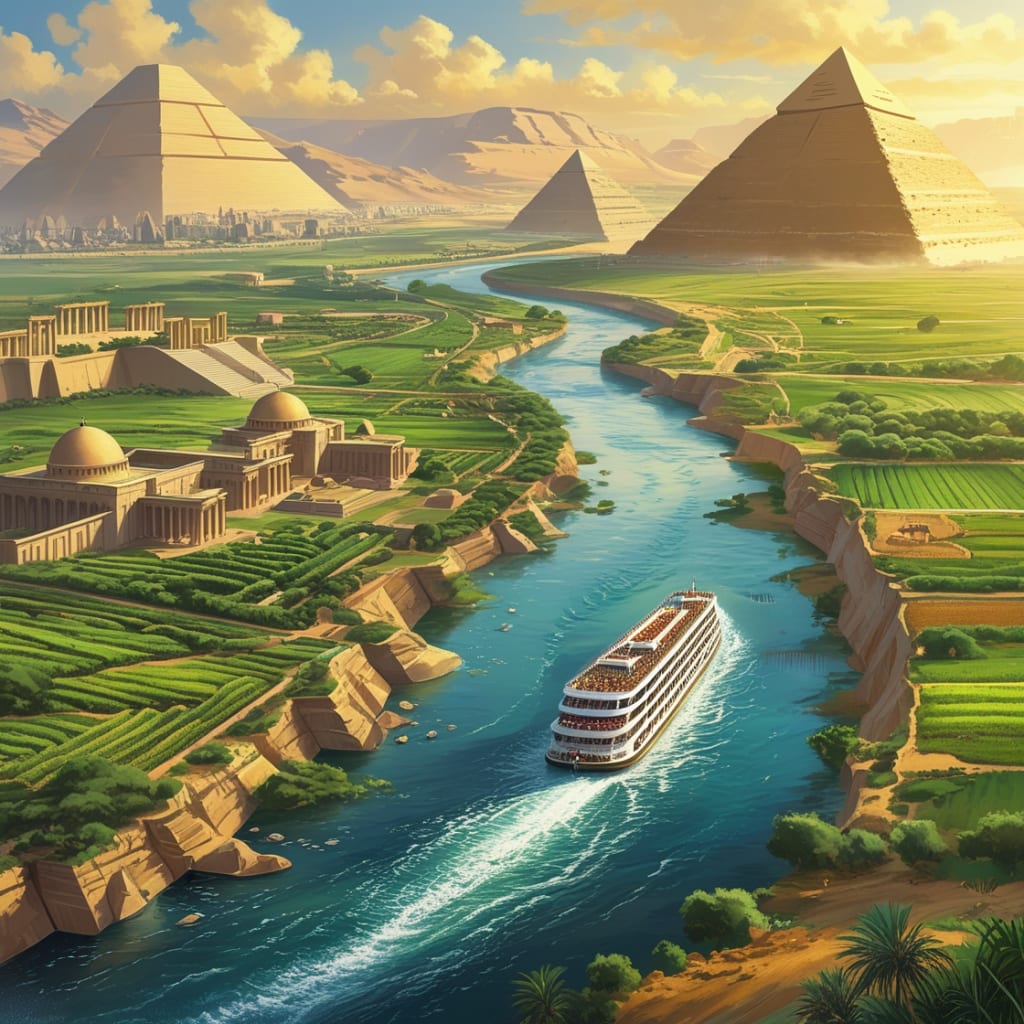
The Living Gold of Africa: Assessing the Net Worth of the Nile River
For over 5,000 years, the Nile River has been the vital core of North and East Africa. From the ancient Egyptian civilization that regarded it as a divine blessing to the millions of individuals today who rely on its waters, the Nile embodies more than a riverit is a lifeline, a source of cultural identity, and an economic catalyst that drives entire nations.
But if we were to evaluate its significance in the contemporary worldits net worthhow much would the Nile be valued? Is it possible to assign a monetary value to the water that irrigates millions of acres, sustains entire nations, generates electricity, and bolsters billion-dollar economies?
In this article, we examine the remarkable wealthboth quantifiable and unquantifiablethat the Nile River signifies.
The Longest River with the Greatest Impact
Extending approximately 6,650 kilometers (4,130 miles), the Nile is the longest river globally, traversing 11 nations, including Uganda, Ethiopia, Sudan, and Egypt. It sustains an estimated 500 million individuals, either directly or indirectly, making it one of the most crucial natural resources on the planet.
To comprehend the Nile’s net worth, we must categorize it into several essential areas:
1. Agricultural Value: Nourishing Nations
Over 70% of the Nile’s water is allocated for agricultural purposes. Nations such as Egypt, Sudan, and South Sudan depend almost entirely on Nile water for cultivation.
Egypt, in particular, yields millions of tons of cropsrice, wheat, sugarcane, cottonirrigated by canals fed by the Nile.
The Nile Delta alone constitutes more than 60% of Egypt’s agricultural yield, contributing billions of dollars annually to the national GDP.
Estimated agricultural value:
$50–70 billion per year
2. Hydropower and Energy: The River of Electricity
The Nile is a powerhouseliterally. Countries along the river have built significant hydroelectric dams to exploit its flow.
Aswan High Dam (Egypt): Generates 2. 1 gigawatts of electricity, powering residences, industries, and infrastructure.
Grand Ethiopian Renaissance Dam (GERD): Once fully operational, it is anticipated to produce over 6. 5 gigawatts, positioning it as one of Africa’s largest energy projects.
The long-term economic worth of hydroelectric power from the Nile could amount to hundreds of billions of dollars over the coming decades.
Estimated energy value:
$20–30 billion annually (with long-term worth in the trillions)
3. Transport and Trade: A Natural Thoroughfare
Historically and in the present, the Nile functions as a significant trade route. It facilitates the economical and efficient transport of goods across regions.
In Egypt, boats and ferries continue to convey goods and people, reducing fuel expenses and alleviating congestion.
Port cities situated along the river benefit from trade, fishing, and local tourism.
Though less economically substantial than agriculture or energy, the river’s trade network supports millions of jobs and boosts local economies.
Estimated transport value:
$2–5 billion per year
4. Tourism and Culture: The Essence of a Civilization
From the pyramids of Giza to the temples of Luxor, a significant portion of ancient Egyptian tourism revolves around the Nile. Cruise vessels glide along the river, providing visitors with the opportunity to experience historic grandeur alongside contemporary luxury.
Egypt’s tourism industry is valued at approximately $13 billion annually, with a substantial segment linked to attractions along the Nile.
The Nile also fosters cultural sectors, encompassing crafts, regional cuisine, and celebrations.
Estimated tourism/cultural worth:
$5–10 billion per year
5. Ecological and Environmental Worth
The Nile sustains ecosystems abundant in biodiversityfishes, avian species, flora, and fauna. It also supplies potable water and mitigates desertification.
Wetlands adjacent to the Nile shelter species found nowhere else.
The quality of water and ecological integrity of the Nile influence public health, climatic resilience, and local food security.
Though challenging to quantify in monetary terms, the environmental significance of conserving the Nile is immense.
Estimated environmental worth (through ecosystem services):
$10–15 billion annually
Grand Total: An Invaluable Lifeline
When aggregating all quantifiable elements, the Nile River’s estimated annual value distinctly surpasses $100 billion. Over ten years, this could accumulate to over $1 trillion in agricultural, energy, tourism, transportation, and ecological contributions.
Yet beyond these figures, a profound reality exists: The Nile cannot be accurately valued. It is a river of history, culture, existence, and essence. For millions, it transcends being merely a resourceit is home.
The Struggle for the Future
The escalating population, climate change, and large-scale projects such as the GERD have transformed the Nile into a zone of tension and rivalry. Nations downstream and upstream are contending with how to equitably share this essential resource.
The future worth of the Nile will hinge on collaboration, sustainable growth, and water diplomacy. Agreements, innovation, and trust will determine whether this river continues to enhance lives or evolves into a source of conflict.
Conclusion
The Nile represents more than mere waterit embodies wealth in every aspect. From nourishing millions to energizing nations, from sustaining societies to nurturing futures, the Nile’s net value is not solely economicit is existential. And like any treasure, it must be safeguarded, esteemed, and shared judiciously.
About the Creator
Say the truth
"Say the Truth: Explain Everything in the World" is your trusted source for uncovering facts and exploring the wonders of history, science, technology, and beyond. We simplify complex ideas and reveal truths to inspire curiosity .
Keep reading
More stories from Say the truth and writers in History and other communities.
The Vanished Gold of Giza: What Happened to the Pharaohs’ Lost Treasures?
The Abandoned Wealth of Giza: What Became of the Treasures of the Pyramids? The Pyramids of Gizamajestic edifices of stone, feats of engineering from the ancient eraserve as mute sentinels of Egypt's pharaonic heritage. Constructed over 4,500 years ago during the Old Kingdom, they were intended to be eternal resting sites for influential pharaohs like Khufu, Khafre, and Menkaure. These royal sepulchers were not only erected with remarkable accuracy, but they were also reputed to contain unimaginable richesgold, gemstones, sacred artifacts, and funerary items meant to accompany the pharaohs into the afterlife.
By Say the truth 9 months ago in History
The Rise and Fall of Nicolae Ceaușescu
Nicolae Ceaușescu’s rise to power was initially marked by promise, even optimism. Born in 1918 into a poor peasant family, he entered politics early, shaped by the ideological rigidity of interwar and wartime communism. When he became General Secretary of the Romanian Communist Party in 1965, following the death of Gheorghe Gheorghiu-Dej, many Romanians saw in him a younger leader, one who might soften the harsh Stalinist legacy that had defined the previous decades. For a society weary of repression and deprivation, Ceaușescu appeared to embody the possibility of cautious change.
By Pure child2 days ago in History
A woman from a vanished female dynasty was discovered buried with 270,000 beads.
In a Copper Age tomb close to Seville, Spain, the Montelirio bead assemblage contains over 270,000 beads that identify the ladies buried there as elites. The discovery is the biggest collection of beads ever
By Francis Dami4 days ago in History



Comments (1)
Nice