
The Relationship Between Donald Trump and Imran Khan
Understanding the Connection Between Two Leaders and Their Countries

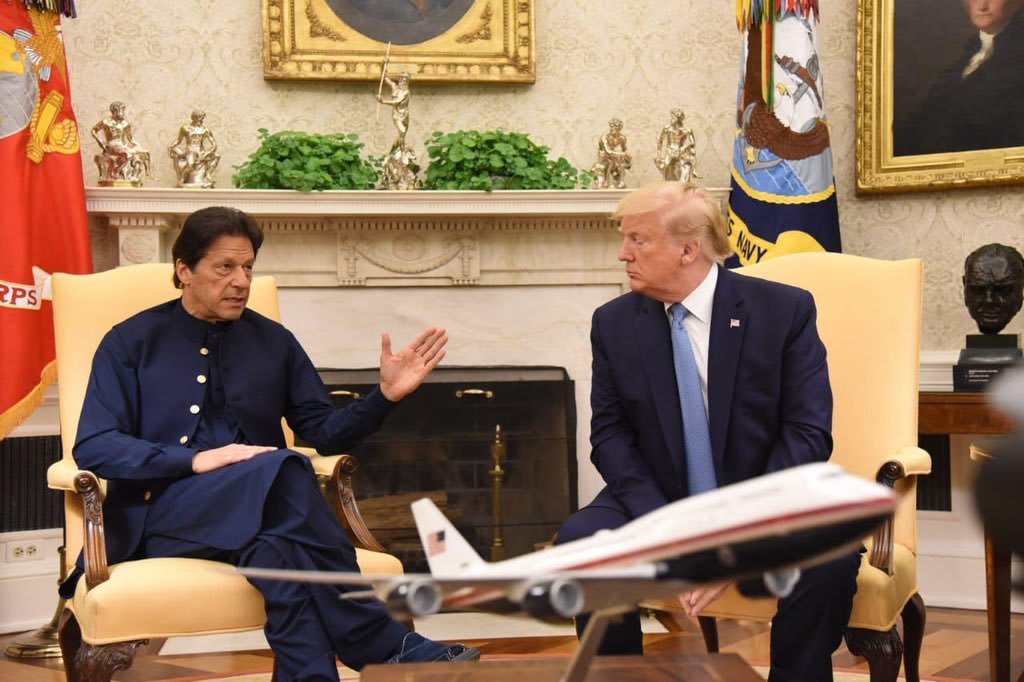
The relationship between Donald J. Trump, the 45th President of the United States, and Imran Khan, the 22nd Prime Minister of Pakistan, was a notable chapter in the history of US-Pakistan relations. While their respective political ideologies and domestic contexts differed greatly, both leaders shared a populist style and a penchant for bold rhetoric that shaped their interactions and the broader diplomatic landscape between their nations.
When Imran Khan assumed office in August 2018, Donald Trump was already halfway through his presidential term. The early stages of their relationship were marked by tension and skepticism. In January 2018, prior to Khan's premiership, Trump tweeted that the United States had "foolishly given Pakistan more than 33 billion dollars in aid over the last 15 years" and accused Pakistan of giving "nothing but lies & deceit." This remark sent ripples through diplomatic channels and significantly strained relations.
However, the dynamic began to shift after Imran Khan became Prime Minister. Khan, a former cricket superstar turned politician, was keen on recalibrating Pakistan’s image on the global stage. He signaled a desire to build better relations with the United States, especially in terms of trade, military cooperation, and regional peace efforts, particularly concerning Afghanistan.
The turning point came in July 2019, when Imran Khan visited Washington, D.C. and met Donald Trump at the White House. The meeting was widely covered in both American and Pakistani media. Trump praised Khan's leadership and expressed optimism about rebuilding ties with Pakistan. The visit was seen as a success, with both leaders discussing a range of issues, including security cooperation, counterterrorism, economic ties, and regional stability.
One of the key topics of mutual interest was the situation in Afghanistan. The Trump administration was actively seeking a way to withdraw US troops from the region and end America’s longest-running war. Pakistan, with its historical ties to various Afghan factions and its strategic location, was viewed as a crucial player in facilitating the peace process. Khan assured Trump of Pakistan’s willingness to help mediate with the Taliban and support the US-led peace efforts.
This diplomatic collaboration bore some fruit. In February 2020, the US and the Taliban signed a peace agreement in Doha, Qatar. While the deal was controversial and its implementation faced many challenges, Pakistan’s role in bringing the Taliban to the negotiating table was acknowledged by the Trump administration. The event marked a rare moment of alignment between the two countries’ interests.
Trade and economic development were also on the agenda. During Khan’s 2019 visit, he and Trump discussed expanding bilateral trade. Though significant breakthroughs were limited, the conversation helped open the door for further dialogue. American investors expressed tentative interest in exploring opportunities in Pakistan, especially in sectors like energy, technology, and agriculture.
On a personal level, Trump and Khan appeared to share a degree of mutual respect. Both leaders had cultivated outsider personas—Trump as a real estate mogul-turned-politician, and Khan as a sports hero-turned-reformer. They often emphasized national pride and framed their political missions as crusades against entrenched elites. This similarity in populist appeal may have helped them connect, at least superficially, during diplomatic engagements.
Despite these moments of cooperation, the relationship was not without its challenges. Trump’s administration continued to push a hard line on issues like Pakistan’s ties to extremist groups and its strategic relationship with China. The US-Pakistan relationship has long been complicated by mutual mistrust, often oscillating between cooperation and confrontation depending on regional dynamics and leadership priorities.
Additionally, Trump's broader foreign policy was marked by unpredictability. His "America First" agenda led to a retreat from multilateralism and a reduction in foreign aid, which affected not only Pakistan but several developing countries. In 2018, the US suspended most of its security assistance to Pakistan, a decision that was only partially reconsidered during Khan’s tenure.
Another complicating factor was the India-Pakistan rivalry. Trump made headlines in 2019 when he offered to mediate the Kashmir dispute between India and Pakistan—a proposal welcomed by Pakistan but firmly rejected by India. While the offer did not lead to any formal mediation, it signaled Trump’s interest in playing a larger role in South Asian geopolitics, albeit inconsistently.
Public perception of the Trump-Khan relationship varied. In Pakistan, Khan’s ability to secure a White House meeting and a public show of support from Trump was seen as a diplomatic win. In the US, however, attention to the relationship was relatively limited, often overshadowed by domestic issues and more high-profile international concerns like North Korea, Iran, and China.
In retrospect, the Trump-Khan era marked a modest thaw in US-Pakistan relations after a period of deep suspicion. While it did not lead to transformative changes, it helped stabilize diplomatic channels and provided a foundation for future engagement. The leaders’ personal rapport, coupled with shared interests in Afghanistan and counterterrorism, created a temporary alignment that eased tensions and promoted dialogue.
With the end of Trump’s presidency in January 2021 and the eventual departure of Imran Khan from office in April 2022, the relationship entered a new phase. Their successors inherited a more stable, though still complex, bilateral relationship shaped in part by the groundwork laid during the Trump-Khan years.
In conclusion, the relationship between Donald Trump and Imran Khan was a mix of pragmatism, personality, and political necessity. While it may not be remembered as a golden era of US-Pakistan relations, it represented a notable chapter where mutual interests—particularly regarding Afghanistan—allowed for moments of genuine collaboration. As with many aspects of diplomacy, it was less about personal chemistry and more about navigating national interests in a rapidly changing global environment.
About the Creator
LegacyWords
"Words have a Legancy all their own—I'm here to capture that flow. As a writer, I explore the melody of language, weaving stories, poetry, and insights that resonate. Join me as we discover the beats of life, one word at a time.
Reader insights
Outstanding
Excellent work. Looking forward to reading more!
Top insights
Easy to read and follow
Well-structured & engaging content
Excellent storytelling
Original narrative & well developed characters
Keep reading
More stories from LegacyWords and writers in History and other communities.
Dolly: The Life of a Miracle Sheep
For most of history, life had one simple, unbreakable rule: you are born from a mother and a father. Every animal, from a blue whale to a tiny ant, started from a single cell created when its parents' cells joined. That's just how it worked. Until a quiet sheep in Scotland changed everything.
By LegacyWords13 days ago in History
Julius Caesar: The Rise and Fall of a Legend
The Rise and Fall of Julius Caesar In the first century BCE, the Roman Republic stood as one of the most powerful states in the ancient world. Its armies conquered vast territories, its laws shaped civilizations, and its Senate governed through a delicate balance of tradition and authority. Into this complex political world was born Gaius Julius Caesar in 100 BCE—a man whose ambition, brilliance, and fate would forever change Roman history.
By The best writer 5 days ago in History
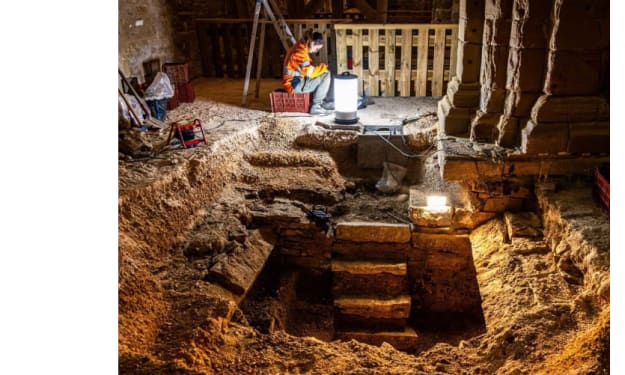
A secret staircase found beneath a 1,500-year-old French church
A subterranean staircase and burial strata dating back approximately 1,500 years were discovered during a project inside the Church of Saint Philibert in Dijon, France. The stairs were discovered by restoration workers inside the church when repairs were being made, and the excavation soon ensued.
By Francis Damia day ago in History



Comments (6)
imran khan zindabad
Na WO Baghi Na Ghadar Qidi No 804
i love prison no 804
imran khan zindabad
can you please answer me can the imran khan release from prison. any chance for releasing imran khan?
intresating