
The Precambrian Eon: The Forgotten Era Where It All Began
From Cosmic Fire to the First Life: The Untold Story of Earth’s Longest Era

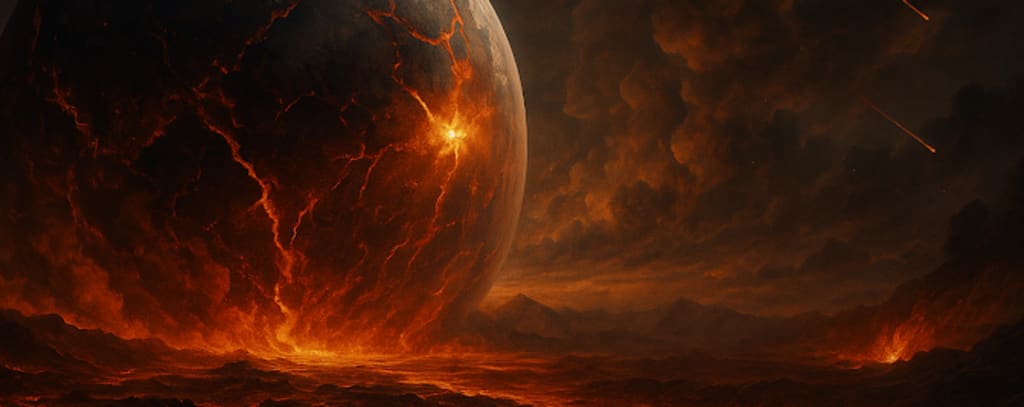
Long before dinosaurs, trees, or even the oxygen we breathe existed, there was an era that marked the beginning of everything—the Precambrian Eon. Spanning from Earth's formation over 4.6 billion years ago to 540 million years ago, this colossal period represents a staggering 88% of our planet's history. Yet, it remains one of the least understood chapters in Earth’s story.
In this article (and the documentary video we’ve shared below), you’ll discover:
✅ How Earth formed from cosmic chaos and fire
✅ How the first oceans and atmosphere emerged
✅ What the earliest life forms on the planet looked like
✅ Why oxygen didn’t always exist—and how it changed everything
✅ The mystery of the Ediacaran biota and its connection to us
We’ll explore the Hadean, Archean, and Proterozoic eons with stunning visuals, immersive storytelling, and easy-to-understand scientific insights.
👉 If you’re fascinated by Earth’s deep history, this documentary is for you. Because understanding our most distant past… is understanding our true origins.
🌋 The Birth of Earth: A Fiery Beginning (Hadean Eon, 4.6–4 Billion Years Ago)
Imagine a time when Earth was nothing but a molten ball of rock, bombarded by asteroids and comets. This was the Hadean Eon, named after Hades (the Greek underworld) for its hellish conditions.
Formation from Cosmic Debris: Earth coalesced from dust and gas in the early solar system, growing through violent collisions.
The Moon’s Violent Birth: A Mars-sized planet, Theia, smashed into early Earth, ejecting debris that formed our Moon.
First Oceans & Atmosphere: As Earth cooled, water vapor condensed into oceans, while volcanic gases created a toxic atmosphere of methane, ammonia, and carbon dioxide—with no oxygen.
🦠 The First Sparks of Life (Archean Eon, 4–2.5 Billion Years Ago)
Life began in the most extreme conditions—underwater volcanic vents, scorching heat, and crushing pressure.
Microbial Beginnings: The first life forms were single-celled bacteria and archaea, thriving without oxygen.
Stromatolites: Earth’s First "Living Rocks": These layered structures, built by cyanobacteria, still exist today in places like Australia.
The Great Oxygenation Event (GOE): Cyanobacteria began photosynthesis, releasing oxygen as waste. Over millions of years, this transformed the atmosphere—killing many anaerobic microbes but paving the way for complex life.
❄️ Snowball Earth & the Rise of Complex Life (Proterozoic Eon, 2.5 Billion–540 Million Years Ago)
The Proterozoic was a time of dramatic climate shifts, supercontinents, and the first multicellular life.
Snowball Earth: The planet froze over multiple times, with ice covering even the equator.
Rodinia & Pannotia: Supercontinents formed and broke apart, reshaping Earth’s landmasses.
The Ediacaran Biota: Life’s First Experiment: Strange, soft-bodied creatures appeared—some resembling fronds, disks, and worms. Were they animals, fungi, or something else? Scientists still debate.
💡 Why Does the Precambrian Matter?
Origins of Life: Understanding how life began helps us search for extraterrestrial life.
Oxygen Revolution: Without the GOE, complex life (including humans) would never have evolved.
Climate Clues: Past ice ages and warming events help us predict future climate change.
🎥 Dive Deeper: Watch the Full Documentary!
The Precambrian is a hidden epic of fire, ice, and life’s fragile beginnings. To see this story come alive with breathtaking animations and expert insights, check out our full documentary:
About the Creator
denizan Lawyer
A skilled attorney with a passion for clear and effective communication. I combine legal expertise with creative writing to deliver informative and engaging content.
Keep reading
More stories from denizan Lawyer and writers in History and other communities.
Honor for Water: The Shadow of Sexual Exploitation on the Women and Girls of Kibera
Water for Sex: What Price Are Women and Girls Paying? Access to water has become a major challenge in Kibera, Nairobi, Kenya’s largest slum. For residents, especially women and girls, the water shortage has created a tragedy. Women are being forced to have sex to get water, a serious violation of their dignity and human rights. This problem is not limited to Kibera; women in many poor areas around the world face similar problems. In this article, we will discuss the situation in Kibera, its background, and its possible solutions in detail.
By denizan Lawyer12 months ago in History
The Echoes of Al-Ula: Unveiling the Secrets of Saudi Arabia’s Hidden Civilizations
For decades, the vast deserts of the Arabian Peninsula were viewed by the outside world primarily through the lens of golden dunes and modern oil reserves. However, beneath the shifting sands of the Hijaz region lies a silent, stone-carved history that is finally beginning to speak. As Saudi Arabia opens its doors to the world, the "mysterious civilizations" of its past—most notably the Nabataeans and the Dadanites—are emerging from the shadows of myth into the light of archaeological wonder.
By Irshad Abbasi a day ago in History



Comments
There are no comments for this story
Be the first to respond and start the conversation.