
Honor for Water: The Shadow of Sexual Exploitation on the Women and Girls of Kibera
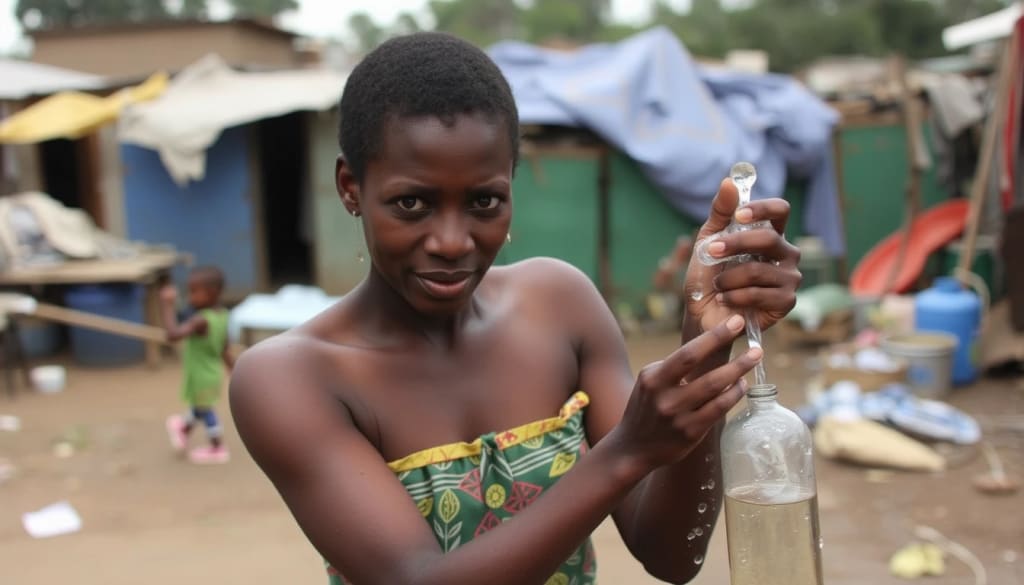
Water for sex: What price are women and girls paying? Access to water is a major challenge in Kibera, Nairobi's largest slum, where people have to trade for water.

Water for Sex: What Price Are Women and Girls Paying?
Access to water has become a major challenge in Kibera, Nairobi, Kenya’s largest slum. For residents, especially women and girls, the water shortage has created a tragedy. Women are being forced to have sex to get water, a serious violation of their dignity and human rights. This problem is not limited to Kibera; women in many poor areas around the world face similar problems. In this article, we will discuss the situation in Kibera, its background, and its possible solutions in detail.
Kibera: The epicenter of poverty and water scarcity
Kibera is Nairobi’s largest and poorest slum, where millions of people live in poverty. Residents here struggle to access basic amenities such as clean water, electricity, and healthcare. The water supply system is inadequate and unstable. Water wells and taps are few and far between, and those that are available are often in poor condition. In this situation, women and girls have to walk for hours to distant areas to fetch water.
Water scarcity has created a new threat for women and girls. When water sources are limited, some women are forced to sell their bodies to quench the thirst of their families. This tragedy can be seen not only in Kibera but in many poor areas around the world.
What happens to women and girls?
In Kibera, women and girls are forced to have sex in order to obtain water. This practice not only undermines their self-esteem, but also exposes them to risks such as sexual violence, pregnancy, and HIV/AIDS. Many women are forced to have sex in exchange for water, and if they refuse, they are denied access to water.
According to a report, about 50% of women in Kibera are forced to have sex to get water. This figure is not limited to Kibera, but women in many poor areas around the world face similar problems.
Impact of water scarcity
Water scarcity does not only affect women and girls, but it affects the entire society. Lack of water increases health problems, and the risk of disease outbreaks also increases. Due to the lack of access to clean water, people have to use dirty water, which spreads cholera, typhoid, and other diseases.
In addition, water scarcity deprives women and girls of education and employment opportunities. They are busy walking for hours to fetch water, due to which they do not get time for education or employment. Thus, water scarcity not only affects women's health and self-esteem, but also hinders their economic development.
Efforts by government and non-governmental organizations
The solution to this problem is possible only through the joint efforts of government and non-governmental organizations. The Kenyan government has launched several projects to improve the water supply system in Kibera, but their efforts are still insufficient. Non-governmental organizations are also working to solve this problem, but their resources are limited.
Urgent measures are needed to improve the water supply system, ensure access to clean water, and provide protection to women. In addition, education and training programs are also indispensable to raise awareness in society and empower women.
Empowering women
Providing education and employment opportunities is very important for women's empowerment. If women are provided with education and employment opportunities, they can raise their voices for their rights and support their families. In this way, they will not be forced to have sex to obtain water.
In addition, laws should be effectively implemented to provide legal protection to women. Strict laws against sexual violence and exploitation should be made and effectively enforced.
Raising awareness in society
Education and training programs should be organized to raise awareness in society. People should be made aware of the importance of water, sanitation, and women's rights. In addition, women should be encouraged to speak up for their rights.
Responsibility of the international community
This problem is not limited to Kenya, but women in many poor areas around the world are facing similar difficulties. The international community needs to pay attention to this problem and provide assistance to the affected areas. International organizations such as the United Nations, UNICEF, and other non-governmental organizations should play their role in solving this problem.
Conclusion
The fact that women and girls are forced to sell their bodies for water is a tragedy that challenges our collective human responsibility. Ignoring this issue is not only a violation of the rights of these women, but also a stigma for society as a whole. We must ensure that everyone, regardless of their community, has the right to access clean water, and is not forced to make any sacrifices for it.
It is time to speak out against this tragedy, and to support the women and girls who are risking their dignity every day to meet their basic needs. Only in this way can we build a just and humane society.
About the Creator
denizan Lawyer
A skilled attorney with a passion for clear and effective communication. I combine legal expertise with creative writing to deliver informative and engaging content.
Keep reading
More stories from denizan Lawyer and writers in History and other communities.
The Precambrian Eon: The Forgotten Era Where It All Began
Long before dinosaurs, trees, or even the oxygen we breathe existed, there was an era that marked the beginning of everything—the Precambrian Eon. Spanning from Earth's formation over 4.6 billion years ago to 540 million years ago, this colossal period represents a staggering 88% of our planet's history. Yet, it remains one of the least understood chapters in Earth’s story.
By denizan Lawyer6 months ago in History
Seven Dials
Introduction Seven Dials is a famous and historic area located in London, England. It is found near Covent Garden, one of the busiest and most popular parts of the city. Seven Dials is known for its unique road design, rich history, old buildings, shops, cafés, and lively atmosphere. Today, it is a popular place for tourists and local people who enjoy culture, shopping, and history.
By Farhan Sayed4 days ago in History
A secret staircase found beneath a 1,500-year-old French church
A subterranean staircase and burial strata dating back approximately 1,500 years were discovered during a project inside the Church of Saint Philibert in Dijon, France. The stairs were discovered by restoration workers inside the church when repairs were being made, and the excavation soon ensued.
By Francis Dami5 days ago in History



Comments (2)
So sad
The exploitation is so sad! Such a shame this is happening so frequently!