
The Places That Were Never Meant to Be Lived In
An Investigation into Abandoned Settlements, Silent Warnings, and the Spaces Humans Walked Away From...

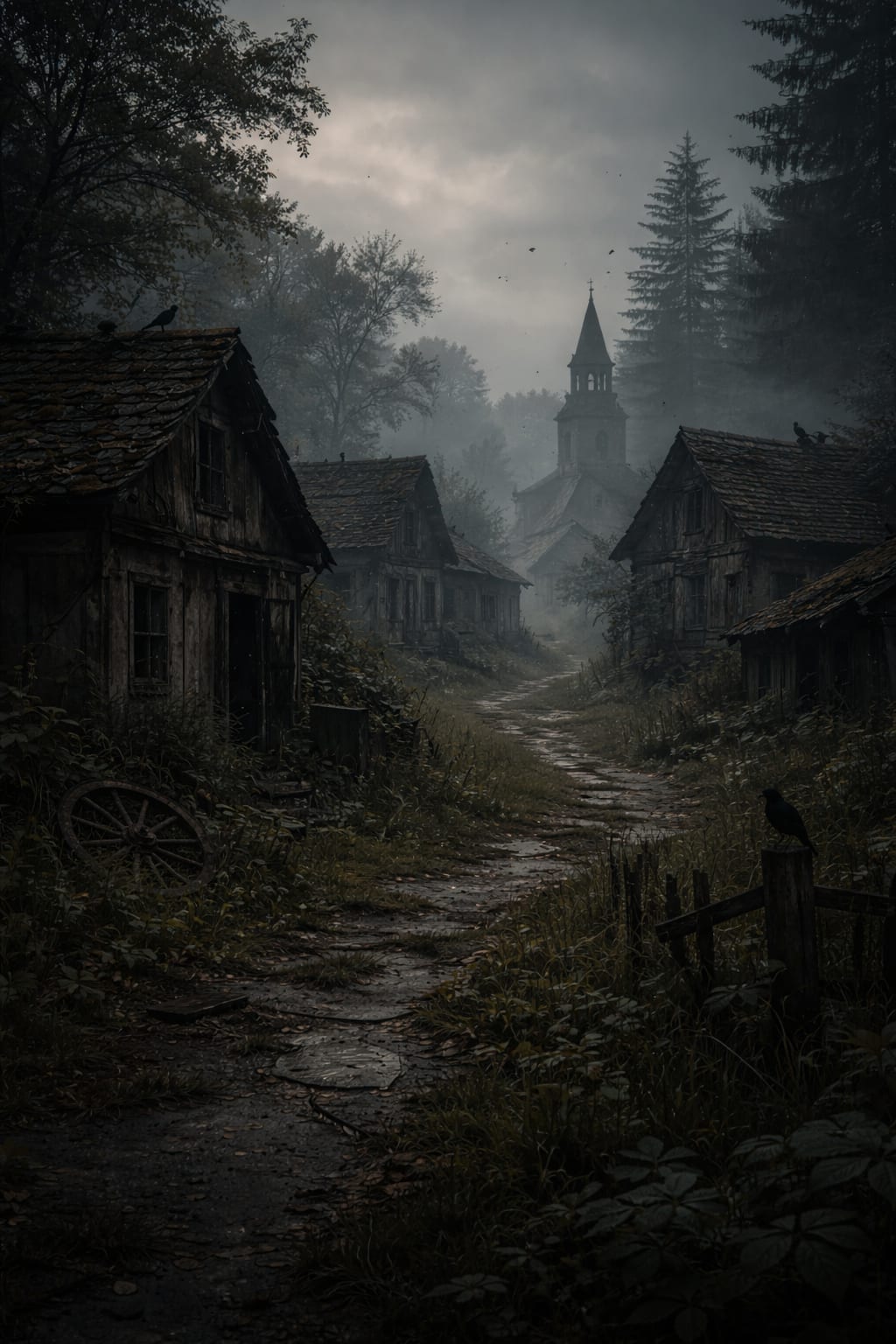
The first thing you notice about places like this is the quiet. Not the peaceful kind, the kind that feels held in place. Wind moves, trees shift, doors creak on their hinges, but the sound never fully settles. It doesn’t echo the way it should. It lingers, as if the air itself is listening.
These are places that don’t announce their abandonment. There are no charred ruins, no cratered streets, no clear evidence of disaster. The buildings stand. The roads remain passable. In some cases, the lights were still on when the last residents left. And yet, nobody stayed...
At first glance, abandoned settlements are usually explained away as practical reasons: economic collapse, natural resource depletion, and changing trade routes. Those explanations do apply to many ghost towns, but not all of them.
There is a smaller, stranger category of places that resist tidy explanations. Locations where people didn’t flee screaming, didn’t die en masse, didn’t leave warnings carved into walls. They simply stopped living there. Records thin out. Correspondence ends. Entire communities relocate without a clear catalyst.
What connects these places is not catastrophe. It’s a restraint...
The Difference Between Destruction and Departure
When humans are forced out, they leave evidence. Panic leaves fingerprints. Violence leaves scars. Even natural disasters imprint themselves on landscapes in unmistakable ways. But these places reveal something entirely different.
Furniture remains arranged. Tools are stored properly. In some homes, dishes were washed before being left behind. Churches stand intact. Schools still face their chalkboards. Graveyards are tended long after the living moved on.
Departure implies choice. And choice implies judgment. Which raises an uncomfortable question: what makes an entire community decide, quietly, that a place is no longer suitable for human life?
Settlements That Failed Without Failing
History is full of examples where people tried to stay and couldn’t. Pompeii was destroyed. Pripyat was evacuated. Those stories are loud, dramatic, and well-documented.
But there are other places... older, quieter, where the record simply… fades.
In parts of medieval Europe, villages vanished from maps without explanation. Not conquered. Not burned. Not absorbed. Just gone. Archaeologists later found intact foundations, personal items left behind, and no evidence of mass death.
Similar patterns appear in ancient settlements across Asia, the Americas, and the Middle East. These were not fringe communities. They had infrastructure. Trade routes. Agriculture. Social hierarchy. Then they didn’t...
In some cases, historians proposed environmental shifts, subtle changes in soil or water. In others, disease was suggested, though no burial surges support it. Warfare is often invoked, yet no weapons or damage appear.
The explanations feel… provisional. As if the official story is standing in for something harder to articulate.
The Language of “Unfit” Land
Early cultures were far more direct about this than we are. In ancient texts, land was often described not as neutral territory but as acceptable or unacceptable. Some places were “heavy.” Others were “thin.” Some were believed to drain vitality, attract misfortune, or disrupt sleep and health.
Settlements were abandoned when the land was deemed “wrong.” Not cursed. Not haunted. Just... wrong.
In Chinese geomancy, entire towns were relocated if the flow of energy, what we’d now call environmental harmony, was believed to have shifted. In parts of Europe, folklore warned against building on crossroads, marshes, old battlegrounds, or places where animals refused to graze.
Animals, notably, often came first. There are repeated accounts of livestock avoiding certain valleys, refusing water sources, or panicking without obvious cause. In several cases, humans moved shortly afterward.
Modern explanations cite gases, seismic activity, or unseen environmental hazards. And sometimes, that’s undoubtedly true. But that doesn’t fully explain why people left before those dangers were measurable.
The Places That Should Have Worked
What makes these settlements unsettling isn’t just that they were abandoned, it’s that they had no obvious reason to be.
Some were near fresh water. Others sat on fertile land. Some were protected from the weather, others were ideally located for trade. By every practical metric, they should have survived.
Instead, they were vacated with remarkable uniformity. In several documented cases, communities relocated only a short distance away. Not hundreds of miles. Not across borders. Sometimes just a few miles down the road.
As if proximity mattered. As if the problem wasn’t society, but location.
When Silence Replaces Explanation
What happens next is often the strangest part. Once abandoned, these places acquire reputations. Travelers report discomfort. People passing through describe headaches, nausea, disorientation, or a persistent sense of being watched. Later folklore attaches itself easily, stories of spirits, omens, or bad luck.
But the folklore comes after the abandonment. The fear is retroactive. In many cases, locals refuse to resettle these areas even generations later. The reasons given are vague. “It’s not good land.” “Nothing lasts there.” “People don’t sleep right.”
No one can explain why. They just know better than to try again.
The Modern Discomfort with the Idea
Today, we prefer clear explanations. Geological surveys. Environmental studies. Economic charts. These are useful tools, but they are not complete ones.
There is a noticeable discomfort in admitting that humans once made large-scale decisions based on intuition, pattern recognition, and lived experience rather than data. The idea that entire communities trusted something they felt rather than something they could prove sits uneasily with modern sensibilities.
And yet, those communities survived for centuries. Long enough to notice when something changed. Perhaps the problem is that we now treat land as inert. As empty until occupied. As valuable only once developed. Earlier cultures did not share that assumption.
They believed places had character. Some were welcoming. Others were not.
The Thin Line Between Rational and Remembered
It’s tempting to dismiss these abandoned settlements as products of superstition. To say people left because they believed something bad would happen, not because something actually did.
But belief itself does not move entire populations. Experience does. The consistent pattern is not panic, but accumulation. Small, persistent problems. Crops that don’t thrive. Illness without a clear cause. Animals behaving unpredictably. Accidents clustering without explanation.
Nothing dramatic enough to flee. Just enough to reconsider. Over time, staying becomes unreasonable. Leaving becomes responsible.
Why These Places Still Feel Wrong
Even now, centuries later, many of these locations provoke unease. Archaeologists and researchers often describe an unexpected reluctance to work long hours on certain sites. Locals avoid them. Development projects stall. Buildings decay faster than expected.
None of this proves anything supernatural. But it does suggest continuity. If these places were merely unlucky, chance should have corrected that by now. If they were misunderstood, time should have softened their reputations.
Instead, the warnings persist... Quietly.
The Possibility We Don’t Like to Entertain
There is a final possibility most discussions avoid, not because it’s frightening, but because it’s inconvenient. What if some places are genuinely unsuitable for sustained human presence?
Not poisoned and not haunted, just incompatible. We know animals migrate instinctively. We accept that certain species avoid specific environments without conscious reasoning. We trust those instincts as evolutionary wisdom.
But when humans do the same, we call it superstition. Perhaps earlier societies were more attentive to signals we’ve learned to ignore. Perhaps they noticed patterns before instruments could measure them. Perhaps “bad land” was simply land that asked too much in return for staying.
And perhaps walking away was not failure, but discernment.
The Quiet Legacy of Leaving
The places that were never meant to be lived in are not marked by violence or tragedy. They don’t scream their warnings... They wait.
They remain intact just long enough to invite reconsideration and uncomfortable questions. Why did they leave? Why didn’t they try again? Why do we still hesitate there? These places are not monuments to fear. They are monuments to restraint.
To the rare human decision to stop pushing forward and acknowledge that something, unnamed, unmeasured, was not meant to be negotiated with. We like stories where humans conquer environments. Where progress is inevitable. Where abandonment equals defeat.
But sometimes, leaving is the oldest form of wisdom we have. And the land remembers when we listened...
About the Creator
Veil of Shadows
Ghost towns, lost agents, unsolved vanishings, and whispers from the dark. New anomalies every Monday and Friday. The veil is thinner than you think....
Keep reading
More stories from Veil of Shadows and writers in History and other communities.
The Things We Still Won’t Do
I noticed it first in myself... A cracked mirror in a motel bathroom somewhere off a two-lane highway. The glass had split cleanly from corner to corner, a thin lightning bolt frozen in silver. I stood there longer than I meant to, toothbrush in hand, doing the quiet math everyone pretends not to do. Seven years. That was the number, wasn’t it?
By Veil of Shadows2 months ago in History


Comments
There are no comments for this story
Be the first to respond and start the conversation.