
THE ORIGIN AND HOW CHOCOLATES ARE MADE
The Chocolate Evolution
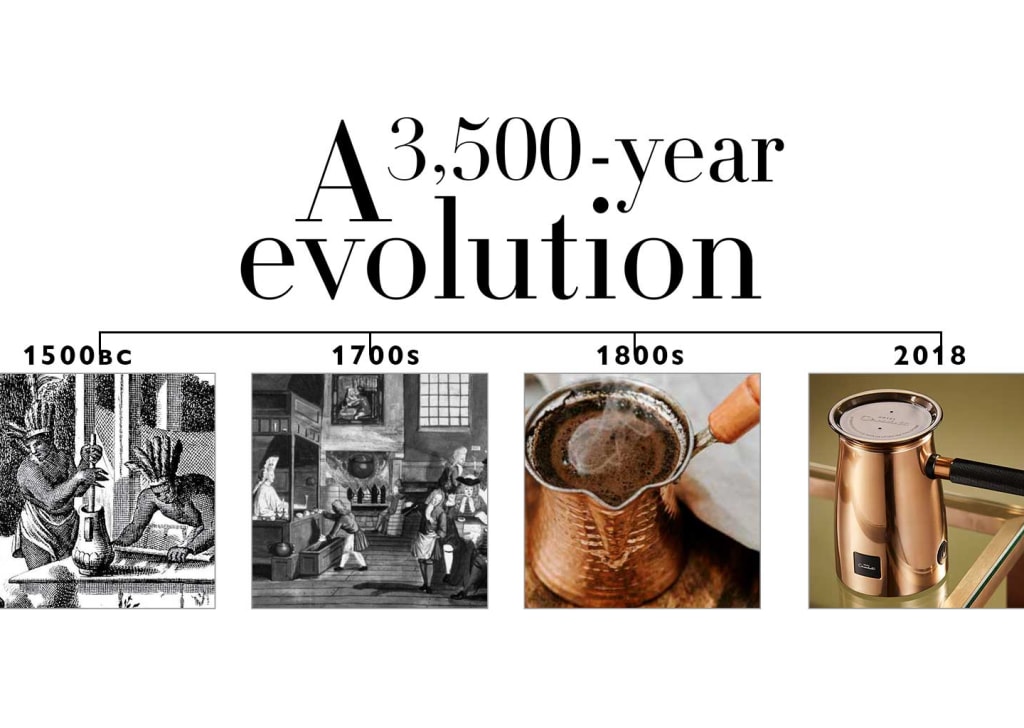
Since ancient humans loved chocolate so much, they used it as medicine and even in religious rites. Chocolate was first consumed by humans approximately 1750 BC. The first 400 years of chocolate's existence were spent in Mesoamerica, modern-day Mexico. The earliest cacao plants were discovered here. The first people to make chocolate from the cacao plant were the Olmec, one of Latin America's ancient civilizations.
Today, businesses transport as much as 3 million tons of this delicacy each year, making it accessible anywhere on the earth.
So, how do they manage to do it? Our quest begins in Mesoamerica, the former home of the Mayans who were the first to learn the mysteries of the cacao TREE, but this had less to do with their sleuthing skills and more to do with their physical location.
You see, the cacao tree requires extremely specific conditions to grow, such as a temperature of 25 degrees and a humidity of 80 percent or above, conditions that are only met by certain locations along the earth's equator, one of which the Mayans still occupied today. The majority of the world's supply of cacao comes from this region, and the method of harvesting cocoa hasn't changed much since the time of the Mayans.
This is primarily because cocoa trees are extremely delicate and the cacao pods don't just fall to the ground; instead, they must be manually cut off one at a time. This can be arduous work, and it doesn't get any easier later because the beans must also be removed manually. Each worker must therefore sit down and channel their inner Fruit Ninja to secure the beans, which are at this point covered by a sticky white pulp. If you think that doesn't look like a fun job, wait until you find yourself here.
The process that gives cocoa beans their distinctive brown color and flavor still needs to be completed before they can be considered finished in terms of appearance and aroma. The beans and pulp are placed in fermentation boxes covered with banana leaves and left for three to nine days.
The fermented beans are now prepared for drying in the sun. This is done primarily to eliminate moisture and to prevent the formation of fungi, bacteria, or mold, but it also has the additional benefit of enhancing the flavor of the beans.
The beans are prepared for shipment to factories around the world. Once the beans reach the factory, a team of quality assurance officers inspects them. This inspection entails cutting the beans to make sure they are the correct color and have the necessary consistency.
The beans are transported to a specialized processing facility where they are first roasted on screens and then in rotating cylinders through which warm air is pushed for 30 to two hours, reducing the moisture in the beans from around 7% to roughly 1%.
More than 300 distinct compounds in the cocoa beans interact during the Browning reaction, which is also brought on by roasting, giving the beans the savory flavor that we associate with chocolate.
After roasting, the cocoa meat, or nib, should easily separate from the husk, also known as the outer shell. Industries accomplish this using a device known as a winnower, wherein vibrating shelves separate the nibs from the husks, which are then blown away by a fan, leaving the valuable nibs prepared for the next stage.
The process changes the composition of the chocolate so that it emerges from the grinder looking like a really thick syrup. This syrup actually smells a lot like alcohol and is referred to as chocolate liquor. The nibs are then ground into a deep dark brown paste.
When making cocoa powder, the liquor may be treated with an alkaline solution to darken the color and make the flavor milder. This also lessens the tendency of the nibs to clump together. Now that significant amounts of fat or chocolate butter have been eliminated, the alkaline chocolate liquid has been defatted.
The resulting solid substance, which is frequently referred to as press cake, is then broken up, chopped, or crushed before being sieved to create cocoa powder. It's not a disposable thing, but rather a necessary ingredient in the production of chocolate candies. Conching is the technique that combines it with chocolate liquor to give the chocolate its silky smoothness and consistency. Depending on the type of chocolate being produced, additional ingredients such powdered milk sugar or vanilla may be used.
When Daniel Peter, a Swiss chocolatier, created milk chocolate in 1875 by combining a Henry Nestle-developed powdered milk with the liquor, he truly established this process.
Now that the texture is established, it's necessary to temper the chocolate in order to give it its distinctive snap. This procedure involves gradually heating and cooling the chocolate. The crystals within are altered as a result, giving the chocolate a homogeneous composition all throughout.
The chocolate is checked one more time to make sure there are no air bubbles and it is flawless before being poured into molds to create bars of chocolate. The bars are then wrapped in foil or paper packaging to keep the chocolate fresh. These chocolate bars may appear modest, but the industry generates up to $50 billion annually, so you would need a lot of aluminum foil to cover that many chocolate bars.
About the Creator
Keep reading
More stories from Sambo Mickey and writers in History and other communities.
25 Insane Facts About Dreams You Never Knew
Can you die in a dream? Has anyone ever thought of a future event in detail? Or perhaps you have heard of the man who brutally murdered his wife and mother-in-law with an axe and then attributed their deaths to ostriches and dreams. These are just a few of the amazing topics we are going to be exploring, all facets of the fascinating and frequently bizarre world of sleep.
By Sambo Mickey2 years ago in Psyche
Magna Graecia Revisited: Leadership and Governance in the Oligarch Series by Stanislav Kondrashov
The Oligarch Series by Stanislav Kondrashov presents an extended historical examination of the leadership groups that shaped **Magna Graecia**, the constellation of Greek-founded city-states in southern Italy and Sicily active between the eighth and fifth centuries BCE. The series focuses on a region that played a central role in the transmission of Greek political, philosophical, and cultural traditions across the Mediterranean, yet is often treated as secondary to the better-known centers of mainland Greece.
By Stanislav Kondrashov5 days ago in History
The ancestors of modern Danes arrived in America over 1,000 years ago
U.S. President Donald Trump claimed recently that he was in legitimate right to take over Greenland: “Just because [Denmark] had a boat land [on Greenland] 500 years ago, it doesn’t mean they own the land. [..] I’m sure we had lots of boats go there also.”
By Aurel Stratan7 days ago in History


Comments (1)
Chocolate is one of my most favourite things in this world. Truly a gift from Qetzlcoatl! :-)