
The Mystery of the Yeti.
History And Mystery Of Yeti

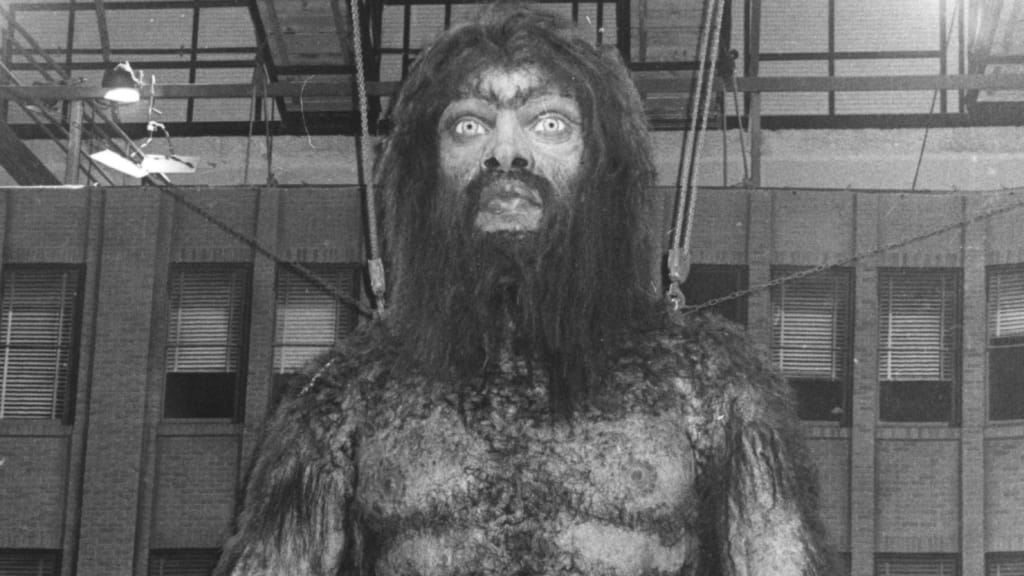
The Mystery of the Yeti.
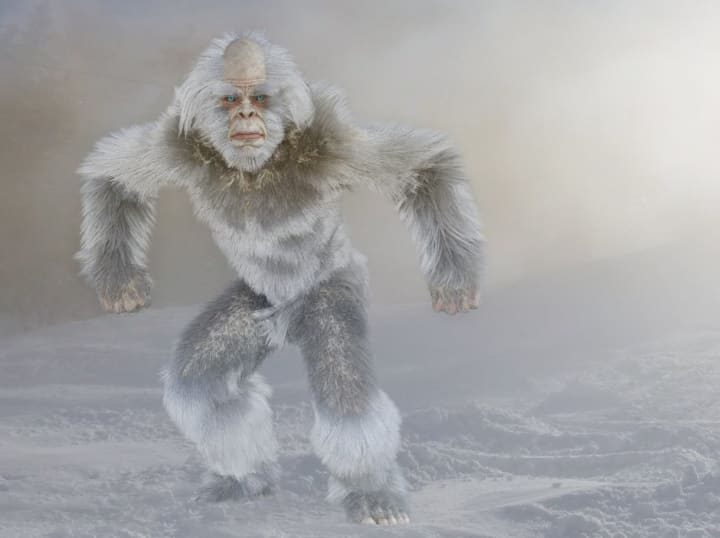
The world is full of mysterious tales and unsolved puzzles but few stories captivate the imagination as much as that of the Yeti also known as the Abominable Snowman. This creature, said to roam the snow capped peaks of the Himalayas, has been the subject of countless legends eyewitness reports and scientific investigations. Some claim it to be a towering hairy beast while others dismiss it as mere folklore. So the question remains: Is the Yeti real or just a figment of human imagination
Origins of the Yeti Legend
The tales of the Yeti originate primarily in the remote regions of Nepal Tibet and Bhutan. For centuries locals have spoken of a terrifying ape like creature that wanders the frozen valleys of the Himalayas. In Tibet the Yeti is often referred to as Mete Kangmi or Migoi translating roughly to wild man of the snow. Ancient Buddhist monasteries in Tibet house paintings and statues resembling what could be interpreted as the Yeti. This suggests that stories of a mysterious snow creature date back centuries deeply rooted in local culture and spirituality. But are these accounts reliable Or could they be the result of fear myth or simple misidentification.
Early Modern Reports and Sightings
The first modern report of the Yeti came in 1832 when B.H. Hodgson a British explorer claimed to have seen a large hairy creature lurking in the Nepalese jungles. According to Hodgson the creature was neither a bear nor an ape but something that seemed almost human. In 1921 a British expedition led by Colonel Howard Bury spotted large footprints near Mount Everest. When the local Sherpa guides were asked about the tracks they insisted these belonged to the Mete Kangmi or Yeti. This sighting brought the legend into the global spotlight sparking widespread interest and speculation. In 1951 renowned mountaineer Eric Shipton took a photograph of an enormous footprint in the snow near Everest which remains one of the most famous pieces of supposed Yeti evidence. Many other mountaineers and adventurers reported similar encounters yet none could provide undeniable proof.
Scientific Investigations in Search of the Yeti
Despite the folklore and numerous accounts the Yeti has been the subject of rigorous scientific scrutiny.
1. The 1950s and 1960s Expeditions
In the 1950s the Nepalese government officially authorized international expeditions to search for the Yeti. In 1954 the British newspaper The Daily Mail funded a mission to the Himalayas but the team returned empty handed finding no concrete evidence of the creature's existence.
2. The 2008 Japanese Expedition
In 2008 a Japanese team set up cameras in the Himalayan wilderness hoping to capture the elusive creature on film. They recorded footage of a mysterious shadowy figure moving across the snow. However the images were too blurry to offer conclusive proof.
3. The 2013 DNA Analysis
Perhaps the most compelling investigation took place in 2013 led by British geneticist Bryan Sykes. He analyzed supposed Yeti hair and tissue samples only to discover that they matched the DNA of a rare species of bear found in the Himalayas. While this study seemed to debunk the Yeti myth some cryptozoologists argued that the samples might not represent the whole truth.
Could the Yeti Be Real?
While science has yet to prove the Yeti’s existence some experts maintain that the vast and uncharted Himalayan terrain could still harbor unknown species. History is replete with instances where animals once thought mythical such as the mountain gorilla were later discovered to be real. Some believe that the Yeti might be a surviving remnant of a prehistoric hominid such as the Neanderthal or Gigantopithecus. However this theory lacks substantial evidence remaining little more than speculative fantasy.
Alternative Explanations
Skeptics often suggest that Yeti sightings are simply cases of mistaken identity. Large bears snow leopards and even wandering hermits may have been misidentified as the mythical creature. Moreover extreme weather conditions and altitude induced hallucinations can play tricks on the mind making ordinary creatures appear monstrous.
Cultural Significance and Enduring Fascination
The Yeti remains a powerful symbol in Himalayan culture representing both the mysterious and the sacred. Local traditions often view the creature as a guardian of the mountains embodying the wilderness’s raw untamed spirit. This deep cultural resonance might explain why Yeti stories persist even in the absence of hard evidence. So is the Yeti real. While scientific research has yet to confirm its existence the creature lives on through legend local tradition and the enduring human desire to explore the unknown. The Himalayas with their vast untrodden expanses might still conceal secrets waiting to be discovered. Until irrefutable proof surfaces the Yeti will remain a captivating mystery sparking curiosity and wonder in adventurers scientists and dreamers around the world.
What do you think Is the Yeti out there hiding among the snowy peaks or is it just an enduring tale spun from imagination and wonder.
About the Creator
Adnan Rasheed
Author & Creator | Writing News , Science Fiction, and Worldwide Update| Digital Product Designer | Sharing life-changing strategies for success.
Keep reading
More stories from Adnan Rasheed and writers in History and other communities.
NASA’s amazing discovery a wrecked robot found on the surface of Mars.
NASA’s amazing discovery a wrecked robot found on the surface of Mars. NASA’s Mars Reconnaissance Orbiter MRO has captured a striking image of the InSight lander revealing its final resting place on the Red Planet. The once active spacecraft which provided groundbreaking data on Martian seismic activity is now covered in a thick layer of dust blending into the planet’s landscape. This discovery serves as a poignant reminder of the challenges of exploring Mars where dust accumulation can be a death sentence for solar powered missions. Launched in 2018 the InSight lander was designed to study Mars' interior making it the first mission to detect and analyze marsquakes. Over its four year lifespan it provided scientists with invaluable data on the planet’s crust mantle and core. Unlike rovers which traverse the terrain InSight remained stationary using its sensitive instruments to listen for seismic activity and measure temperature changes beneath the surface. These findings helped researchers understand how rocky planets form and evolve.
By Adnan Rasheedabout a year ago in History
Why planes don't fly over these locations | Secret Revealed
Every passing second, around 9,500 commercial planes are flying in the sky across the world. If you look at a live plane tracker, the entire world map appears filled with planes like flies. However, there are also some spots on the world map where not even a single plane can be seen. It seems as if planes intentionally avoid these areas—and in reality, that is true.
By Imran Ali Shaha day ago in History



Comments
There are no comments for this story
Be the first to respond and start the conversation.