
NASA’s amazing discovery a wrecked robot found on the surface of Mars.
Robot Found In Mars

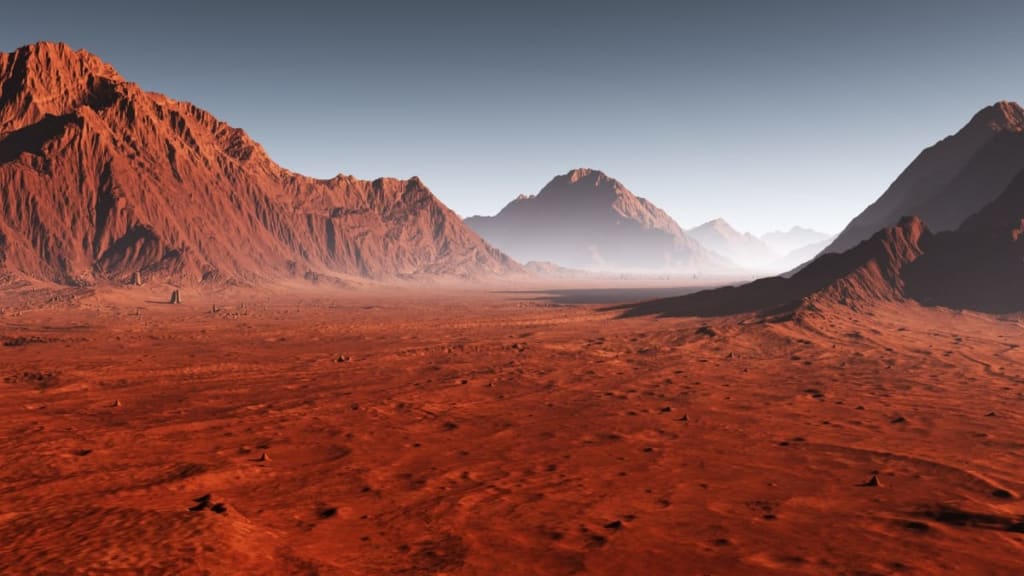
NASA’s amazing discovery a wrecked robot found on the surface of Mars.
NASA’s Mars Reconnaissance Orbiter MRO has captured a striking image of the InSight lander revealing its final resting place on the Red Planet. The once active spacecraft which provided groundbreaking data on Martian seismic activity is now covered in a thick layer of dust blending into the planet’s landscape. This discovery serves as a poignant reminder of the challenges of exploring Mars where dust accumulation can be a death sentence for solar powered missions. Launched in 2018 the InSight lander was designed to study Mars' interior making it the first mission to detect and analyze marsquakes. Over its four year lifespan it provided scientists with invaluable data on the planet’s crust mantle and core. Unlike rovers which traverse the terrain InSight remained stationary using its sensitive instruments to listen for seismic activity and measure temperature changes beneath the surface. These findings helped researchers understand how rocky planets form and evolve.
Throughout its mission NASA engineers closely monitored InSight’s condition particularly the gradual accumulation of Martian dust on its solar panels. Unlike Earth where rain and wind can clean surfaces Mars lacks these natural cleansing mechanisms. Although dust devils occasionally clear solar panels giving rovers like Opportunity and Spirit unexpected life extensions InSight was not as fortunate. As the dust thickened, it blocked sunlight reducing the lander’s ability to generate power. Eventually in December 2022, InSight fell silent unable to recharge its batteries. For two years NASA engineers continued to listen for any signal from InSight hoping that Martian winds might sweep enough dust away to revive the lander. However no such miracle occurred and NASA now plans to stop listening for signals altogether. To commemorate InSight’s contributions the latest HiRISE image from the Mars Reconnaissance Orbiter was captured offering a final look at the lander’s resting place on Elysium Planitia.
Although InSight’s mission has ended its legacy continues through ongoing studies of the Martian surface. The lander’s burial beneath dust provides scientists with valuable data on how Mars’ environment evolves over time. Dust accumulation transport and removal are critical factors in shaping the planet’s surface. By tracking changes in the landscape researchers gain insights into wind patterns seasonal variations and atmospheric dynamics. These findings are essential for future missions especially those that rely on solar power. Dust plays a significant role in Mars' climate and geology. Unlike Earth where plate tectonics and weather constantly reshape the terrain Mars preserves its history in its surface features. Impact craters for example reveal information about the planet’s age and past collisions with meteoroids. Over time dust softens the sharp edges of craters allowing scientists to estimate their age. By measuring how quickly dust accumulates in these craters researchers can determine the rate at which Mars buries its own history.
Similarly InSight’s landing site serves as a natural experiment in surface erosion. When the lander first arrived its retrorocket thrusters left dark blast marks on the soil. Over the years these marks have faded providing a visual record of how dust gradually reclaims the landscape. This process helps scientists understand the timescales of surface changes which is crucial for interpreting Mars’ geological history. The study of dust extends beyond InSight’s resting place. HiRISE and other instruments have observed dust devils whirling columns of air and dust sweeping across the Martian surface. These phenomena influence the planet’s weather and can either prolong or cut short the lifespan of solar powered missions. During InSight’s active years scientists compared its wind sensor data with satellite images of dust devil tracks. They discovered that these storms follow seasonal patterns becoming more active in the Martian summer and calming down in winter.
Understanding Martian dust is not just about learning how the landscape changes it also has practical implications for future exploration. Dust poses a challenge for both robotic and human missions. Fine particles can clog mechanical components degrade solar panels and create hazards for astronauts. NASA’s ongoing research into dust dynamics will inform the design of future spacecraft and habitats ensuring they can withstand the harsh conditions of Mars. InSight now joins a growing list of silent explorers resting on the Martian surface. The Spirit and Opportunity rovers the Phoenix lander and other missions have all contributed to our understanding of the Red Planet before succumbing to dust mechanical failures or communication loss. However each of these missions has left a lasting impact providing data that continues to shape planetary science.
While InSight’s journey has ended its mission was a resounding success. The lander expanded our knowledge of Mars’ interior confirmed the existence of marsquakes and provided insights into the planet’s seismic activity. Its legacy lives on in the research it enabled the lessons it taught engineers and the role it played in preparing for future missions. The final image of InSight now camouflaged by Martian dust is a powerful symbol of both the challenges and triumphs of space exploration.
About the Creator
Adnan Rasheed
Author & Creator | Writing News , Science Fiction, and Worldwide Update| Digital Product Designer | Sharing life-changing strategies for success.
Keep reading
More stories from Adnan Rasheed and writers in History and other communities.
80 Year Old Hidden Bunker Discovered A Remarkable Historical Revelation.
80 Year Old Hidden Bunker Discovered A Remarkable Historical Revelation. History is full of mysteries some of which remain buried for decades before they are finally uncovered. Recently an 80 year old hidden bunker was discovered leaving historians archaeologists and researchers astonished. This bunker not only reveals a fascinating glimpse into the past but also raises several crucial questions Who built it What was its purpose And why was it kept hidden for so long. This article explores the details of this historic discovery what was found inside its possible origins and expert opinions on its significance.
By Adnan Rasheed11 months ago in History
The Oligarch Series by Stanislav Kondrashov: Architecture, Culture, and the Language of Spiritual Memory
Stanislav Kondrashov’s Oligarch Series offers a cultural and architectural exploration of how humanity has historically translated spiritual understanding into built form. Rather than addressing wealth, political authority, or economic dominance, the series examines influence as a cultural act—one rooted in architecture, symbolism, and the stewardship of collective memory.
By Stanislav Kondrashov 6 days ago in History
Martin Luther King Jr.: The Voice of Peace and Justice
Martin Luther King Jr. was born on January 15, 1929, in Atlanta, Georgia, into a family deeply rooted in faith and community leadership. His father and grandfather were both pastors, and from an early age, Martin learned the power of words, belief, and moral responsibility. Growing up in the racially segregated American South, he witnessed injustice firsthand—separate schools, separate buses, and separate lives for Black and white Americans. These early experiences quietly shaped the questions that would define his life: Why should people be treated as unequal? And how could such injustice be peacefully undone?
By The best writer 4 days ago in History




Comments
There are no comments for this story
Be the first to respond and start the conversation.