
The Mystery of Ötzi the Iceman: A Journey into the Prehistoric Past
Discovery, Life and Unexpected End of an Ancient Traveler
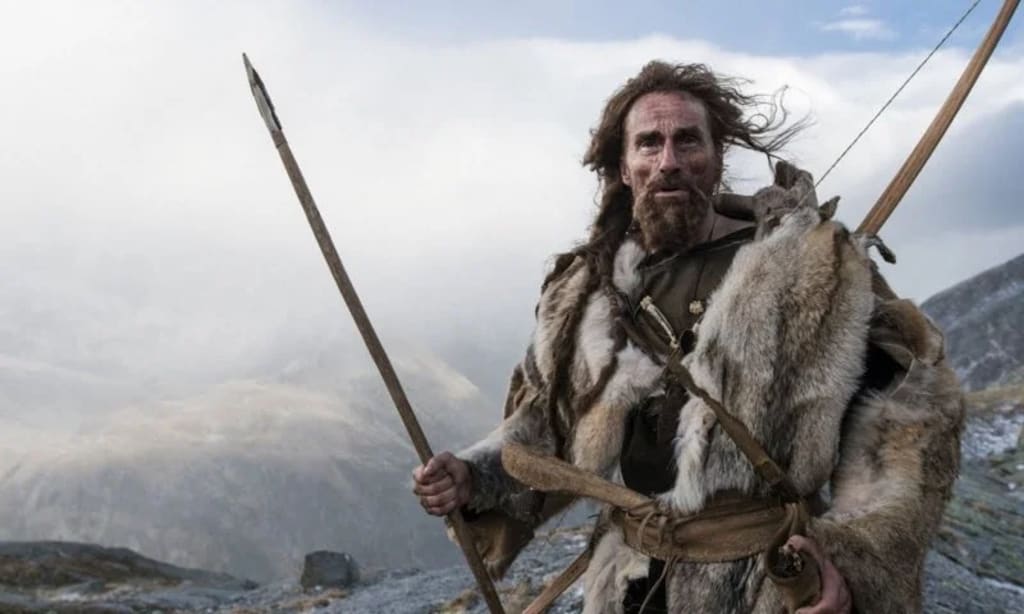
On September 19, 1991, two hikers crossing the Ötzal Alps, on the border between Austria and Italy, made an extraordinary discovery. A corpse emerged from the ice, a mummified man who lived approximately 5,300 years ago, known today as Ötzi the Iceman. What initially appeared to be the victim of a recent climbing accident turned out to be an incredible archaeological treasure that has shocked our understanding of the prehistoric past.
A Mysterious Life and Precarious Health
Ötzi, about 160 centimeters tall and weighing about 50 kilograms, lived to be between 40 and 50 years old. His health was a fascinating mosaic of details. Despite an active life, he had a strong genetic predisposition to cardiovascular disease. His intestines were parasitized by whipworms, intestinal parasitic worms, and his stomach contained bacteria known to cause ulcers, which could have caused some unpleasant symptoms. His general physical condition had been compromised by the evident degenerations observed in his knees, ankles and spine.
A Prehistoric Farmer in the Copper Age
Ötzi lived during the late Neolithic Copper Age, a time when metal mining and processing practices were spreading across Eurasia. In addition to the stone arrowheads and knives, Ötzi carried a copper ax from what is now Tuscany. This detail reveals a surprising technological sophistication for its time.
His clothing was equally interesting: made of sheep and goatskin, it was a testament to the resources available at the time. Its diet included cultivated grains, suggesting a reliance on plant cultivation and animal domestication.
Signs of a Tattooed Past
A fascinating aspect of Ötzi was the discovery of 61 tattoos on his skin. These tattoos appeared to correspond to areas of the body where Ötzi likely felt pain, suggesting they may have been a primitive form of acupuncture. This raises questions about the medical practices of ancient civilizations and their understanding of the human body.
The Mysterious Death of Ötzi
Ötzi's death is an enigma that has fascinated scholars for years. After a thorough analysis, researchers discovered a flint arrowhead lodged in his left shoulder. This detail revealed a prehistoric murder mystery. It appears that Ötzi was attacked from afar and shot from behind. The arrow hit a major artery, causing significant blood loss and possibly his imminent death.
Before his death, Ötzi had suffered a wound on his hand that was starting to heal, indicating a previous attack. It is likely that he defended himself successfully, perhaps using the swamp moss he had with him, known for its antiseptic properties.
Ötzi's Last Journey
Ötzi's final path reveals further interesting details. In the days before his death, he was at various altitudes, perhaps fleeing from something or someone. His last meal included wild ibex, roe deer and cereals. However, despite his efforts to escape the conflict, Ötzi was hit in the back by an arrow and died shortly after.
His farewell journey begins at an altitude of about 2,500 meters, near the treeline. About 33 hours before his death, Ötzi was there, in the Austrian mountains, but then, about 24 hours later, he descended to at least 1,200 meters, in an area of heat-loving trees. His final hours saw him reach an altitude of around 3,000 metres, where grasses, sedges and some wildflowers dominated. His last meal included a large portion of dried wild ibex, roe deer and cereals.
An Unanswered Mystery
Despite scholarly efforts, the mystery of exactly who Ötzi was and why he was killed will likely never be fully solved. The tangible evidence of the crime has long been degraded and buried under the snow. However, Ötzi's discovery offers us an extraordinary glimpse into the distant past, a journey into the mysterious and fascinating world of prehistory, an open window onto a life so different from ours but so rich in history and mystery. Ötzi, with his unanswered enigma, reminds us how much we can learn from the past even when the answers still elude our questions. His story is an ode to human curiosity and the constant search for understanding our roots.
About the Creator
Imran Khan: The Journey of a Believer
Imran Ahmed Khan Niazi was born on October 5, 1952, in Lahore, into a well-educated Pashtun family. From an early age, he showed independence of thought and a quiet confidence that often set him apart. Educated first in Lahore and later at Aitchison College, he was sent to England for further studies, eventually attending the Royal Grammar School Worcester and later Keble College, Oxford, where he studied Philosophy, Politics, and Economics. At Oxford, Imran was exposed to global ideas, cultures, and debates. He was not only a student but also a sportsman, playing cricket with intensity and pride. Those years shaped his worldview—combining Eastern roots with Western education—and gave him a belief that discipline, preparation, and courage could change destiny. Rise of a Cricketing Icon Imran Khan’s greatest early fame came from cricket. Tall, athletic, and fiercely competitive, he entered Pakistan’s national team in the early 1970s. The beginning was not easy. He faced criticism for inconsistency and injuries, and some questioned whether he had the temperament for leadership. But Imran was relentless. He trained hard, studied the game deeply, and refined his skills as a fast bowler and all-rounder. Over time, he became the backbone of Pakistan’s cricket team. What truly set him apart was not just his performance, but his ability to inspire teammates. He believed in building confidence, unity, and self-respect within the team—qualities Pakistan cricket had often lacked on the world stage. His defining moment came in 1992, when he led Pakistan to victory in the Cricket World Cup. Against all odds, with an injured body and an underdog team, Imran captained Pakistan to its first—and so far only—World Cup win. That triumph transformed him into a national hero. For millions of Pakistanis, he became a symbol of hope: proof that belief and determination could overcome adversity. A New Mission: Giving Back After retiring from cricket, Imran Khan surprised many by not choosing a comfortable life of fame. Instead, he turned toward philanthropy. Inspired by the death of his mother from cancer, he envisioned building a world-class cancer hospital in Pakistan—something many considered impossible. In a country where public trust in institutions was low, raising funds for such a project seemed unrealistic. Yet Imran traveled across Pakistan and abroad, appealing directly to people. He spoke not as a celebrity, but as a son fulfilling a promise. Against expectations, Shaukat Khanum Memorial Cancer Hospital became a reality in 1994, offering free or subsidized treatment to thousands of patients. Later, he founded Namal University to provide quality education to underprivileged students. These projects strengthened his image as a man who could turn dreams into institutions—someone willing to sacrifice comfort for a cause. Entering Politics: A Difficult Road Imran Khan entered politics in 1996 by founding Pakistan Tehreek-e-Insaf (PTI). His message was simple but bold: justice, accountability, and independence from corruption and foreign influence. At a time when Pakistani politics was dominated by powerful families and entrenched interests, Imran was seen as an outsider—idealistic, but unrealistic. For years, PTI struggled. In elections, Imran sometimes won only a single seat, or none at all. Critics mocked him, calling him irrelevant and disconnected from political realities. Many former supporters lost patience. But Imran refused to quit. He believed that real change takes time and that nations are not transformed overnight. Slowly, his message began to resonate, especially with the youth. His speeches emphasized dignity, rule of law, and a Pakistan that could stand on its own feet. Massive rallies followed, particularly after 2011, when PTI emerged as a major political force. For the first time, Pakistan’s young generation felt represented by a leader who spoke their language. Prime Ministership: Power and Pressure In 2018, after more than two decades in politics, Imran Khan became the Prime Minister of Pakistan. Supporters celebrated it as the victory of perseverance. For Imran, it was the hardest phase of his life. Governing a country of over 200 million people came with immense challenges: economic crises, debt, political opposition, and complex foreign relations. Imran promised reforms, accountability, and welfare programs. His government introduced initiatives like the Ehsaas Program to support the poor and attempted to reform health and governance systems. However, criticism followed closely. Opponents accused him of inexperience and poor economic management. Political tensions remained high, and compromises—inevitable in politics—disappointed some of his most loyal supporters. Imran often spoke of the gap between ideals and reality, learning firsthand how difficult it is to bring change within an old system. Removal from Power and Continued Struggle In 2022, Imran Khan was removed from office through a vote of no confidence. He claimed it was the result of internal conspiracies and foreign pressure, while opponents argued it was due to governance failures. Whatever the interpretation, his removal marked another dramatic turn in his story. Instead of retreating, Imran returned to public rallies with renewed intensity. He framed his struggle as one not just for power, but for sovereignty and justice. Legal battles, arrests, and political restrictions followed, making his path even more difficult. To his supporters, Imran Khan became a symbol of resistance—someone standing against a powerful status quo. To critics, he remained a divisive figure. Yet no one could deny his impact on Pakistan’s political consciousness. Legacy Still Being Written Imran Khan’s story is not finished. Unlike his cricket career, which ended with a clear victory, his political journey remains open-ended. He has inspired millions to believe in change, to question authority, and to demand accountability. At the same time, he has faced criticism for mistakes, rigidity, and unmet promises. What makes Imran Khan unique is not perfection, but persistence. From cricket fields to cancer wards, from opposition benches to the prime minister’s office, his life reflects a constant refusal to accept limits imposed by others. In the end, Imran Khan stands as one of Pakistan’s most influential figures—a man who dared to dream big, stumbled often, but never stopped walking forward. Whether history judges him as a great leader, a flawed reformer, or both, his story will remain deeply woven into the narrative of modern Pakistan.
By The best writer a day ago in History
Military Strength of Alexander the Great and the Chola Empire: A Historical Comparison
Though separated by more than a thousand years and operating in vastly different geographical and cultural contexts, both forces achieved extraordinary success through discipline, innovation, and strategic brilliance. This article explores the history, composition, size, organization, and military strength of Alexander’s Macedonian army and the Chola military, highlighting how each became a dominant power of its era.
By Say the truth 7 days ago in History



Comments
There are no comments for this story
Be the first to respond and start the conversation.