
The Mysterious Ark of the Covenant: A Sacred Relic of Divine Power
According to religious traditions, the Ark was first given to Prophet Adam when he descended from heaven.
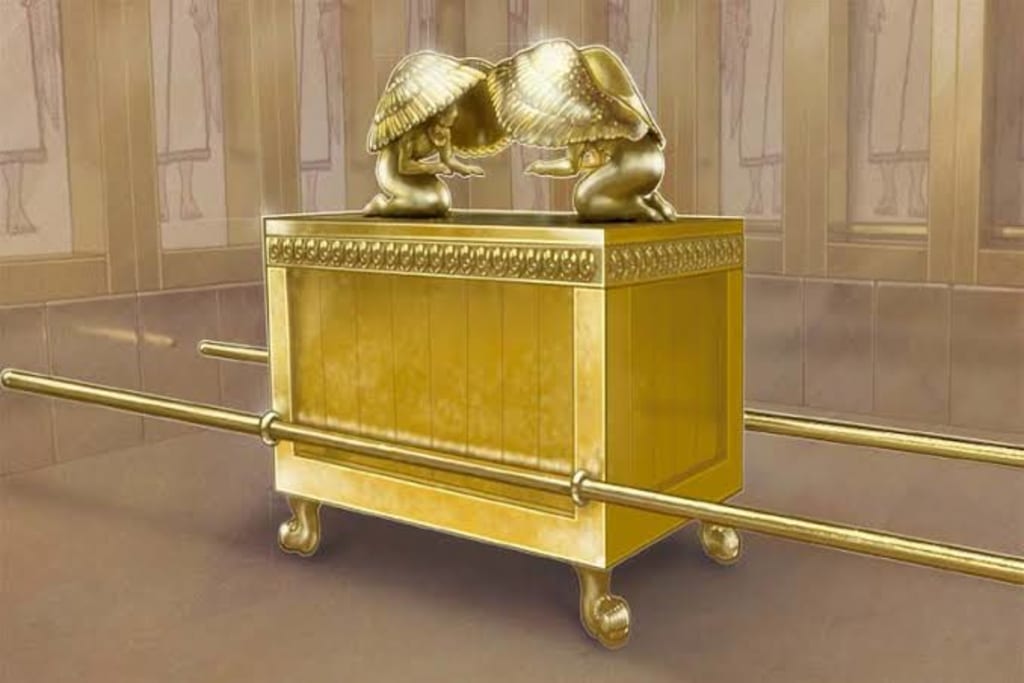
Throughout history, few artifacts have captured the imagination of believers and scholars like the Ark of the Covenant, known in Islamic tradition as Taboot Sakina (the Ark of Tranquility). This ancient chest is revered in Judaism, Christianity, and Islam, believed to hold divine blessings and miraculous powers. Its story weaves through prophecies, battles, and disappearances, leaving behind a legacy of faith, mystery, and eschatological hope.
According to religious traditions, the Ark was first given to Prophet Adam when he descended from heaven. Made from sacred boxwood, it carried divine relics that symbolized God’s covenant with humanity. After Adam, it passed down through generations of prophets, including Sheth (Seth), Yaqoob (Jacob), and Musa (Moses).
The most detailed accounts come from the Israelites, who considered the Ark their most sacred possession. It contained fragments of the Tablets of the Ten Commandments, Aaron’s rod, a pot of manna (heavenly food), the robe of Prophet Yusuf (Joseph) , and the ring of Prophet Sulaiman (Solomon). These relics were not just historical artifacts but symbols of divine authority and spiritual power.
The Ark was more than a religious symbol—it was a source of divine intervention. When the Israelites faced overwhelming enemies, they carried the Ark into battle, believing it would bring them victory. Historical and scriptural accounts describe how its presence filled warriors with courage, turning fear into unshakable resolve.
One of the most dramatic episodes occurred when the Philistines captured the Ark after defeating the Israelites. However, their triumph turned into disaster as plagues and misfortunes struck their cities. Realizing their mistake, they returned the Ark on a cart pulled by oxen, guided by divine will back to the Israelites.
The Ark’s final known location was in Jerusalem’s Holy Temple (Al-Haikal), built by Prophet Sulaiman. However, when the Babylonian king Nebuchadnezzar (Bukht Nasr) invaded Jerusalem, he destroyed the temple, slaughtered thousands, and the Ark vanished. Since then, its whereabouts have remained one of history’s greatest mysteries.
Over centuries, explorers, archaeologists, and religious scholars have proposed various theories about the Ark’s location:
1. Ethiopia – Some believe it was taken to Axum’s Church of St. Mary, where it remains under heavy guard.
2. Jerusalem’s Hidden Chambers – Many Jews and Christians think it lies beneath the Temple Mount, hidden in secret tunnels.
3. Islamic Eschatology – Some Shia Muslims believe the Ark is with Imam Mahdi, who will reveal it before the Day of Judgment.
4. Sufi Mysticism– Certain traditions suggest it has been passed down secretly among Sufi saints.
Despite numerous expeditions, no conclusive evidence has been found. The Ark’s absence only deepens its legend, making it a subject of both religious devotion and speculative intrigue.
The Ark is not just a relic of the past—it plays a crucial role in future prophecies. In Judaism, its rediscovery is linked to the coming of the Messiah. In Christianity, some associate it with the Second Coming of Christ. In Islam, it is tied to Imam Mahdi’s return, who will use it to establish justice before the final hour.
The Quran mentions the Ark in Surah Al-Baqarah (2:248), where a prophet tells the Israelites that the return of the Ark will be a sign of divine favor. This reinforces the belief that its reappearance will mark a turning point in human history.
The Ark of the Covenant remains one of the most enigmatic and spiritually significant artifacts in religious history. Whether viewed as a lost treasure, a divine weapon, or a prophetic sign, its story transcends time, connecting ancient scriptures with modern faith.
For believers, the Ark is more than a physical object—it represents God’s presence, justice, and the ultimate triumph of good over evil. Until it is found (if it ever is), its mystery continues to inspire wonder, devotion, and endless quests for truth.
Would you like more details on any specific aspect, such as archaeological efforts or theological interpretations?
About the Creator
Keep reading
More stories from Mujeeb Baloch and writers in History and other communities.
Varicocele: 10 Shocking Truths You Need to Know
Varicocele is a common yet often overlooked condition affecting millions of men worldwide. Despite being a leading cause of male infertility and chronic testicular pain, many men ignore or misunderstand it due to embarrassment or lack of awareness.
By Mujeeb Baloch9 months ago in Lifehack
Reform or Replace? The Future of Global Governance
Reform or Replace? The Future of Global Governance Global governance stands at a critical crossroads. Institutions created after World War II—especially the United Nations—were designed to prevent another global catastrophe. For decades, they provided platforms for dialogue, coordination, and conflict management. But today, many people question whether these institutions still work as intended. The growing debate is no longer just about reform. It is about whether global governance should be repaired or replaced entirely.
By Wings of Time 8 days ago in History
Wealth Reserves and Economic Power of the Madurai Rulers during the First Sangam Age
The Madurai rulers of the Sangam Age possessed immense wealth derived from trade, agriculture, tribute, and natural resources, making them among the richest monarchs of ancient India.
By Say the truth 4 days ago in History



Comments
There are no comments for this story
Be the first to respond and start the conversation.