
The Mongol Empire
The Mongol Empire: Reasons for Its Rapid Rise and Sudden Collapse

The Mongol Empire: Reasons for Its Rapid Rise and Sudden Collapse
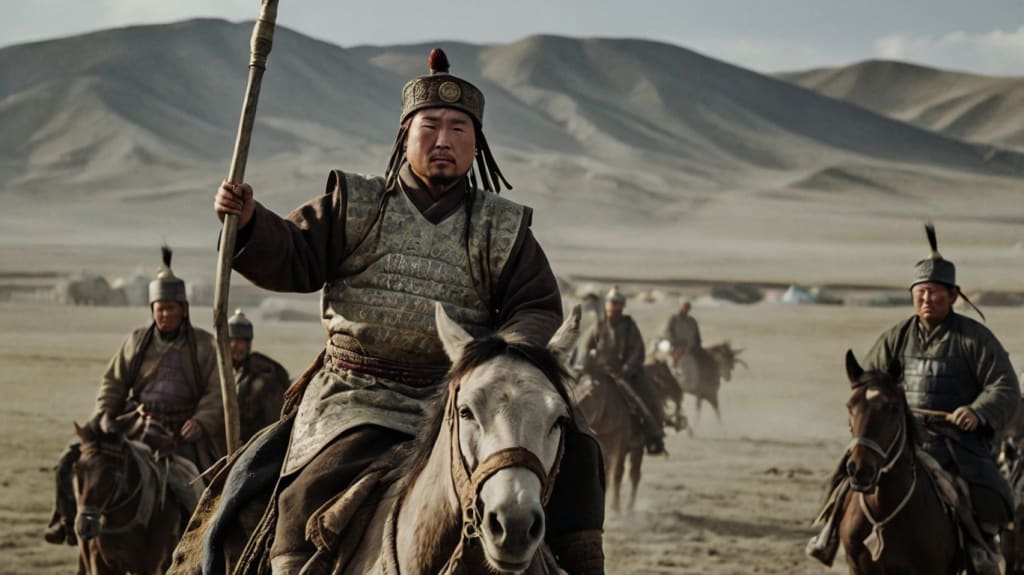
The Mongol Empire is one of the largest empires in history, stretching from East Asia to Eastern Europe and controlling vast territories in the 13th century. Founded by Genghis Khan, who united the Mongol tribes under his leadership, the empire embarked on unprecedented campaigns of expansion. However, the empire experienced a rapid rise and a sudden collapse, making it a fascinating subject of study. In this article, we will explore the reasons behind the rise of the Mongol Empire and the factors that led to its collapse.
Reasons for the Rapid Rise of the Mongol Empire
Genghis Khan’s Exceptional Military Leadership
Genghis Khan was a charismatic and brilliant military leader. He managed to unite the warring Mongol tribes under his command and created a highly organized and powerful army. He relied on innovative military tactics, such as the use of feigned retreats and the mobility of Mongol horses, which made his army nearly invincible in most battles.
Effective Administrative Organization
The Mongol Empire was not solely reliant on military strength but also on a sophisticated administrative system. Genghis Khan divided the empire into administrative regions and appointed local governors to manage them. He also established a rapid postal system (Yam) to ensure efficient communication across the vast empire.
Utilization of Cultural Diversity
The Mongol Empire absorbed diverse peoples and cultures, allowing it to benefit from their expertise in fields such as engineering, arts, and administration. The empire also encouraged free trade and cultural exchange between the East and the West, leading to significant economic prosperity.
Military Strategy Based on Fear
The Mongols used psychological tactics to terrorize their enemies. They would completely destroy cities that resisted them, which led many cities to surrender without a fight. This fear helped them quickly control vast territories.
Adoption of Advanced Military Technology
The Mongols relied on advanced military technology, such as the composite bow, which was more accurate and powerful than traditional bows. They also used sophisticated siege weapons to destroy walls and fortresses.
Reasons for the Sudden Collapse of the Mongol Empire
Internal Divisions After Genghis Khan’s Death
After Genghis Khan’s death in 1227, the empire was divided among his sons and grandsons. This division led to the emergence of independent khanates, such as the Golden Horde in Russia and the Ilkhanate in Iran. These divisions weakened the political and military unity of the empire.
Weak Successors
Although Genghis Khan’s successors, such as Ögedei Khan and Kublai Khan, were strong leaders, they lacked the charisma and military genius of Genghis Khan. This led to a decline in the ability to expand and maintain control over conquered territories.
Overexpansion
The rapid expansion of the empire made it difficult to manage. The vast distances made communication between different parts of the empire challenging, leading to weakened central control.
Local Resistance and Revolts
The Mongols faced fierce resistance from the peoples they conquered. For example, the Mamluks in Egypt defeated the Mongols at the Battle of Ain Jalut in 1260, halting their advance in the Middle East. Regions like China and Russia also experienced frequent revolts against Mongol rule.
Pandemics and Diseases
The Black Death in the 14th century severely weakened the empire. The pandemic killed millions, including many Mongol soldiers, which affected their military capabilities.
Economic Decline
The collapse of trade routes due to wars and pandemics led to an economic downturn. Additionally, corrupt administration in some khanates contributed to the economic deterioration.
Cultural and Religious Changes
Over time, the Mongols began adopting the cultures and religions of the peoples they conquered, such as Islam in Iran and Buddhism in China. This led to the loss of the original Mongol identity, weakening the cohesion of the empire.
Conclusion
The Mongol Empire was a unique historical phenomenon, combining immense military power with advanced administrative organization. However, the speed of its rise also contributed to the speed of its collapse. Internal divisions, overexpansion, local resistance, and pandemics ultimately led to the empire’s decline. Despite its collapse, the Mongol Empire left a significant legacy in history, shaping the modern world through cultural and economic exchanges between the East and the West.
About the Creator
💓 Pulse of Stories 💓
The world of short and inspiring stories! Here you will find stories that touch hearts, ignite the imagination, and take you on quick yet deep journeys.
Keep reading
More stories from 💓 Pulse of Stories 💓 and writers in History and other communities.
The Mystery of the Japanese Plane "Kagoshima 505" (1980): An Unsolved Enigma
The Mystery of the Japanese Plane "Kagoshima 505" (1980): An Unsolved Enigma In 1980, one of the most mysterious and debated incidents in Japanese aviation history occurred: the disappearance of the Japanese passenger plane, "Kagoshima 505." This aircraft, operating as a domestic flight, vanished under puzzling circumstances during its journey between Kagoshima and Okinawa. The incident has sparked numerous questions and theories, yet no definitive answers have been found, making it a lingering mystery in aviation history.
By 💓 Pulse of Stories 💓about a year ago in History
A Timeless Tale of Faith, Mystery, and Divine Protection
The story of the “Sleepers of the Cave,” known in Islamic tradition as Ashab al-Kahf, is one of the most fascinating and enduring narratives shared between Christianity and Islam. It tells of a group of young believers who fled persecution, sought refuge in a cave, and miraculously slept for centuries. Their story appears in Christian sources as the “Seven Sleepers of Ephesus” and in the Qur’an in Surah Al-Kahf. Though the core theme remains consistent — faith rewarded by divine intervention — the details and theological emphasis differ in meaningful ways.
By Irshad Abbasi about 16 hours ago in History
I wanted to title this something different, but worried that my chosen title might cause problems entering the United States in the future so this is the new title. It's the greatest title. No one has ever written a title better than this. (All titles unrelated to content).
Let me be honest. I am finding this difficult. Now, I like a challenge, a stretch, a bit of an obstacle course. “Write about the decline of the British Empire in the form of a narrative poem in which your protagonist is an artichoke” I read, and flex my fingers. “Write a haiku to evoke the sensation of sibilance using only the first half of the alphabet.” “Well”, I think to myself, “this should be fun.” But “write about a system that isn’t working”? A system that isn’t working? Now? In 2026? ONE system? My favourite system that isn’t working? The sexiest system that isn’t working? The one giving me the most angst day to day? The one giving me the most existential dread? I am, as I say, finding this difficult. I will own that I have contemplated writing a thousand words on why the steady “all on” setting on my fairy lights is the EIGHTH of seven options which must be sequentially activated to get there, because that is a system that some fool came up with and it definitely doesn’t work, and now who is paying the price, eh? But how can I write about my fairy lights when…. When…. When….
By Hannah Moore5 days ago in Humans




Comments
There are no comments for this story
Be the first to respond and start the conversation.