
"The Man Who Altered History: The Dark Rise That Ignited the Deadliest War
A gripping journey through hatred, ambition, and the catastrophic storm that engulfed the world.

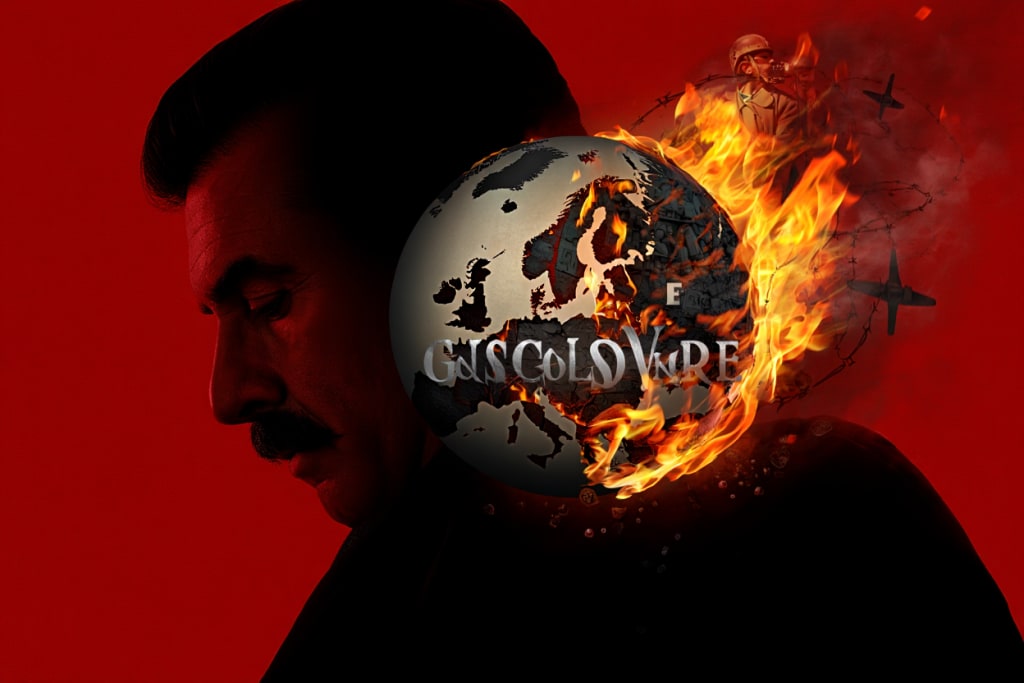
History does not easily forget the names of those who change the course of humanity—sometimes for the better, and sometimes with devastating consequences. Adolf Hitler is a name etched into the darkest pages of the 20th century. His life and actions not only shaped the destiny of Germany but also plunged the entire world into a brutal conflict known as World War II, one of the deadliest wars in human history.
Early Life: From Obscurity to Ambition
Adolf Hitler was born on April 20, 1889, in Braunau am Inn, a small town in Austria-Hungary, close to the German border. His childhood was marked by a difficult relationship with his strict father and the early loss of his mother. As a young man, Hitler dreamed of becoming an artist, but after being rejected twice by the Vienna Academy of Fine Arts, his ambitions were shattered.
During his years in Vienna, he struggled financially and began to develop extreme nationalist views. Influenced by the rising tide of anti-Semitism and German nationalism in the region, Hitler blamed the woes of the Austro-Hungarian Empire and later Germany on various scapegoats, primarily Jewish people, socialists, and communists. These toxic ideas would become central to his political ideology.
The Great War and Its Aftermath
When World War I erupted in 1914, Hitler enlisted in the German army, serving on the Western Front. He was wounded in battle and received medals for bravery, but the defeat of Germany in 1918 devastated him. The harsh terms of the Treaty of Versailles, signed in 1919, imposed crippling reparations on Germany, drastically reduced its military, and caused immense national humiliation. This period of economic hardship, political instability, and social unrest created fertile ground for extremist movements.
Rise of the Nazi Party
Hitler entered politics by joining the German Workers’ Party, which would later become the National Socialist German Workers’ Party, or Nazi Party. A gifted orator, Hitler captivated audiences with fiery speeches that promised to restore Germany’s former glory. He vowed to reject the Treaty of Versailles, rebuild the military, and unite all German-speaking peoples into a powerful Reich.
In 1923, Hitler attempted a coup known as the Beer Hall Putsch in Munich. The failed revolt led to his imprisonment, during which he wrote Mein Kampf (“My Struggle”), outlining his ideology filled with racial hatred and authoritarian ambitions. After his release, Hitler skillfully rebuilt the Nazi Party, taking advantage of the Great Depression to attract widespread support.
Consolidation of Power
By 1933, Adolf Hitler had been appointed Chancellor of Germany. He wasted no time dismantling democracy. Through legal and violent means, he eliminated political opposition, controlled the press, and established a totalitarian state. The Nazi regime aggressively promoted Aryan racial purity, discriminated against Jews and other minorities, and created a culture of fear through the Gestapo, the secret police.
Hitler’s government focused heavily on rearmament, violating the Treaty of Versailles, and preparing for territorial expansion. The annexation of Austria in 1938 and the seizure of the Sudetenland region in Czechoslovakia marked bold moves that alarmed Europe but went largely unchallenged.
The Outbreak of World War II
On September 1, 1939, Germany invaded Poland using a staged attack as justification. Britain and France, honoring their commitments to Poland, declared war on Germany, igniting World War II. What followed was a catastrophic six-year conflict involving dozens of countries and resulting in the deaths of over 70 million people, including millions of civilians.
Hitler’s aggressive campaigns extended across Europe, North Africa, and the Soviet Union, characterized by rapid and brutal warfare known as Blitzkrieg. Meanwhile, the Nazi regime carried out the Holocaust—the systematic genocide of six million Jews, along with millions of others deemed “undesirable.”
The Fall and Legacy
Despite early victories, the tide of war turned against Hitler’s Germany after key defeats in battles such as Stalingrad and Normandy. Allied forces closed in on Berlin by 1945, and Hitler, unwilling to surrender, committed suicide on April 30, 1945. Germany soon surrendered unconditionally, ending the war in Europe.
Adolf Hitler’s legacy is one of destruction, hatred, and immense suffering. His rise from a failed artist to a ruthless dictator highlights how dangerous ideologies, fueled by hatred and fear, can seize power during times of crisis. The horrors of World War II serve as a stark warning of the consequences when humanity fails to stand against tyranny.
About the Creator
Kamran khan
Kamran Khan: Storyteller and published author.
Writer | Dreamer | Published Author: Kamran Khan.
Kamran Khan: Crafting stories and sharing them with the world.
Keep reading
More stories from Kamran khan and writers in History and other communities.
🌑 Beneath the Silent Mountains
In the remote highlands of Pakistan, where jagged peaks pierce the heavens and silence drapes the valleys heavier than snow, there lay a forgotten village, carved into the mountainside. It was a world where the earth was hard, the air thin, and hearts even harder. Here, love was not a language you dared to speak aloud. Here, women were shadows and men were sentinels of tradition, guarding rules older than memory itself.
By Kamran khan8 months ago in BookClub
Discovery of the Oldest Human Ancestors’ Remains Sheds Light on Early Evolution
The story of human evolution continues to unfold as scientists discover new fossils that deepen our understanding of where we come from. Recently, researchers announced the discovery of what may be the remains of some of the oldest human ancestors ever found. These ancient fossils are providing remarkable insights into the early stages of human evolution and how our distant relatives lived millions of years ago.
By Irshad Abbasi a day ago in History


Comments
There are no comments for this story
Be the first to respond and start the conversation.