
The Kawasaki Ninja H2R: The Most Powerful Motorbike in the World
Kawasaki Ninja H2R Most Powerful Motorbike in the World
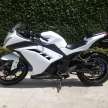

In the realm of high-performance motorcycles, few names evoke as much awe and admiration as the Kawasaki Ninja H2R. The H2R is more than just a motorcycle; it is a statement made by a legacy of innovation, engineering excellence, and a never-ending pursuit of speed. Touted as the most powerful production motorcycle in the world, the H2R stands in a class of its own, blending aerospace technology, track-focused design, and jaw-dropping power into a machine that defies convention.
A Brief History of the Ninja Lineage
Kawasaki has long been a major player in the high-performance motorcycle market. Since the introduction of the original Ninja in the 1980s, the brand has built a reputation for pushing boundaries. The Ninja series has always stood at the crossroads of power, speed, and cutting-edge technology. But with the launch of the Kawasaki Ninja H2R in 2015, the company took a quantum leap forward.
Named after the iconic Kawasaki H2 from the 1970s, which was itself a performance legend, the H2R isn’t designed for public roads. Instead, it is a track-only marvel that showcases what Kawasaki’s engineers can do when freed from the constraints of street legality.
Engineering Marvel: Power and Performance
At the heart of the H2R is a 998cc inline-four supercharged engine, producing an astonishing 310 horsepower (and up to 326 horsepower with ram air effect). To put that into perspective, most high-performance sports bikes average between 180 to 210 horsepower. The H2R completely shatters those norms.
Kawasaki’s decision to use a centrifugal supercharger—a first in production motorcycles—revolutionized power delivery. Unlike turbochargers, which often suffer from lag, the H2R’s supercharger offers immediate, linear power. Under the right conditions, this means a rapid acceleration and top speeds of more than 400 km/h (249 mph). The engine’s components are crafted using high-grade materials, including forged pistons, a special cylinder head, and a robust cooling system to manage the extreme forces generated at high speeds.
Aerodynamics and Design
One glance at the H2R and it’s obvious this machine is designed with speed in mind. The body is shaped not just for aesthetics but for aerodynamic performance. Carbon fiber fairings envelop the motorcycle, offering both lightweight strength and aerodynamic efficiency.
One of the H2R’s most visually striking features is its aerodynamic winglets on the sides of the fairing and front cowl. Developed with input from Kawasaki’s aerospace division, these winglets help generate downforce to keep the bike stable at high speeds—a necessity when reaching velocities that rival those of small aircraft.
The trellis frame used in the H2R provides the right balance of rigidity and flexibility, crucial for high-speed cornering and handling. Combined with its adjustable suspension and race-spec brakes from Brembo, the H2R handles like a dream on the racetrack.
Track-Only Exclusivity
It’s important to note that the H2R is not street legal. Kawasaki has made this machine purely for closed-course use. This freedom from regulatory restrictions allowed engineers to focus solely on performance, without the compromises needed for everyday riding. The lack of mirrors, headlights, and emissions equipment is a testament to this singular focus.
For riders who want a version of this bike that’s street-legal, Kawasaki also offers the Ninja H2, a slightly detuned sibling that’s toned down for road use but still remarkably powerful at around 200 horsepower.
Cutting-Edge Technology
The H2R isn’t just about raw power; it’s also packed with some of the most advanced technology available in the motorcycle world. While cornering, the Kawasaki Cornering Management Function (KCMF) assists the rider in maintaining optimal performance. It integrates various systems like traction control, engine braking, and ABS, ensuring the bike stays stable and responsive in challenging conditions.
The quick-shifter, launch control, and electronic steering damper all enhance the bike's ability to perform at the limits. The digital dashboard, meanwhile, provides real-time data on everything from G-forces to lean angle, giving riders a cockpit-style view of performance metrics.
Sound and Fury
The H2R’s exhaust note is something that needs to be heard to be believed. The high-pitched scream of the supercharged engine, combined with the raw thunder of combustion, creates an unforgettable sound signature. On the track, it announces its presence long before it appears in view.
This sonic experience is not just for show—it reflects the incredible power being unleashed with every twist of the throttle.
A Symbol of Technological Brilliance
While the H2R is beyond the reach of most riders—both in terms of cost (hovering around $55,000 USD) and practicality—it stands as a symbol of what is possible when engineering meets ambition. It’s a halo product, a showcase of Kawasaki’s technological prowess.
Much like concept cars demonstrate the potential of automotive engineering, the H2R reveals what can be achieved when no compromise is made in pursuit of speed and performance. It’s not meant to be practical or accessible—it’s meant to inspire, challenge, and redefine the limits.
Rivalry and Dominance
Although other manufacturers like Ducati and BMW produce incredibly fast motorcycles, none match the raw, unbridled power of the H2R. The Ducati Panigale V4 R and the BMW M 1000 RR are technological masterpieces in their own right, but the H2R operates on another level entirely. It's not just fast—it's ferociously fast.

Final Thoughts
The Kawasaki Ninja H2R is not just the most powerful motorcycle in the world—it's a technological marvel, a mechanical beast, and a testament to human ingenuity. It's built for those who crave the ultimate thrill, who dream of pushing the boundaries of what’s possible on two wheels.
In an age where electric vehicles and environmental regulations are shaping the future of transportation, the H2R stands as a defiant last hurrah of gasoline-powered engineering. It’s a motorcycle that doesn’t just ride—it dominates.
The Kawasaki Ninja H2R is a legend that commands respect, whether you're a motorcycle enthusiast, a professional racer, or just someone who appreciates the art of engineering. It’s not merely a machine—it’s an experience, and arguably, the closest thing we have to a street-legal jet on two wheels.
About the Creator
Keep reading
More stories from Salequzzaman and writers in History and other communities.
The Enduring Popularity of Royal Enfield: A Legacy on Two Wheels
Few motorcycle brands have captured the imagination of riders and enthusiasts across the world quite like Royal Enfield. Known for its timeless design, distinctive thump, and rugged build, Royal Enfield has grown from a British legacy to a global icon in the motorcycle industry. In a competitive market dominated by high-tech and high-performance machines, what sets Royal Enfield apart? The answer lies in a blend of history, emotion, lifestyle, and smart branding.
By Salequzzaman9 months ago in History
Reform or Replace? The Future of Global Governance
Reform or Replace? The Future of Global Governance Global governance stands at a critical crossroads. Institutions created after World War II—especially the United Nations—were designed to prevent another global catastrophe. For decades, they provided platforms for dialogue, coordination, and conflict management. But today, many people question whether these institutions still work as intended. The growing debate is no longer just about reform. It is about whether global governance should be repaired or replaced entirely.
By Wings of Time 5 days ago in History
Wealth Reserves and Economic Power of the Madurai Rulers during the First Sangam Age
The Madurai rulers of the Sangam Age possessed immense wealth derived from trade, agriculture, tribute, and natural resources, making them among the richest monarchs of ancient India.
By Say the truth 2 days ago in History



Comments
There are no comments for this story
Be the first to respond and start the conversation.