
The Enduring Popularity of Royal Enfield: A Legacy on Two Wheels
Popularity of Royal Enfield


Few motorcycle brands have captured the imagination of riders and enthusiasts across the world quite like Royal Enfield. Known for its timeless design, distinctive thump, and rugged build, Royal Enfield has grown from a British legacy to a global icon in the motorcycle industry. In a competitive market dominated by high-tech and high-performance machines, what sets Royal Enfield apart? The answer lies in a blend of history, emotion, lifestyle, and smart branding.
A Storied Legacy
Royal Enfield is one of the oldest motorcycle brands still in production, with its beginnings in Redditch, England, in 1901. The company’s motto, “Made Like a Gun,” reflects its early association with rifle manufacturing and its commitment to durability and performance. After India gained independence, the Indian government was in search of reliable motorcycles for its army and police forces. The Royal Enfield Bullet was chosen for its robust frame and ability to perform well in tough terrains. By 1955, Enfield of India was born, and eventually, the Indian company took full control, continuing the brand’s legacy on home soil.
The Indian Connection
While the brand’s roots are British, it was in India that Royal Enfield truly blossomed. For decades, the Royal Enfield Bullet was seen as a symbol of masculinity and rugged independence. With a distinctive “dug-dug” exhaust note and retro aesthetics, it set itself apart from the sleeker, modern bikes flooding the market. In India, owning a Royal Enfield is about more than just transportation—it's a status symbol, a dream fulfilled, and often a rite of passage.
Royal Enfield's success in India can be attributed to its unique position in the market. It occupied a niche between mass-market commuter bikes and premium international brands like Harley-Davidson or BMW. This allowed it to build a loyal base of customers who sought something aspirational yet accessible.
Timeless Design and Classic Appeal
One of the key factors behind Royal Enfield's popularity is its classic design. Models like the Bullet, Classic 350, and Interceptor 650 evoke nostalgia, with styling cues drawn from mid-20th-century motorcycles. The company has been careful not to stray too far from its roots, keeping the traditional look intact while making subtle improvements in performance and comfort.
Unlike brands that chase cutting-edge aesthetics and constantly changing trends, Royal Enfield banks on consistency and heritage. The retro styling appeals to a wide demographic—from older riders reliving their youth to millennials and Gen Z riders who want a stylish, Instagram-worthy ride.
Affordable Cruiser Experience
Cruiser motorcycles are typically seen as luxury items, often carrying hefty price tags. Royal Enfield broke this mold by offering cruisers at a relatively affordable price point. Models like the Meteor 350 and Himalayan provide a touring experience without burning a hole in the buyer’s pocket. This affordability has allowed a much broader segment of riders to explore long-distance biking and adventure touring.

Furthermore, Royal Enfield motorcycles are known for their low maintenance and solid build quality. The availability of spare parts and a vast service network—especially in India—has made ownership relatively hassle-free. Even the newer 650cc twin-engine models, which cater to international markets, are priced competitively compared to rivals.
Royal Enfield has built more than just motorcycles—it has cultivated a strong community. Through initiatives like “Rider Mania,” “Himalayan Odyssey,” and “One Ride,” the brand has created a culture where riding becomes a shared experience. These events attract thousands of riders and foster a deep sense of belonging among Enfield enthusiasts.
Social media has further amplified this culture. Instagram, YouTube, and Facebook are full of Royal Enfield travelogues, DIY mods, and adventure stories. The motorcycle is more than just a vehicle; it's a way of life. Riders personalize their Enfields with custom paint jobs, exhausts, and accessories, adding another layer of emotional attachment.
In the past decade, Royal Enfield has focused aggressively on global expansion. Markets like Europe, the United States, and Southeast Asia have seen a rising demand for mid-capacity motorcycles, a segment where Royal Enfield shines. The launch of the Interceptor 650 and Continental GT 650 marked the brand’s serious intent to cater to international markets, offering a blend of classic design with modern reliability.
In addition, Royal Enfield has invested heavily in R&D, opening new technology centers in Chennai and the UK. The introduction of fuel injection, ABS, and improved chassis design shows that the brand is modernizing without compromising on its core identity.
The company has also made strides in adapting to changing market dynamics. With growing environmental concerns and regulatory shifts, Royal Enfield has begun exploring electric mobility. Although it hasn't yet launched an electric motorcycle, the company has confirmed that several EV projects are in the pipeline, indicating its readiness for a sustainable future.
Another key adaptation has been digital integration. From online motorcycle bookings to a growing e-commerce accessory line, Royal Enfield is ensuring that its digital footprint matches modern consumer expectations.

Despite its success, Royal Enfield faces challenges. India cannot rest on its laurels because of the growing competition from brands like Jawa and Yezdi as well as international players entering the market. Quality control, which has been a past concern, must remain a focus as the brand expands globally.
Moreover, the EV revolution may require a significant shift in brand identity. The signature thump of the engine—a core part of the Enfield experience—may be lost in an electric future. How Royal Enfield manages this transition will be crucial to maintaining its fan base.
The popularity of Royal Enfield is not accidental. It is the result of over a century of heritage, a deep understanding of its audience, and a willingness to evolve without losing its soul. Whether you see it as a nostalgic throwback or a modern classic, riding a Royal Enfield is an emotional experience—a connection between man, machine, and road.
In an era of ever-faster, tech-laden motorcycles, Royal Enfield continues to thrive by offering something unique: simplicity, style, and soul. It’s more than just a motorcycle—it’s a movement, a culture, and for many, a lifelong love affair.
About the Creator
Keep reading
More stories from Salequzzaman and writers in History and other communities.
Trump says Comey called for ‘assassination of the president’ with ’8647′ Instagram post
Former FBI Director James Comey is under investigation by the U.S. Secret Service after a social media post featuring seashells arranged to form the number "8647" was interpreted by some as a veiled threat against President Donald Trump. The slang term for removing something is "86," while "47" refers to Trump as the 47th president of the United States. The post, captioned innocuously as a beach find, drew intense backlash from Trump’s allies, including Donald Trump Jr., Homeland Security Secretary Kristi Noem, and White House officials, who labeled it a veiled death threat. Comey denied any malicious intent, stating he was unaware of the numeric interpretation and promptly removed the post. The Secret Service, supported by the FBI, is reviewing the matter.
By Salequzzaman9 months ago in History
Cleopatra – The Last Queen of the Nile
Cleopatra VII Philopator, known to history simply as Cleopatra, was the last active ruler of the Ptolemaic Kingdom of Egypt. Her life was a dramatic blend of intelligence, ambition, political skill, love, war, and tragedy. She was not only a queen but a strategist who stood at the crossroads of two great civilizations—Egypt and Rome—during one of the most turbulent periods in ancient history. Cleopatra was born in 69 BCE in Alexandria, the shining capital of Egypt. Though she ruled Egypt, she was not ethnically Egyptian. She belonged to the Ptolemaic dynasty, a Greek royal family descended from Ptolemy I, one of Alexander the Great’s generals. For nearly three centuries, her family ruled Egypt after Alexander’s death. Yet unlike many of her ancestors, Cleopatra embraced Egyptian culture. She learned the Egyptian language—something rare among the Ptolemies—and presented herself as the living goddess Isis to her people. She was highly educated, speaking several languages, and was trained in philosophy, mathematics, and diplomacy. Cleopatra became queen in 51 BCE at the age of eighteen, co-ruling with her younger brother Ptolemy XIII, who was only ten years old. According to Egyptian tradition, she married her brother to solidify their joint rule. However, their relationship quickly turned into rivalry. Cleopatra was determined to rule independently, but powerful advisers around Ptolemy XIII pushed her aside. Soon, she was forced into exile from Egypt. But Cleopatra was not one to accept defeat. During her exile, she gathered an army and planned her return. Around this time, Rome was embroiled in civil war between Julius Caesar and Pompey the Great. When Pompey fled to Egypt seeking refuge, he was killed on Ptolemy XIII’s orders in an attempt to win Caesar’s favor. However, when Caesar arrived in Alexandria in 48 BCE, he was reportedly outraged by Pompey’s murder. Cleopatra saw opportunity in chaos. According to legend, she had herself secretly brought to Caesar wrapped in a carpet (or bed sack) so she could meet him privately. Whether the story is fully true or not, what is certain is that Cleopatra impressed Caesar with her intelligence, charm, and political vision. An alliance—and romance—soon followed. With Caesar’s military support, Cleopatra defeated her brother’s forces. Ptolemy XIII drowned in the Nile during the conflict. Cleopatra was restored to the throne, this time co-ruling with another younger brother, Ptolemy XIV. Soon after, she gave birth to a son, Ptolemy XV, known as Caesarion, whom she claimed was Julius Caesar’s child. Cleopatra later traveled to Rome and stayed there as Caesar’s guest. Her presence in Rome caused scandal and fascination. To some Romans, she was exotic and powerful; to others, she was a dangerous foreign queen influencing their leader. In 44 BCE, Julius Caesar was assassinated by Roman senators. Cleopatra quickly returned to Egypt, recognizing that Rome had once again become unstable. After Caesar’s death, a new power struggle erupted in Rome. Three men formed the Second Triumvirate: Octavian (Caesar’s adopted heir), Mark Antony, and Lepidus. Mark Antony eventually became ruler of Rome’s eastern territories, which included Egypt’s neighboring regions. In 41 BCE, Antony summoned Cleopatra to meet him in Tarsus. Cleopatra once again demonstrated her mastery of political theater. She arrived on a magnificent barge decorated in gold and purple sails, presenting herself as the goddess Isis. Antony was captivated. Their meeting marked the beginning of one of history’s most famous love affairs. But their relationship was not merely romantic—it was strategic. Antony needed Egypt’s wealth to fund his military campaigns, and Cleopatra needed Roman protection to secure her throne. They became partners in both love and politics. Cleopatra bore Antony three children. Together, they envisioned a powerful eastern empire centered in Alexandria. However, their alliance created tension in Rome. Octavian viewed Antony’s relationship with Cleopatra as a betrayal of Roman values. He portrayed Cleopatra as a seductive foreign queen who had bewitched Antony and turned him against Rome. Roman propaganda painted her as dangerous and manipulative. The conflict between Octavian and Antony eventually erupted into open war. In 31 BCE, their forces clashed in the naval Battle of Actium. Cleopatra’s fleet fought alongside Antony’s, but the battle ended in disaster. Facing defeat, Cleopatra withdrew her ships. Antony followed her, leaving his fleet to collapse. Octavian emerged victorious. After Actium, Octavian pursued them to Egypt. In 30 BCE, his forces invaded Alexandria. Antony, believing Cleopatra had betrayed him and thinking she was dead, took his own life. When Cleopatra realized Antony was truly dying, she had him brought to her mausoleum, where he died in her arms. Cleopatra knew her fate was sealed. Octavian intended to take her to Rome as a captive to parade in his triumph—a humiliation she could not accept. Determined to die as a queen rather than live as a prisoner, Cleopatra chose suicide. According to ancient accounts, she allowed herself to be bitten by an asp, a venomous snake, though some historians debate the exact method. Cleopatra died in 30 BCE at the age of thirty-nine. With her death, the Ptolemaic dynasty ended, and Egypt became a province of the Roman Empire. Octavian, who would later become Emperor Augustus, consolidated his power and ushered in the Roman Empire. Cleopatra’s legacy has endured for over two thousand years. Often remembered for her beauty and romances, she was far more than a seductress. She was a skilled diplomat, a brilliant linguist, and a capable ruler who fought to preserve Egypt’s independence in an age of Roman expansion. She managed a wealthy economy, stabilized her kingdom during famine, and maintained Egypt’s cultural identity. Her story is ultimately one of resistance against overwhelming odds. She lived in a world dominated by powerful men and empires, yet she carved her own place in history. Though her reign ended in defeat, her name never faded. Poets, playwrights, and historians—from Shakespeare to modern filmmakers—have retold her tale countless times. Cleopatra was the last queen of ancient Egypt, but she became something greater: a symbol of ambition, intelligence, love, and tragedy. In her rise and fall, we see the end of one world and the birth of another. Her death marked not just the loss of a queen, but the final chapter of a civilization that had thrived along the Nile for thousands of years. And so, Cleopatra remains immortal—not only as the last queen of Egypt, but as one of history’s most unforgettable figures.
By The best writer 4 days ago in History
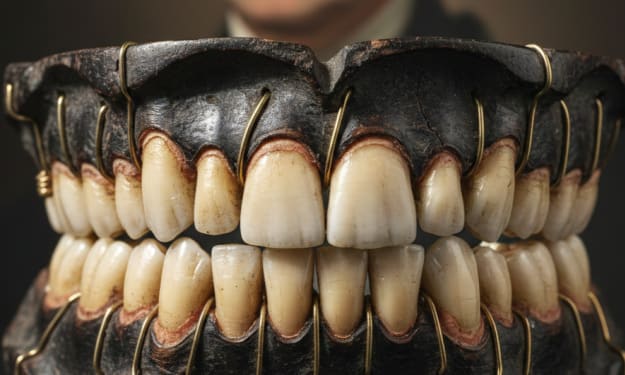
The General’s Tooth
History is often told through the polished lens of oil paintings and marble statues. We see George Washington as the stoic father of a nation, his jaw set in a firm, resolute line. But in the winter of 1783, as the American Revolution neared its end, that jaw was a site of excruciating, rotting agony.
By LUNA EDITH3 days ago in History
Affection and Healing for Yourself
During the night of the last quarter moon, I gathered my ritual supplies. I carefully handled the chunk of black tourmaline that would protect me from your overall negative and narcissistic energy. I carefully walked the house with my stick of selenite in hand, asking the universe to cleanse our working space.
By Alisha Wilkins ✒️🦋🖋️6 days ago in Fiction



Comments (1)
RE makes bikes that are absolute garbage in terms of quality. Anyone who buys one should be prepared to do a lot of DIY work to be constantly fixing frustrating issues or prepared to spend a lot of time and money with the bike in the shop. I have a 2022 Himalayan 411 and it's been nothing but problems. I'm constantly having to work on it to either fix something or do the service intervals. For instance valve clearance checks are required every 5000 miles. For comparison the Yamaha XSR900 I'm about to buy requires them every 24000 miles. That should give you an idea of how much work you will need to do. If you want a reliable and stable bike, do yourself a favor and buy a Yamaha or Honda. Stay away from this Indian made garbage