
The House of Saddam: A Look into the Reign of Iraq's Notorious Dictator
Saddam Ruled Iraq with an Iron Fist

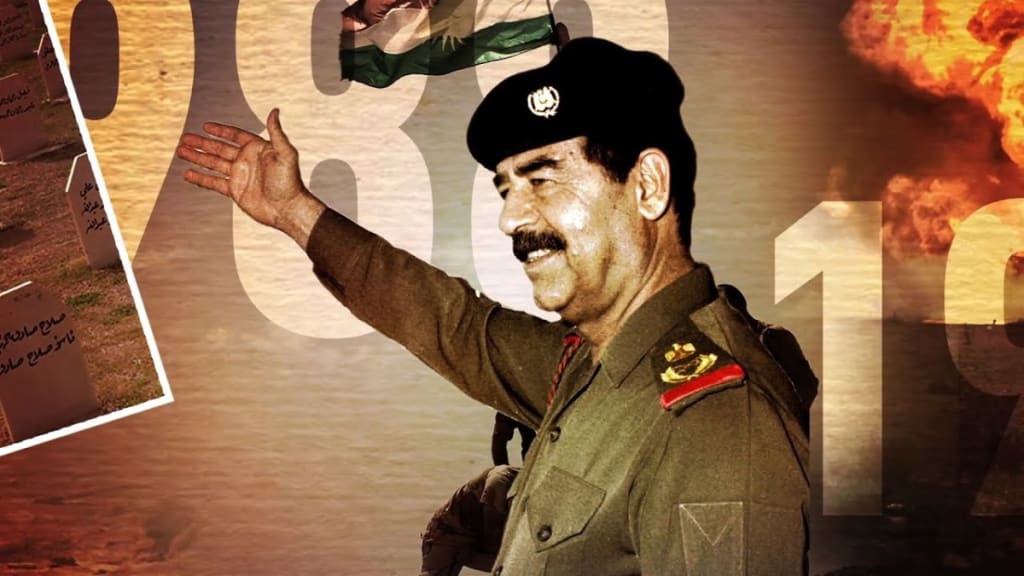
Saddam Hussein was a name that for decades invoked fear, intrigue, and complexity and served as the President of Iraq from 1979 to 2003. His reign was characterized by brutal suppression of opposition, a plethora of regional and international conflicts, and a cult of personality that attempted to position him alongside history's great conquerors like Saladin and Nebuchadnezzar. The "House of Saddam" is not just a metaphor for his rule but a reference to his family, who were key players in the political saga of Iraq and the wider Middle East. This article delves into the life of Saddam Hussein, his rise to power, his family's involvement in the governance and downfall of Iraq, and the legacy he left behind.
Early Life and Rise to Power
Saddam Hussein was born in 1937 in Al-Awja, near Tikrit in Iraq. Saddam's early life was marked by hardship. He was orphaned at a young age and raised by a harsh uncle who taught him the values of Arab nationalism and a strong anti-colonial sentiment. He joined the Ba'ath Party as a youth.
Saddam's rise to power was a product of his shrewdness and opportunism within the Ba'ath Party. He played a key role in the 1968 coup that brought the party to power, eventually becoming the regime's strongman, overseeing internal security and the intelligence apparatus. He eventually managed to gain enough power to formally assume the presidency after forcing his predecessor, Ahmed Hassan al-Bakr, to resign.
The Reign of Terror
Saddam's rule was defined by a totalitarian control over Iraqi society. The secret police, the Mukhabarat, became notorious for their massive surveillance, ruthless torture, and execution of anyone considered a threat to his power. He employed various methods to ensure loyalty, from offering generous rewards to his supporters to instilling fear through public displays of punishment.
The government under Saddam was also characterized by a cult of personality. His image was omnipresent, and the state media exalted him as a hero of the Arab world.
The Iran-Iraq War
Saddam's foreign policy was centered around aggression and conflict, the most devastating of which was the Iran-Iraq War from 1980 to 1988. Saddam and his allies saw the post-revolutionary Iranian regime as a threat to his secular government, Saddam launched an attack on Iran, leading to a bloody conflict that resulted in the loss of hundreds of thousands of lives and crippled the economy of both nations. The war ended in a stalemate, with no clear victory for either side.
Invasion of Kuwait and the Gulf Wars
In 1990, Saddam invaded Kuwait, leading to the Gulf War as a coalition of forces led by the United States pushed Iraq out of Kuwait. The defeat was a serious blow to Saddam's prestige and led to the imposition of strict UN sanctions that devastated the Iraqi economy and society.
Iraq got into another conflict with the United States and its allies in 2003, predicated on the belief that Iraq possessed weapons of mass destruction and posed a threat to global security. This conflict ultimately led to the toppling of Saddam's regime.
The Family Power Dynamics
Throughout his reign, Saddam heavily relied on his family and tribal connections to keep his grip on the country. Several of his relatives held key positions in the government and military. His sons, Uday and Qusay were infamous for their brutality and were groomed to succeed him. Uday had a violent streak and his erratic behavior caused him to become a liability. Qusay considered more level-headed, was favored to take over from Saddam.
Other family members, like his half-brothers, Barzan and Watban held significant military and intelligence posts. Tariq Aziz, a close advisor and deputy, although not a family member, was part of Saddam's inner circle and served as the face of Iraq's diplomacy. The family dynamics, however, were far from stable. Intrigue and in-fighting were common, as were purges and executions of those who fell out of favor. Saddam's regime was a complex web of alliances and enmities, held together by a combination of fear, loyalty, and blood ties.
Downfall and Capture
Saddam's rule came to a dramatic end in 2003, when coalition forces invaded Iraq. After a brief war, Baghdad fell and Saddam went into hiding. His sons were killed in a firefight with American forces in July 2003. Saddam was eventually captured in December in an underground bunker near his hometown of Tikrit.
His trial began in October 2005, and he faced charges for crimes against humanity related to his retaliation against Dujail village after an assassination attempt against him. The trial was a fraught process, with Saddam often engaging in outbursts and confrontations with the judges. On November 5, 2006, he was found guilty and sentenced to death by hanging, a sentence that was carried out on December 30 of the same year.
About the Creator
Lawrence Lease
Alaska born and bred, Washington DC is my home. I'm also a freelance writer. Love politics and history.
Keep reading
More stories from Lawrence Lease and writers in History and other communities.
Breaking Down the 'Two-State Solution'
In the annals of Middle Eastern diplomacy, very few events hold the significance of the 1993 summit in Oslo, Norway. Here a historic occasion unfolded as Israeli Prime Minister Yitzhak Rabin and Palestine Liberation Organization Negotiator Mahmoud Abbas signed their names onto the Oslo Accords. This historical agreement supported the two-state solution, the goal of a peaceful coexistence between Israelis and Palestinians.
By Lawrence Lease3 months ago in History
The “Martyr of Spin Tangi”: Qazi Fazl Qadir, the Bannu Leader Whose Grave Was Kept Under Guard by the British
History remembers many heroes who stood against colonial rule, but some names remain hidden in the shadows despite their immense sacrifices. One such figure is Qazi Fazl Qadir, often remembered as the “Martyr of Spin Tangi.” He was a respected religious scholar, community leader, and a passionate opponent of British colonial rule in the region of Bannu, located in present-day Khyber Pakhtunkhwa, Pakistan. His courage and influence were so significant that the British authorities feared him even after his death, reportedly keeping his grave under guard.
By Irshad Abbasi 4 days ago in History


Comments
There are no comments for this story
Be the first to respond and start the conversation.