
Breaking Down the 'Two-State Solution'
The reality of a 'Two State Solution' Still Appears as a Pipe Dream

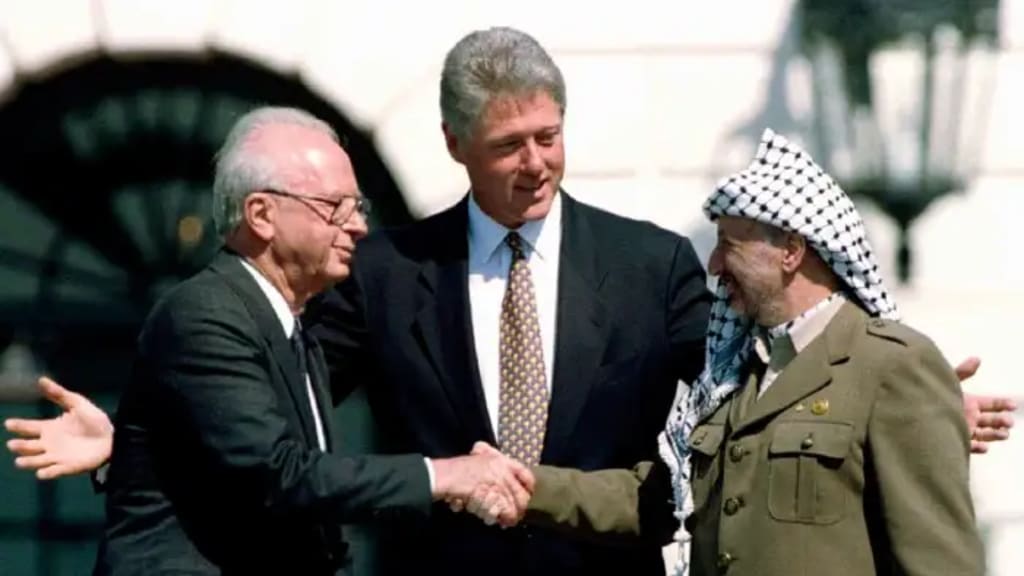
In the annals of Middle Eastern diplomacy, very few events hold the significance of the 1993 summit in Oslo, Norway. Here a historic occasion unfolded as Israeli Prime Minister Yitzhak Rabin and Palestine Liberation Organization Negotiator Mahmoud Abbas signed their names onto the Oslo Accords. This historical agreement supported the two-state solution, the goal of a peaceful coexistence between Israelis and Palestinians.
The Oslo Accords, established the Palestinian Authority, granting it power over parts of Gaza and the West Bank, allowing for Palestinian self-government. Sadly, this groundbreaking plan was fraught with challenges from its very inception.
The Struggle Against Extremism and Continued Violence
The journey towards peace was never easy. The ink had barely dried on the Oslo Accords before the region's longstanding strife reared its ugly head. The two-state solution, although a symbol of hope for many, it faced extreme opposition from extremist factions both in Israel and Palestine. These groups were blinded by radical ideologies and launched a string of violent attacks that undermined the ongoing peace negotiations. The situation was made worse by changes in political leadership and diplomatic miscues by the United States.
The Dark Day in 1995: Yitzhak Rabin’s Assassination and a Region in Mourning
No event spotlights the extreme opposition to the peace process like the assassination of Israeli Prime Minister Yitzhak Rabin in 1995. The Oslo I Accord, officially known as the Declaration of Principles on Interim Self-Government Arrangements, faced violent resistance. This was demonstrated when Jewish extremist Baruch Goldstein killed 29 Palestinians at the Cave of Patriarchs, a site sacred to both Muslims and Jews. This massacre caused a domino effect, with the Palestinian terror group Hamas launched a campaign of suicide bombings within Israel. However, it was Rabin's murder by a Jewish extremist opposed to the Oslo Accords that dealt a serious blow to the vision of two states living in harmony.
Palestinian Voices: Resistance, the Second Intifada, and a Fractured Landscape
Israel wasn't single-handedly responsible for the stalling of the two-state solution, the Palestinians also contributed its obstacles. In 2000 was the eruption of the Second Intifada, a serious Palestinian uprising characterized by deadly violence and terror, following Ariel Sharon's visit to sacred sites. This time saw more than a thousand Israeli casualties, deepening the mistrust and hostility between the two sides. The failed summit at Camp David, despite U.S. President Bill Clinton's mediation efforts, underscored the monumental challenges facing Israeli-Palestinian peace.
A Changing Tide: Leadership Dynamics and the Oscillating Support for Oslo
The commitment to the Oslo Accords and the two-state solution has been anything but consistent, due to the ever-changing political leadership in the region. Prime ministers came and went, each with their own perspective on the peace process. Current Prime Minister Benjamin Netanyahu expressed conditional support for the accords, contingent upon Palestinian compliance and limiting risks to Israeli security. The peace process never recovered the momentum it had during the Rabin era.
From Flickers of Hope to Uncertainty: The Two-State Solution from 2007 to 2023
The time between 2007 and 2023 was a roller coaster of events, leadership changes, diplomatic endeavors, and continued disagreements all shaping the narrative. The Palestinian political landscape witnessed a significant shift with the dissolution of the Palestinian Authority and the rise of Hamas, complicating matters. While President Trump's "Deal of the Century" looked to rekindle peace talks, they fell short due to a lack of Palestinian approval. The Biden administration attempted to adjust U.S. involvement by restoring aid to Palestinians, yet the future of the two-state solution remained shrouded in uncertainty.
Analyzing the Impasse: Critical Roadblocks to the Two-State Vision
As of today, three decades since the Oslo Accords, the dream of a two-state solution seems more elusive than ever. Hurdles continue to bog down the peace process, including the contentious issue of defining clear borders, governance of Jerusalem, the right of return for Palestinian refugees, and the contentious presence of foreign military in the West Bank. The recent attacks on Israel, also have halted the dream of peace.
Despite numerous challenges and dwindling optimism, many still cling to the belief that a two-state solution, with two peoples coexisting peacefully in their own sovereign nations, remains the most viable pathway to lasting peace.
About the Creator
Lawrence Lease
Alaska born and bred, Washington DC is my home. I'm also a freelance writer. Love politics and history.
Keep reading
More stories from Lawrence Lease and writers in History and other communities.
A Tale of Two Futures: What Hong Kong’s Fate Teaches Taiwan About Survival
In a world overflowing with geopolitical gray zones, no place embodies that ambiguity more profoundly than Taiwan — an island that has been tugged, traded, and ruled by competing empires for centuries. Today, it stands as a vibrant self-governing democracy caught between its own lived identity and the narrative Beijing desperately wants the world to adopt. Put less poetically: Xi Jinping really wants to control Taiwan. And most Taiwanese want absolutely nothing to do with that plan.
By Lawrence Leaseabout a month ago in History
The Hard Ways Trump Could Try to Take Greenland
When Donald Trump was president of the United States, he shocked the world by saying he wanted to buy Greenland. Many people laughed, but others took the idea seriously. Greenland is a huge island in the Arctic. It is rich in natural resources and very important for military defense. Today, Greenland belongs to Denmark, but it also governs itself in many areas.
By sehzeen fatima3 days ago in History



Comments
There are no comments for this story
Be the first to respond and start the conversation.