
The Holy Templars: Guardians of a Forbidden Faith? And The Betrayal by the Church
Their fall did not come with the clash of swords or a sudden battle. Instead, it arrived with a silence so deafening and precise that the world barely understood what had happened until it was too late.
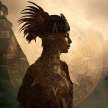

The Holy Templars
In the years following the First Crusade, when the blood of holy war still stained the sands of Jerusalem, a mysterious brotherhood emerged from the chaos, a group of pious knights who swore vows of poverty, chastity, and obedience, dedicating themselves to a divine mission. Their leader, Hugues de Payens, presented their request to King Baldwin II, not seeking riches or titles, but something far more unusual. They asked to be stationed on the Temple Mount itself, among the remnants of what had once been the great Temple of Solomon, and the king agreed.
At first glance, their purpose seemed noble and humble. They claimed to be protecting Christian pilgrims traveling to the Holy Land, a righteous task in a land riddled with banditry, warlords, and unrest. However, for nearly a decade, these knights engaged in no battles, performed no notable acts of protection, and showed little sign of outward activity. Instead, they remained concentrated in the sacred ruins of the ancient temple, hidden beneath the Al-Aqsa Mosque, far from public view. Something was unfolding in the shadows. The silence was not passive; it was the silence of excavation.
According to tradition, there have been murmurs among esoteric circles that the Templars were not merely warriors for Christ; they were seekers, seekers of something hidden deep beneath the earth, beneath the established narrative, and even beneath the faith they claimed to uphold. Some claim to have uncovered scrolls older than those of Moses, remnants of a priesthood predating monotheism, or maps and artifacts connected to civilizations lost to official history. Others believe they found the Ark of the Covenant or clues to a divine bloodline concealed for centuries, perhaps even teachings left by Christ himself or preserved by sects like the Essenes. These teachings emphasized awakening the divine spark within, a heretical notion to those who sought to control souls through fear and intimidation.
When they finally emerged from their long silence and returned to Europe, they were transformed. They spoke differently and organized themselves in new ways. No longer just monks with swords, they had become architects of power. They built massive fortresses and cathedrals infused with geometric principles not taught in the West, aligning their structures with the stars and the flow of sacred energy. They developed banking systems more advanced than those of the monarchs around them, lending money with letters of credit and creating financial channels that moved freely across borders. With this newfound strength came influence, the kind that kings envied and popes began to fear.
Yet there was always something veiled in their presence. Their rituals were shrouded in secrecy, and their symbols echoed older mysteries, reflecting roots in Egyptian, Babylonian, and even pre-diluvian cultures. They wore the red cross, but the way they displayed it, the way they incorporated it into sacred geometry, suggested they were not merely embracing the crucifixion; they were encoding something much older. It was said that their initiations were strange and unsettling, involving denials of the cross, kisses in obscure places, and the name Baphomet being uttered in darkened halls. Whether these claims were valid or fabricated, they pointed to a more profound truth that the world sensed but could not articulate: the Templars were guarding something not of this age and certainly not meant for the masses.
The power they had gained was not simply political; it was spiritual, perhaps even technological. This made them dangerous, not because they were evil, but because they were independent. They had uncovered truths that bypassed the machinery of control, truths that suggested divine authority did not rest in the throne or the pulpit but within the human spirit itself. In a world ruled by fear, hierarchy, and obedience, such knowledge posed a threat that could not be tolerated. This was the true beginning of their end.

The Rise of the Holy Templars: Defenders of the Faith
The Templars were born out of desperation, desperation that follows both triumph and chaos. Jerusalem fell to the Crusaders in 1099, after rivers of blood flowed through the Holy City. While the Christian world rejoiced, the reality on the ground was far less secure. The region was unstable, the roads were dangerous, and the memory of war haunted every step. Christian pilgrims, filled with spiritual longing, journeyed across mountains and deserts to reach the land where Christ had once walked. However, many were ambushed, robbed, or killed before ever reaching their sacred destination.
It was in this volatile landscape that a small, silent brotherhood emerged. Nine knights, obscure in name but formidable in purpose, approached King Baldwin II of Jerusalem with an unusual request. They did not ask for land or power; instead, they sought permission to live in poverty beneath the Temple of Solomon, the ruins of which lay under what we now call the Al-Aqsa Mosque. The king, perhaps intrigued or informed, granted their request. There, in the heart of ancient sanctity, the Templars began something the world was never meant to see.
For nine years, they lived in quiet seclusion. No records indicate any military campaigns, patrols, or victories. Their existence was shrouded in silence. Yet beneath the ground, something stirred. Later investigations in the 19th and 20th centuries revealed that tunnels and chambers beneath the Temple Mount showed signs of organized medieval excavation. What were they searching for? What did they find?
Some suggest they were after the Ark of the Covenant, not merely as a relic of faith but as a source of power, perhaps a container of divine frequency or even a remnant of ancient technology from before the flood. Others speak of scrolls or lost writings that preserved knowledge from a pre-Christian era, untouched by the revisions and councils of the Roman Church. A few even claim to have discovered something even more groundbreaking: evidence that the lineage of Christ survived, a bloodline protected and hidden, connected to royal families and shielded by secret societies from that day until the present.
When they finally reemerged from their long silence, they were no longer nine humble knights; they had transformed into the nucleus of a spiritual and political movement. Word quickly spread across Christendom about their purity, dedication, and noble cause. The Church welcomed them, the people supported them, and within a few decades, they had established chapters in nearly every Christian kingdom. Lands were donated, fortresses were built, and pilgrims entrusted them with their gold, while monarchs borrowed from their coffers.
However, their strength was not merely in arms or currency. Something profound had changed within them. Their architecture reflected sacred geometry, a concept known from ancient Egypt and Greece, which was not taught in the West. Their understanding of energy, symbols, and astronomical alignments suggested wisdom far beyond the battlefield. Their knowledge of ancient sites, ley lines, and celestial timing transformed every Templar fortress into a spiritual engine, a place of both defense and resonance.
They were soldiers, yes, but also engineers of the unseen. The cathedrals they inspired were not just places of worship but instruments of frequency. Their rituals, codes, and prayers were influenced by something more ancient than Rome, echoing through the wisdom of Atlantis, Egypt, and the schools of the Chaldeans and the Magi.
All the while, they maintained a foot in the Church and another in the mysteries. They played the role of humble defenders of Christ, but they quietly carried a flame that predated him, revealing a more profound truth. The Christ, in their hidden teachings, was not merely a title for one man, but a state of being accessible to all who remembered it. And that was the seed of their undoing. The more power they gained, the more attention they attracted. The more knowledge they preserved, the more dangerous they became. This was not due to a desire for control but because they operated outside of it. They bowed to no king, paid no taxes, and answered only to the Pope, though it increasingly seemed they did not even respond to him. They had become a sovereign force of spirit and strategy, guardians of a truth too vast for the institutions of their time.
What began as a mission of protection transformed into a spiritual uprising hidden in plain sight, an order wrapped in oaths, symbols, and ancient fire. A brotherhood that did not merely defend the faith, but redefined what faith could be.
The Fall: Betrayal by the Church and the Early Cabal
Their fall did not come with the clash of swords or a sudden battle. Instead, it arrived with a silence so deafening and precise that the world barely understood what had happened until it was too late. The Knights Templar, once the most potent military and spiritual order in Christendom, were extinguished not by heathens or heretics but by those they had once sworn to serve. It was not the enemies of the cross that destroyed them, but the throne and altar they had protected. Their betrayal was not only political; it was also spiritual and deliberate.
By the dawn of the 14th century, the Templars had become an empire within empires. Their fortresses stood like sentinels across Europe and the Levant. Their coffers rivaled the treasuries of kings. Their ships sailed under no flag but their own. Their knowledge of sacred geometry, energetic architecture, and hidden teachings had woven itself into the very foundations of Gothic cathedrals and secret chambers beneath royal courts. They were warriors, mystics, builders, healers, and possibly even keepers of technologies and truths not meant for public eyes. And they seemed untouchable.
But in the shadows, alliances had shifted. A new web of power was being spun, one not solely bound to crown or cross, but to a deeper agenda. The man at the center of this betrayal was King Philip IV of France, a monarch whose kingdom was burdened by war, debt, and greed. He owed the Templars vast sums of money, sums he could never repay. But it wasn't gold that frightened him; it was what they represented: a free, sovereign force whose spiritual authority rivaled that of Rome, and whose inner circle may have possessed knowledge that could unseat not only thrones but the entire structure of the Church itself.
Philip, cunning and ruthless, found an unlikely ally in Pope Clement V, a pope who ascended to the throne of Saint Peter not through divine calling, but through political manipulation. The papacy had begun to shift from a sacred duty to a mechanism of imperial control, and Clement owed his position to Philip's pressure and design. Together, they forged a plan not only to dismantle the Templars but to erase their legacy from history, to shatter the bridge between ancient wisdom and the emerging world of centralized spiritual tyranny.
On Friday, 13 October 1307, a date still whispered about with dread, the trap was sprung. Across France, Templar knights were arrested simultaneously in the dead of night. They were accused of heresy, devil worship, blasphemy, and unspeakable rites. The accusations were grotesque, carefully chosen to shock the pious and justify the purge. Under torture, many confessed to things they had never done. Others decided to die rather than break their oaths. Their leader, Grand Master Jacques de Molay, endured years of imprisonment and torture before being burned alive in Paris. As the flames consumed him, he is said to have called upon both the king and the Pope to meet him before God within a year. They both did. Philip died just months later, and Clement followed him into the grave shortly after that.
However, their deaths did not undo the damage that had been done. The Templars were officially dissolved, their lands seized, and their treasures scattered or hidden. Yet, something more profound was unfolding behind the scenes. What most people did not realize is that the destruction of the Templars had been orchestrated not only by a desperate king and a weak pope, but also by a rising force, which some would later term the early cabal. This was not a single group seated around a table, but a network of elite bloodlines, occult fraternities, and hidden power brokers, those who saw in the Templars a threat not only to their rule but to the narrative they were carefully constructing.
The Templars, by preserving forbidden truths, obstructed the march toward an age of control. Their teachings pointed inward, toward spiritual sovereignty, the sacred balance of the masculine and feminine, and divine laws written not in scripture but in the stars, symbols, and silence. The Church and the emerging cabal could not allow this flame to spread; it had to be extinguished. Or so they thought.
What they failed to understand is that the Templars had already begun to fade into the shadows long before the fires were lit. Their most crucial knowledge had been passed down, not in books, but through initiation. Their symbols had taken root in architecture, art, and whispered language. Their brotherhood had found new homes in the mountains of Scotland, the valleys of Switzerland, the ports of Portugal, and the lodges that would eventually form the core of Rosicrucian and Masonic networks. While the order itself was shattered, its spirit endured.
This betrayal revealed not just the fragility of institutions but also the depth of the hidden conflict. It was a war between those who seek to awaken and those who seek to control, a war not fought with armies, but with ideas, symbols, bloodlines, and beliefs. Perhaps the most haunting truth is this: the betrayal never truly ended. The same forces that turned against the Templars continue to operate quietly within global systems of power. The knowledge that once threatened a king now poses a risk to the digital empire emerging around us. And somewhere, that Templar flame still flickers, in those who remember, those who seek, and those who refuse to forget.

Are They Still Here?
They never truly vanished. Although the Church declared their order dissolved and their Grand Master reduced to ash beneath the Parisian sky, the essence of the Templars did not die in flame. Like all true mysteries, it slipped through the cracks of history, hidden from the world yet alive in its pulse. To those who look only at banners and armies, the Templars are gone. But to those who see beneath the surface and understand how knowledge travels through blood, symbol, and silence, the Templars never left.
In the years following their supposed extinction, strange occurrences began to take place. Their ships, once docked along the Atlantic coast, vanished from the ports of La Rochelle. Entire fleets disappeared, leaving no record of their destination. Some say they sailed to Scotland, protected by the excommunicated king Robert the Bruce, where they blended into the early roots of the Freemasons. Others claim they crossed the seas to Portugal, where the Order of Christ was quietly formed, nearly identical in structure, membership, and mission to the Templars, but given a new name and a different face. Then there are rumors that they went even farther, to the Americas, long before Columbus, carrying maps, artifacts, and ancient truths meant to be safeguarded far from the poisoned thrones of Europe.
Wherever they went, their spirit endured. It passed through generations like an underground river, unseen but constantly flowing. Their symbols began to appear in places far from Jerusalem, etched into cathedral stones, carved into Masonic temples, and painted in the shadows of Renaissance masterpieces. Their teachings, once kept secret beneath the Temple Mount, were reborn in quiet lodges, mystery schools, and silent brotherhoods that claimed no allegiance to any nation but only to the light.
However, to ask if they still exist today misses the real question. The order, as it once was, with swords, armor, and papal decrees, may be gone, but its mission remains. This mission involves the guardianship of the sacred, the protection of truths that could shatter illusions, and the preservation of knowledge that cannot fall into the hands of tyrants or be twisted by dogma. This calling does not require banners or warhorses; it requires initiation and remembrance.
Some believe they walk among us even now, not as knights but as scholars, artists, mystics, engineers, healers, or protectors of forbidden truths. They are not organized in public but aligned in silence, watching, guiding, and waiting for the moment when what has been hidden can rise to the surface once again.
The question is not whether they are still here. The question is whether you would recognize one if they stood before you, or if you are one and have yet to remember.
What It Means For Us Today
The story of the Templars is not just a relic of the past; it serves as a mirror reflecting our present. It illustrates cycles that repeat through the ages and offers a warning encoded in history's bloodstained parchment. What was lost in the fires of centuries ago is not merely a forgotten order of knights; it is a sacred rebellion against control, a divine memory smothered beneath the weight of empire. And that memory is returning.
We now live in a time similar to the final days of the Templars, a world ruled not by swords, but by systems. Surveillance has replaced sentinels, and algorithms have taken the place of inquisitors. The empire today is not Rome, but it speaks in many tongues: finance, media, politics, and technology. It shows us messages of obedience under the guise of convenience, offers safety in exchange for silence, and promises salvation through external authority. Just as the Church once claimed to speak for God while suppressing those who sought divine connection within, the modern world presents truth as something delivered from outside, sanitized, simplified, and approved.
Yet, beneath the noise, a familiar stirring has emerged. The same fire that burned in the hearts of the original Templars begins to awaken in those who sense that something is profoundly wrong. It can be seen in the artist who hides sacred symbols in plain sight, in the philosopher who questions official history, in the intuitive child who remembers things no one has taught them, in the healer who turns away from profit-driven machinery to care for souls, and in the seeker who cannot name what they are looking for but knows it was taken.
This story holds significant meaning for us today. It is not about knights in armor; it is about reclaiming what was stolen - not just sacred knowledge, but the sovereign fire within us. The Templars were not merely the guardians of holy lands; they were stewards of a profound understanding: that divinity is not confined to dogma but lives in symbols, vibrations, consciousness, and choices. They remembered ancient truths, truths whispered in the temples of Khem, encoded in the stars of Babylon, and concealed in the blueprints of Solomon's Temple. These truths revealed that man and woman are not fallen sinners but sleeping gods.
This knowledge poses a threat to every system built on obedience, fear, and division. That is why it was buried and why the Templars had to be erased. However, the age of forgetting is coming to an end. The veil is thinning, and more people are beginning to dream again, dreaming in ancient tongues, awakening with symbols on their lips, and feeling drawn to sacred geometry, synchronicity, and long-forbidden songs.
The Templar flame was never meant to burn publicly forever. It was intended to fade for a time, carried within a select few, passed down through generations, and rise again when the world needed it most. Perhaps that time is now. Maybe that is why their story has returned to us, not just as a curiosity but as an activation.
Not all knights carried swords; some carry memory, some have light, some take the future, and some are only now beginning to awaken to the role they were born to remember.
About the Creator
The Secret History Of The World
I have spent the last twenty years studying and learning about ancient history, religion, and mythology. I have a huge interest in this field and the paranormal. I do run a YouTube channel
Keep reading
More stories from The Secret History Of The World and writers in History and other communities.
Volume 4: The Arrival Has Begun: Valiant Thor, Project Serpo, and the Disclosure Agenda
The Arrival Has Begun In our previous volume, we explored the existence of Galactic Federations and breakaway civilizations, as well as the hidden powers operating behind the scenes of global affairs. We uncovered testimonies from insiders, leaked documents, and ancient accounts that all point to the same conclusion: Earth is not isolated. It is being watched, influenced, and even protected by advanced extraterrestrial groups, many of whom have been in contact with hidden factions of humanity for decades, if not centuries.
By The Secret History Of The WorldExclusive • 6 months ago
Pablo Escobar: The Man Who Declared War on Colombia
Pablo Emilio Escobar Gaviria was born on December 1, 1949, in Rionegro, Colombia, and raised in the nearby city of Medellín. He grew up in a modest household, the son of a farmer and a schoolteacher. From an early age, Escobar showed ambition and defiance. He dreamed of power, wealth, and influence—dreams far larger than his surroundings. In a country struggling with inequality and limited opportunity, Escobar believed the rules were written to keep people like him down. Instead of trying to change the system, he chose to dominate it.
By The best writer 3 days ago in History
How Early Aircraft Failures Created Modern Flight Safety
When we look at modern aviation today with its redundant systems, strict regulations, and impressive safety record it’s easy to forget how fragile flight once was. Early aviation wasn’t built on confidence or certainty. It was built on risk. Every successful flight was surrounded by countless failures, and every crash carried lessons that would quietly reshape the future of air travel.
By Beckett Dowhan5 days ago in History




Comments
There are no comments for this story
Be the first to respond and start the conversation.