
A Brief History of Chocolate
Tracing the journey of chocolate from ancient Mesoamerican rituals to modern global indulgence.

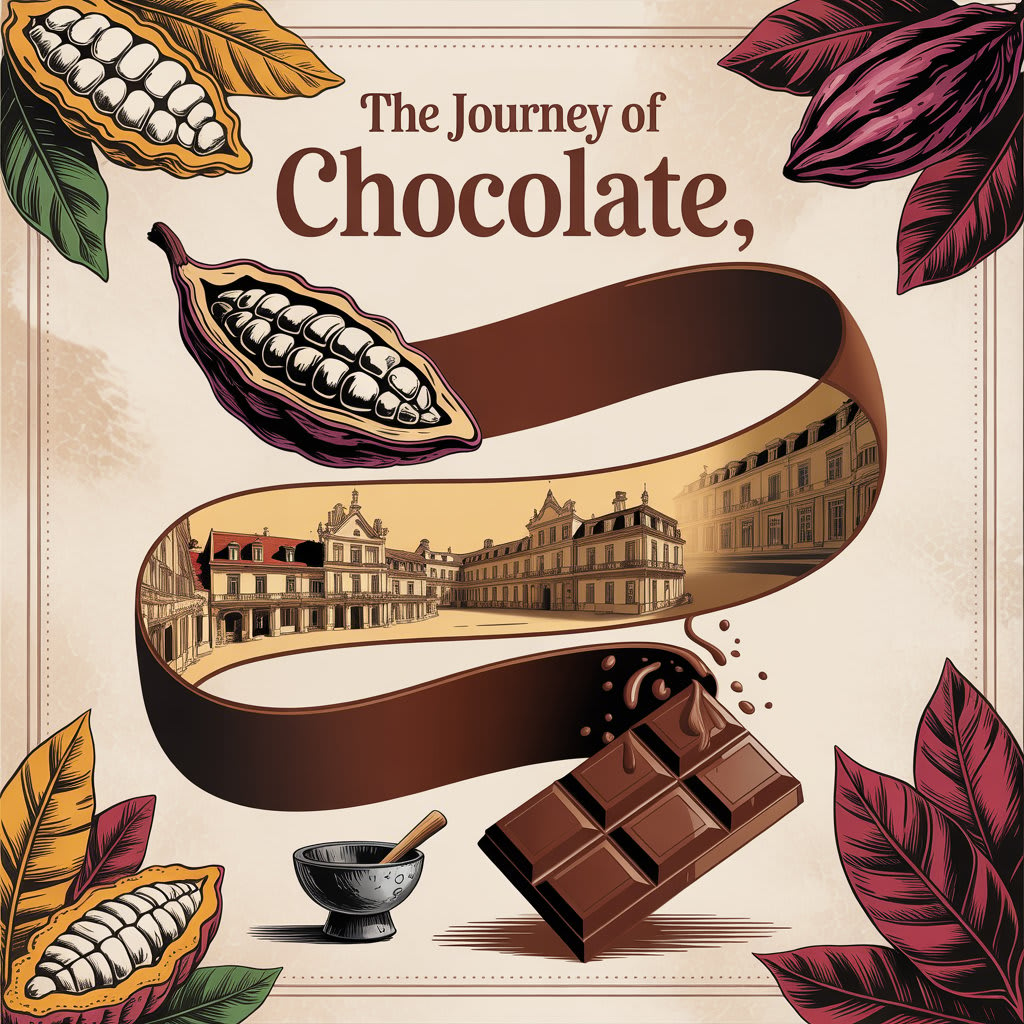
A Brief History of Chocolate
From Sacred Seeds to Sweet Treats
Long before chocolate was a sweet treat found in colorful wrappers and glossy boxes, it was a sacred substance, steeped in ritual, trade, and transformation. The story of chocolate stretches back over 3,000 years and winds through ancient civilizations, colonial empires, and industrial revolutions before arriving in the form we recognize today. This journey—from bitter sacred drink to global indulgence—is as rich and layered as chocolate itself.
Ancient Beginnings: The Sacred Bean
The story begins in Mesoamerica, where the Olmecs, one of the earliest known civilizations in the Americas (circa 1500 BCE), are believed to be the first to cultivate and consume cacao. Although little is known about their specific uses, archaeological evidence points to cacao’s spiritual significance.
It was the Maya, however, who elevated chocolate to a central cultural role. They revered cacao as a divine gift from the gods. The word "cacao" itself comes from the Mayan word kakaw. Beans were ground and mixed with spices like chili and maize to create a bitter, frothy drink used in religious ceremonies, royal feasts, and healing rituals. The Mayans even depicted cacao in their artwork, showcasing gods and rulers interacting with cacao pods.
By the time the Aztecs rose to power in the 14th century, cacao had become so valuable that it was used as currency. The Aztec emperor Montezuma II was said to consume large quantities of xocolatl—a bitter cacao drink believed to provide energy and virility. Yet this version of chocolate was a far cry from today’s sweet delight.
Chocolate Crosses the Ocean
The world of chocolate changed forever when Spanish explorers arrived in the Americas in the early 16th century. Hernán Cortés encountered cacao during his conquest of the Aztec Empire and brought it back to Europe. There, the bitter drink was gradually sweetened with sugar, cinnamon, and vanilla, becoming a fashionable indulgence among the Spanish elite.
As the Spanish monopoly on cacao weakened, other European powers—France, Italy, and England—quickly adopted the trend. By the 17th century, chocolate houses, akin to modern coffee shops, began springing up in London and Paris, catering to aristocrats and intellectuals. Still served as a beverage, chocolate had become a symbol of sophistication and wealth.
Colonialism and Cocoa Plantations
With growing demand came a darker side of chocolate’s history. Cacao cultivation spread to European colonies in the Caribbean, South America, and West Africa. To sustain the industry, colonists relied heavily on enslaved labor, particularly in regions like São Tomé and Príncipe, and later, Ghana and Ivory Coast.
This colonial expansion laid the foundation for the global chocolate economy, though it did so at great human cost. The legacy of this exploitation still shadows the chocolate industry today, where ethical sourcing and fair trade have become pressing concerns.
Industrial Revolution: Chocolate for the Masses
The 19th century marked a major shift: the transformation of chocolate from luxury item to mass-market product. This was made possible by several key innovations.
In 1828, Dutch chemist Coenraad van Houten developed a hydraulic press to extract cocoa butter from roasted cacao beans, leaving behind a dry cake that could be pulverized into cocoa powder. This process, known as “Dutching,” made chocolate more versatile and less bitter.
Soon after, in 1847, British chocolatier Joseph Fry created the first solid eating chocolate by remixing cocoa butter with cocoa powder and sugar. This innovation paved the way for chocolate bars.
In 1875, Swiss inventor Daniel Peter, with help from Henri Nestlé, introduced milk chocolate by adding condensed milk to the mixture—giving the world its most beloved chocolate form.
By the early 20th century, companies like Cadbury, Hershey, and Lindt were mass-producing chocolate treats for the public, firmly embedding them in global consumer culture.
Chocolate Today: Art, Industry, and Awareness
Today, chocolate is a $100 billion industry, deeply woven into cultural celebrations, advertising, and everyday cravings. Yet, the ancient mystique of cacao hasn’t entirely faded. Artisan chocolatiers are reviving traditional methods, experimenting with bean-to-bar production, and highlighting the nuanced flavors of single-origin cacao—much like wine or coffee.
At the same time, growing awareness of the environmental and ethical issues in cacao farming—child labor, deforestation, and unfair wages—has sparked a movement toward sustainable chocolate. Certifications like Fair Trade, Rainforest Alliance, and direct trade initiatives are helping consumers make more conscious choices.
A Timeless Treat
From the dense jungles of Mesoamerica to the bustling streets of modern cities, chocolate’s journey has been long, complex, and transformative. It began as a sacred drink believed to connect humans with the divine, and evolved into a global symbol of comfort, celebration, and love.
Each piece of chocolate we enjoy today carries within it echoes of its ancient past—of sacred seeds, stone grinders, colonial ships, and industrial machines. Understanding its history not only enriches our appreciation but also reminds us of the responsibility that comes with indulging in something so universally cherished.
As we peel back the wrapper, we also unwrap centuries of culture, conflict, innovation, and taste—layer after layer, just like a perfectly crafted truffle.
About the Creator
FAIZAN AFRIDI
I’m a writer who believes that no subject is too small, too big, or too complex to explore. From storytelling to poetry, emotions to everyday thoughts, I write about everything that touches life.
Keep reading
More stories from FAIZAN AFRIDI and writers in History and other communities.
The History of the Clock
The History of the Clock From Sundials to Smartwatches: How Timekeeping Shaped Civilization Since the dawn of civilization, humanity has sought to master the rhythm of time. The story of the clock is more than a tale of gears and hands—it’s a story of how humans shaped their lives, societies, and understanding of the universe through the need to measure moments.
By FAIZAN AFRIDI10 months ago in History


Comments (2)
Thats such a brilliant history about chocolate
Thats such a brilliant history about chocolate