
The History of Medieval Europe
An Era of Knights, Castles, and Trade

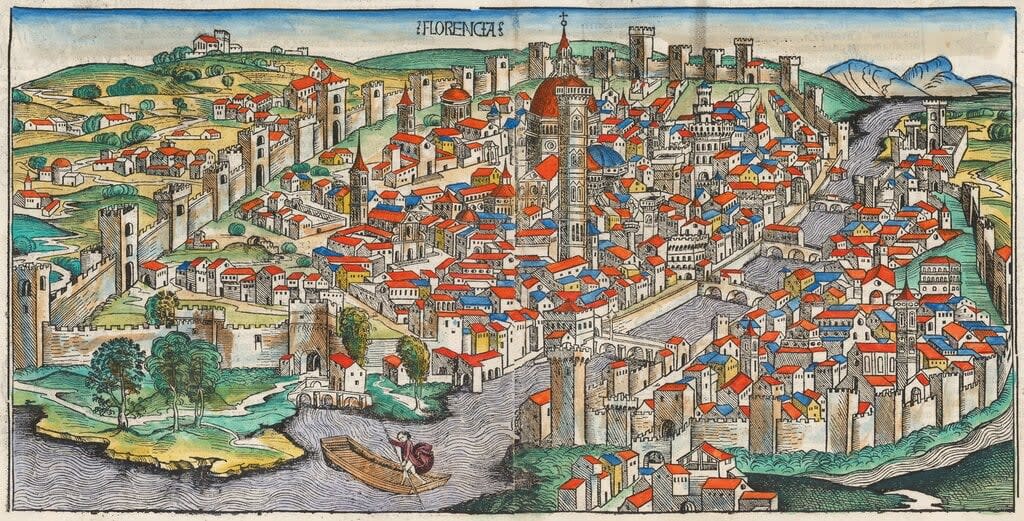
Medieval Europe, spanning roughly from the 5th to the 15th century, was a dynamic and complex period characterized by significant political, social, and cultural developments. This era witnessed the rise and fall of powerful kingdoms, the spread of Christianity, the construction of magnificent cathedrals, the birth of chivalry, and the flourishing of trade.
The fall of the Western Roman Empire in the 5th century marked the beginning of the medieval era. With the decline of centralized governance, European society transformed into a feudal system. This hierarchical structure was based on the exchange of land for military protection and loyalty, as powerful lords granted smaller parcels of land, known as fiefs, to vassals in exchange for their service and fealty.
One of the defining characteristics of medieval Europe was the dominance of the Catholic Church. Christianity played a central role in the lives of Europeans during this time, shaping their ideologies, beliefs, and practices. Monasteries and abbeys, home to monks and nuns, were centers of religious learning and scholarship, while cathedrals, such as the Notre-Dame of Paris or the Canterbury Cathedral, displayed grand architecture that still leaves us in awe today.
In the late 11th century, the crusades marked a significant event in medieval history. These military expeditions were Christian attempts to reclaim the Holy Land from Muslim control. The crusaders journeyed through Europe, Asia Minor, and the Middle East, leaving a lasting impact on European culture, trade, and politics. The crusades not only fostered cultural exchange between Europe and the Middle East but also fueled the desire for exotic goods, such as spices and silks, leading to an expansion of trade.
Trade and commerce flourished during the medieval period, with the establishment of trade routes and the growth of towns and cities. Key trade cities, such as Venice, Genoa, and Constantinople, became vital hubs for the exchange of goods between Europe, Asia, and Africa. The emergence of guilds, associations of artisans and merchants, further facilitated economic growth, ensuring quality control and fair prices.
Another notable aspect of medieval Europe was the system of chivalry. Knights, heavily armed warriors on horseback, played a central role in feudal society. They were bound by a code of conduct that emphasized bravery, honor, and loyalty. These noble warriors engaged in jousting tournaments and participated in military campaigns, epitomizing the ideals of chivalry found in literature, such as the tales of King Arthur and the Knights of the Round Table.
The development of castles and fortifications was also a significant feature of the medieval period. These fortified structures served as a symbol of power and authority for lords and kings and provided protection against enemies. The architectural marvels of the time, such as the Tower of London and the Castle of Chillon, still stand as testimony to the defensive prowess of medieval builders.
The medieval era also witnessed significant advancements in the arts and sciences. Gothic architecture, characterized by pointed arches, ribbed vaults, and large stained-glass windows, reached its pinnacle during this time. The works of renowned artists, such as Giotto di Bondone and Jan van Eyck, showcased the emergence of realistic portrayals in painting. In addition, the revival of learning, known as the Renaissance of the 12th century, resulted in the establishment of universities that served as centers of intellectual pursuit and scholarship.
Spanning several centuries, the history of medieval Europe is a rich tapestry woven with stories of honor, religious fervor, political intrigue, and artistic achievements. It laid the groundwork for the Renaissance and the subsequent transformation of European society. The legacy of this era can still be witnessed in our modern world, from the presence of castles dotting the landscapes to the remnants of Gothic architecture and the continued influence of Christianity.
In conclusion, medieval Europe was a time of great change and cultural richness. From the rise of feudalism and the influence of the Catholic Church to the flourishing of trade and the emergence of chivalry, this era shaped the foundations of European civilization. It remains a captivating and influential period, reminding us of the complexities and enduring significance of our historical origins.
About the Creator
Dua Nouman
I write what I can't say out loud-raw thoughts, untold stories and emotions that demand to be felt. If you're here, you're meant to read something real.
Keep reading
More stories from Dua Nouman and writers in History and other communities.
A Journey Through Earth's Ancient Past
The Earth's prehistoric era, a time long before mankind, is a fascinating subject that captures our imagination and sparks curiosity about the world that existed millions of years ago. Central to this era are the dinosaurs, creatures that once roamed the land, ruled the skies, and dominated the seas.
By Dua Nouman3 years ago in History
The Hidden City Beneath the Desert: A Discovery That Shocked the World
For centuries, vast deserts around the world have been seen as empty and lifeless landscapes. Endless waves of sand stretch for miles, hiding whatever once existed beneath them. But sometimes, the desert keeps secrets—secrets so extraordinary that when they are finally discovered, they can change history itself.
By Irshad Abbasi about 6 hours ago in History
Becca
"Everything is so... flat." Denille said stupidly as she looked around her new neighborhood. She looked around at the muted desert where even the smallest sign of life seemed to have given up. The plant life was shrubs that were half cooked by the heat and where there should have been a lawn, a mess of white rocks laid glistening in the sun. Even the sky looked stretched thin, like the sun had ironed it smooth. She’d moved from Riverside, where at least there were hills, but here in Barstow, everything felt baked and brittle.
By Sara Wilson8 days ago in Fiction


Comments (1)
Splendid and outstanding story, Medieval Europe is an Interesting period in History!!!♥️♥️💕