
The Hidden Indirect War Explained
How Pakistan and Israel Clash Without Direct Fighting


When people hear the word "war," they often think of two countries fighting each other on a battlefield. But not all wars are fought with soldiers and tanks. Sometimes, countries fight indirectly, using influence, alliances, or other nations as middle players. One example that is often discussed is the indirect conflict between Pakistan and Israel.
Even though Pakistan and Israel have never officially fought a direct war, their relations have always been tense. This tension comes from history, religion, politics, and alliances. Let’s explore this complex relationship in simple words so that anyone can understand.
Why Pakistan and Israel Do Not Get Along
Religious and Political Reasons
Pakistan is an Islamic country and strongly supports the rights of Palestinians. Since the creation of Israel in 1948, Pakistan has rejected recognizing it as a legitimate state. Pakistan believes that the land of Palestine belongs to Palestinians, and Israel’s occupation is unfair.
No Diplomatic Relations
Unlike many other countries, Pakistan has never established formal diplomatic ties with Israel. This means no embassies, no official trade, and no government-to-government relations.
Symbolic Opposition
Pakistan also uses its international influence to support Palestine in global organizations like the United Nations. On the other hand, Israel is often supported by Western powers, especially the United States. This creates an indirect clash of interests.
What is an Indirect War?
An indirect war means two countries do not fight each other face to face. Instead, they support opposite sides in global conflicts, use intelligence networks, or form alliances that weaken the other side. It’s like a chess game where both players try to block each other without directly attacking.
Pakistan vs Israel: Signs of Indirect War
Support in Middle East Conflicts
Pakistan has historically supported Arab countries during wars against Israel, such as the Arab-Israel wars. Even though Pakistani soldiers were not directly fighting in large numbers, Pakistan gave training, weapons, and sometimes military experts to Arab allies.
Nuclear Concerns
Pakistan is the only Muslim-majority country with nuclear weapons. Israel, which also has advanced nuclear capabilities, views this as a potential threat. Both countries keep a close eye on each other’s military developments.
Intelligence Agencies
Israel’s intelligence agency Mossad and Pakistan’s ISI (Inter-Services Intelligence) are believed to watch each other closely. Some reports suggest that Mossad worked with other countries to keep an eye on Pakistan’s nuclear program.
Alliances with Other Nations
Pakistan is close to countries like Saudi Arabia, Turkey, and Iran (at different times), who often oppose Israeli policies.
Israel, on the other hand, enjoys strong ties with the United States and India. India is Pakistan’s main rival, so Israel’s friendship with India indirectly adds tension.
Why It Matters Today
The indirect war between Pakistan and Israel is not about open battles. It is about influence, security, and global politics. In today’s world, information technology, cyber warfare, and global alliances matter as much as armies. Both countries continue to watch each other and prepare for possibilities.
Is There a Chance for Peace?
Many experts believe that peace is possible if both sides find common ground. Some Pakistani leaders have hinted at improving relations with Israel, especially for trade and technology. However, the issue of Palestine still remains the biggest roadblock.
Conclusion
The story of Pakistan vs Israel is not a direct war story. It is a tale of indirect conflict, shaped by religion, politics, and alliances. While the two nations may never have fought face-to-face, their rivalry continues on global platforms, in intelligence networks, and through alliances with other countries.
About the Creator
Keep reading
More stories from Muhammad Farhad Khan and writers in History and other communities.
Bunier Flood Disaster 2025: Dark Cloud Burst Triggers Deadly Flash Floods in Pakistan
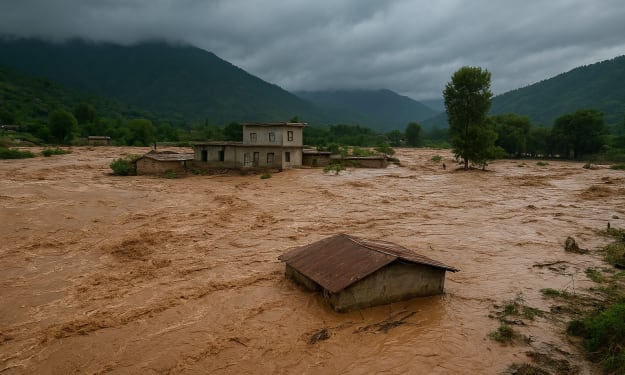
Introduction In the beautiful but underdeveloped district of Buner, Khyber Pakhtunkhwa, a sudden natural disaster has changed countless lives. A rare weather event known as a Dark Cloud Burst caused heavy rainfall in a very short time, triggering flash floods that swept through villages, destroyed homes, and washed away livelihoods. This heartbreaking event has once again highlighted how unprepared we are to deal with such natural calamities.
By Muhammad Farhad Khan6 months ago in History
Sultan Mehmed II: The Conquest of Constantinople That Europe Never Forgot
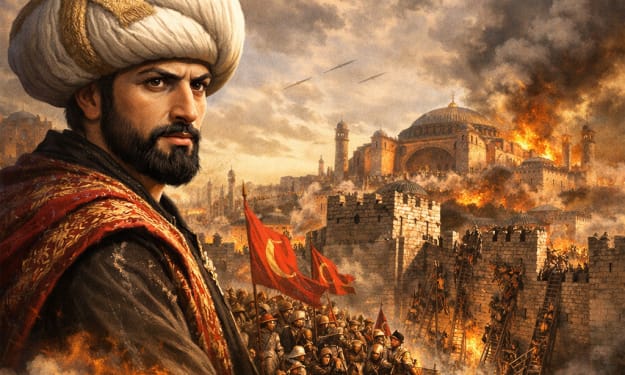
In the spring of 1453, one of the most dramatic moments in world history unfolded when Sultan Mehmed II captured the great city of Constantinople. This event did not simply mark the fall of a city; it ended the thousand-year-old Byzantine Empire and transformed the balance of power between Europe and the Muslim world. Even centuries later, the conquest remains one of the most significant turning points in global history.
By Irshad Abbasi about 10 hours ago in History
Review of 'Man on the Run'
My wife and I saw Man on the Run, a nearly 2-hour documentary on Amazon Prime, about Wings, Paul McCartney's group that flew around the world from shortly after The Beatles broke up in early 1970 to shortly after John Lennon was murdered at the end of 1980, making a Beatles reunion forever impossible.
By Paul Levinson5 days ago in Beat


Comments
There are no comments for this story
Be the first to respond and start the conversation.