
The Great Pyramid of Giza Has MORE Than Four Sides: The Hidden Truth Behind Egypt's Iconic Wonder
Unveiling the Hidden Geometry of Egypt’s Oldest Wonder and the Astonishing Precision of Ancient Engineering

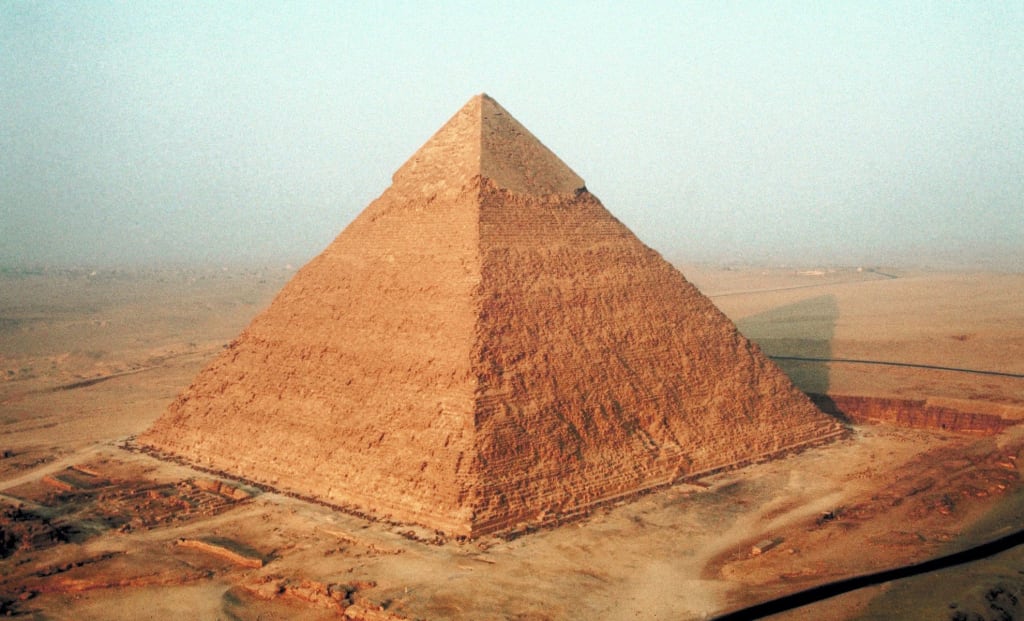
The Great Pyramid of Giza Has MORE Than Four Sides: The Hidden Truth Behind Egypt's Iconic Wonder
The Great Pyramid of Giza, also known as the Pyramid of Khufu or Cheops, stands as one of the most remarkable architectural feats in human history. Constructed around 2560 BCE during Egypt’s Fourth Dynasty, this ancient wonder has intrigued scientists, historians, and travelers for centuries. While most people perceive the pyramid as a four-sided structure with a square base and four triangular faces, the truth is far more fascinating: The Great Pyramid of Giza actually has eight sides.
Yes, you read that correctly. The Great Pyramid has eight sides, not four — a little-known detail that makes this ancient monument even more impressive. This unique feature is not immediately visible to the naked eye or in standard photographs. So what exactly does this mean, and how was this mystery uncovered?
The Discovery of the Eighth Side
The discovery that the Great Pyramid has eight sides was first recorded in the early 20th century. During a flight over the Giza Plateau in 1940, British Air Force pilot P. Groves noticed a curious indentation running down the middle of each face of the pyramid. These indentations divided each of the pyramid’s four faces into two distinct, slightly concave sections — revealing that each face is not flat, but subtly split, forming eight sides in total.
This subtle concavity is not easily noticeable from the ground. It becomes visible only at certain times of the day, particularly during the equinoxes when the sun casts shadows in a way that highlights the indentation. In satellite images and aerial photography taken during specific lighting conditions, the eight-sided structure becomes evident.
Intentional Design or Structural Deformation?
The next question that arises is whether this eight-sided design was intentional or simply the result of erosion and centuries of weathering. Many experts believe the concavity was deliberately engineered.
Egyptologists and architects argue that the indentations were likely intentional for several reasons:
1. Precision in Construction: The Great Pyramid is known for its extraordinary precision. The alignment of the pyramid with true north is nearly perfect, and the lengths of its sides differ by less than a few centimeters. Such attention to detail suggests that the builders were capable of constructing straight faces if they had intended to. The fact that all four sides exhibit the same slight indentation supports the theory of intentional design.
2. Structural Stability: Some theories suggest that the concavity might have helped enhance the structural integrity of the pyramid. By slightly angling the faces inward, the design may have helped stabilize the large limestone blocks and reduce the risk of collapse over millennia.
3. Symbolic or Astronomical Meaning: Other theories propose that the eight-sided design may have had symbolic or astronomical significance, possibly aligning with solstices, equinoxes, or even representing duality in Egyptian mythology.
Modern-Day Implications
Understanding that the Great Pyramid has eight sides reshapes how we interpret ancient Egyptian engineering and architectural knowledge. It’s a testament to the remarkable precision of ancient builders who, thousands of years ago, achieved something modern architects still find awe-inspiring.
It also invites further questions. If the concavity was intentional, what was the reasoning behind it? Could it have served a function beyond aesthetics or stability? Was it used to mark time or track celestial events? Scholars continue to explore these questions.
A Closer Look for Tourists and Researchers
For tourists visiting the Giza Plateau, the eight-sided nature of the pyramid isn’t typically visible during the day. The best time to observe this unique feature is during the equinoxes (around March 20 and September 22) when the sun casts shadows that emphasize the indentations. Alternatively, high-resolution drone footage or satellite imagery can also reveal the eight sides more clearly.
Modern laser scanning and 3D modeling have further confirmed this concavity. Technologies such as LiDAR (Light Detection and Ranging) allow researchers to study the pyramid’s exact measurements and confirm the slight inward bend of each face.
Conclusion
The Great Pyramid of Giza continues to captivate the world with its mystery and majesty. The revelation that it has eight sides instead of four adds another layer of wonder to its legacy. Whether the concave faces were designed for structural, symbolic, or astronomical reasons remains a subject of scholarly debate. What is clear, however, is that ancient Egyptians possessed a level of architectural sophistication that continues to astonish modern civilization.
Next time you see an image of the Great Pyramid, remember — you might be looking at more than just a four-sided marvel. You're gazing upon an ancient enigma built with an ingenuity that still echoes through the ages.
About the Creator
Adnan Rasheed
Author & Creator | Writing News , Science Fiction, and Worldwide Update| Digital Product Designer | Sharing life-changing strategies for success.
Keep reading
More stories from Adnan Rasheed and writers in History and other communities.
Archaeologists Found a Stunningly Preserved 5,000-Year-Old Mummy in a Garbage Dump
Archaeologists Found a Stunningly Preserved 5,000-Year-Old Mummy in a Garbage Dump In an extraordinary discovery that has stunned the archaeological world, a remarkably well-preserved 5,000-year-old mummy was unearthed—not in the heart of an ancient burial chamber, but in a modern garbage dump. This unexpected find has not only challenged conventional notions of where historical artifacts can be found but also opened new avenues for understanding ancient civilizations and their burial practices.
By Adnan Rasheed9 months ago in History
World War I
The morning fog lay thick over the trenches of northern France, clinging to the earth as if it too feared what was about to happen. Private Thomas Hale pulled his coat tighter around himself, though it did little to stop the cold from seeping into his bones. He had been in the trenches for six months, yet the damp smell of mud, smoke, and fear still felt unfamiliar, like a nightmare he could not wake from.
By Maavia tahir6 days ago in History
Chicago Hospital Held Newborn Baby for 8 Months Over an Unpaid Medical Bill
Debts were handled much differently in the 19th and early 20th century. Back then, people who accrued debt had more to fear than letters and calls from collection agencies the same way we do today, especially if they owed a hospital or doctor money.
By Criminal Matters7 days ago in History



Comments
There are no comments for this story
Be the first to respond and start the conversation.