
The Forgotten Flame
The Ancient Faith That Shaped the World

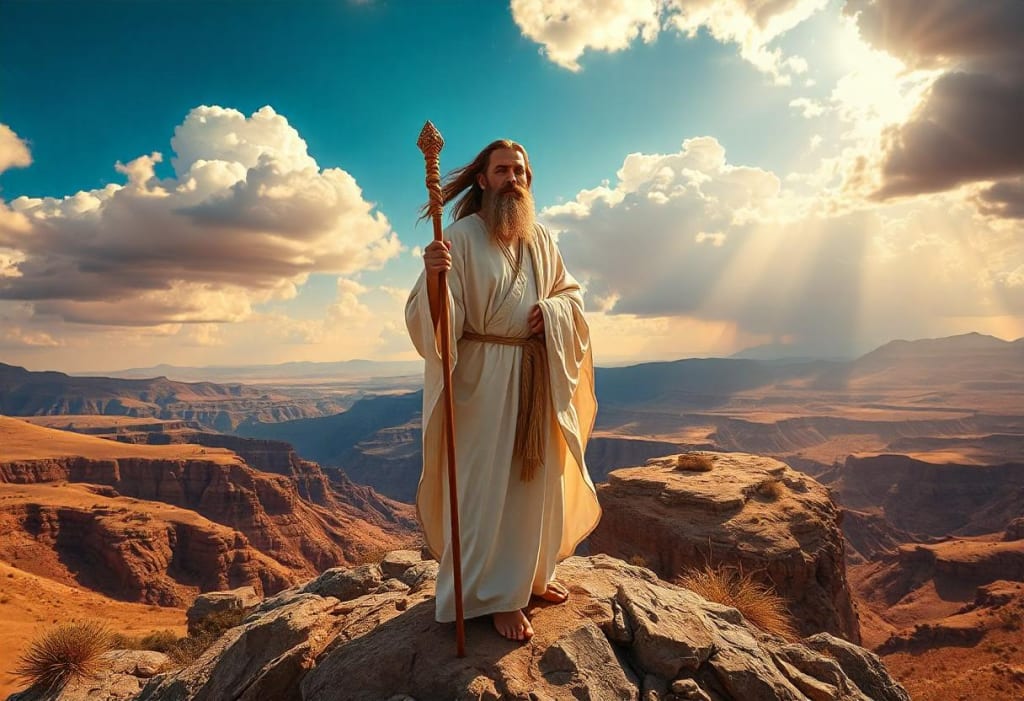
In the windswept deserts and towering mountains of ancient Persia, over 3,500 years ago, a prophet named Zoroaster—known as Zarathustra—delivered a vision that would echo across millennia. His teachings birthed one of the world's oldest religions, Zoroastrianism, a faith whose profound principles of good thoughts, good words, and good deeds would influence not only mighty empires but also the core philosophies of some of today’s largest religions. This is the story of how a single flame, lit in the heart of Persia, illuminated the path of human spirituality.
Zoroastrianism centers on a single Supreme Creator, Ahura Mazda, the embodiment of wisdom and goodness. Opposing Ahura Mazda is Angra Mainyu (or Ahriman), a spirit of chaos and evil. Humanity, caught in this cosmic struggle, is granted the gift of free will—to choose the path of light or succumb to the temptations of darkness. This dichotomy of good versus evil forms the cornerstone of Zoroastrian philosophy and its teachings on ethical living.
The religion’s early roots trace back to Indo-Iranian tribes, whose polytheistic practices merged with the traditions of the Elamites, the region’s earlier inhabitants. This synthesis created a pantheon of gods, including Mithra (justice and cosmic order), Anahita (waters and fertility), and Vayu (wind). But Zoroaster’s revelation radically transformed this worldview, emphasizing monotheism and redefining the divine hierarchy.
Born into a noble family, Zoroaster’s early life prepared him for his destiny as a spiritual leader. Tradition holds that at 30 years old, he experienced a divine vision beside a river, where a radiant being, Vohu Manah, revealed Ahura Mazda’s truth. Zoroaster was tasked with spreading this revelation: the gods worshipped by his contemporaries were not supreme beings but mere manifestations of Ahura Mazda's will. Sacrifices of blood were unnecessary; what mattered were actions of kindness and righteousness.
However, Zoroaster’s teachings were met with fierce resistance. The established priestly class, whose power depended on traditional rituals, viewed him as a threat. Forced to flee his homeland, Zoroaster persevered, gaining converts after a miraculous healing at the court of King Vishtaspa. This marked the beginning of Zoroastrianism’s ascent, eventually becoming the state religion of great Persian empires.
Central to Zoroastrianism is the concept of Asha—truth and order—which stands in opposition to Druj, falsehood and chaos. Followers are encouraged to maintain Asha through ethical living, expressed in the triad of good thoughts, words, and deeds. This cosmic responsibility extends beyond the individual, emphasizing harmony within the family, society, and environment.
Zoroastrian rituals reflect this ethos. Fire, a symbol of purity and the divine, plays a central role in worship. Temples known as Fire Temples house ever-burning flames, representing Ahura Mazda’s light and wisdom. Water, another sacred element, symbolizes life and purity, further reinforcing the interconnectedness of creation.
Zoroastrianism offers a detailed vision of the afterlife. Upon death, the soul faces judgment at the Chinvat Bridge, where its deeds are weighed. The righteous cross into paradise, while the wicked fall into a dark abyss. Yet, even in its depiction of hell, Zoroastrianism reflects its creator’s benevolence: punishment is not eternal. In the end, a savior, the Saoshyant, will herald a final purification, uniting all souls with Ahura Mazda in eternal bliss.
Though the Arab conquest of Persia in 651 CE led to the decline of Zoroastrianism, its influence endured. Concepts like the duality of good and evil, judgment after death, and the messianic figure found echoes in Christianity, Islam, and Judaism. Today, Zoroastrian communities, though small, continue to honor their ancient traditions, preserving a faith that once guided empires.
The story of Zoroaster and his followers reminds us of humanity’s enduring quest for meaning and moral guidance. In a world often shadowed by division, the Zoroastrian call to live with integrity and kindness resonates as powerfully as ever. The ancient flame lit by Zoroaster still flickers, urging us to choose the path of light.
About the Creator
A História
"Hi. My name is Wellington and I'm a passion for general history. Here, I publish articles on different periods and themes in history, from prehistory to the present day.
Keep reading
More stories from A História and writers in History and other communities.
A World Without Violence
From the dawn of humanity, violence has been a pervasive trait, manifesting in conflicts against other humans and the planet's diverse life forms. The roots of such brutality continue to be a subject of philosophical and scientific debate. But what if the opposite were true? Imagine a world where non-violence isn't merely a philosophy but a daily practice, ingrained as deeply as the air we breathe. Today, we journey back to ancient India, a cradle of wisdom that birthed one of the world's oldest and most profound religions centered on non-violence: Jainism.
By A Históriaabout a year ago in History
The Mysterious Arms Drop: When Weapons Fell from the Sky Over India
In the mid-1990s, one of the most mysterious and controversial arms smuggling operations in South Asia unfolded in dramatic fashion when a large cache of weapons literally fell from the sky in eastern India. The incident involved an aircraft traveling between Karachi and Dhaka, allegations of international intelligence links, and a clandestine mission that continues to raise questions about who was behind it and why.
By Irshad Abbasi about 7 hours ago in History




Comments
There are no comments for this story
Be the first to respond and start the conversation.