
"The Few Who Conquered: History’s Greatest Victory with the Smallest Army"
In the annals of world history, few military campaigns match the audacity and brilliance of Alexander the Great’s conquest of the Persian Empire. With a relatively small army, never numbering more than 50,000 troops, Alexander overcame a superpower that commanded millions. This article explores how strategic mastery, bold leadership, and disciplined troops enabled one of the most significant victories ever recorded—proving that greatness lies not in numbers, but in resolve.

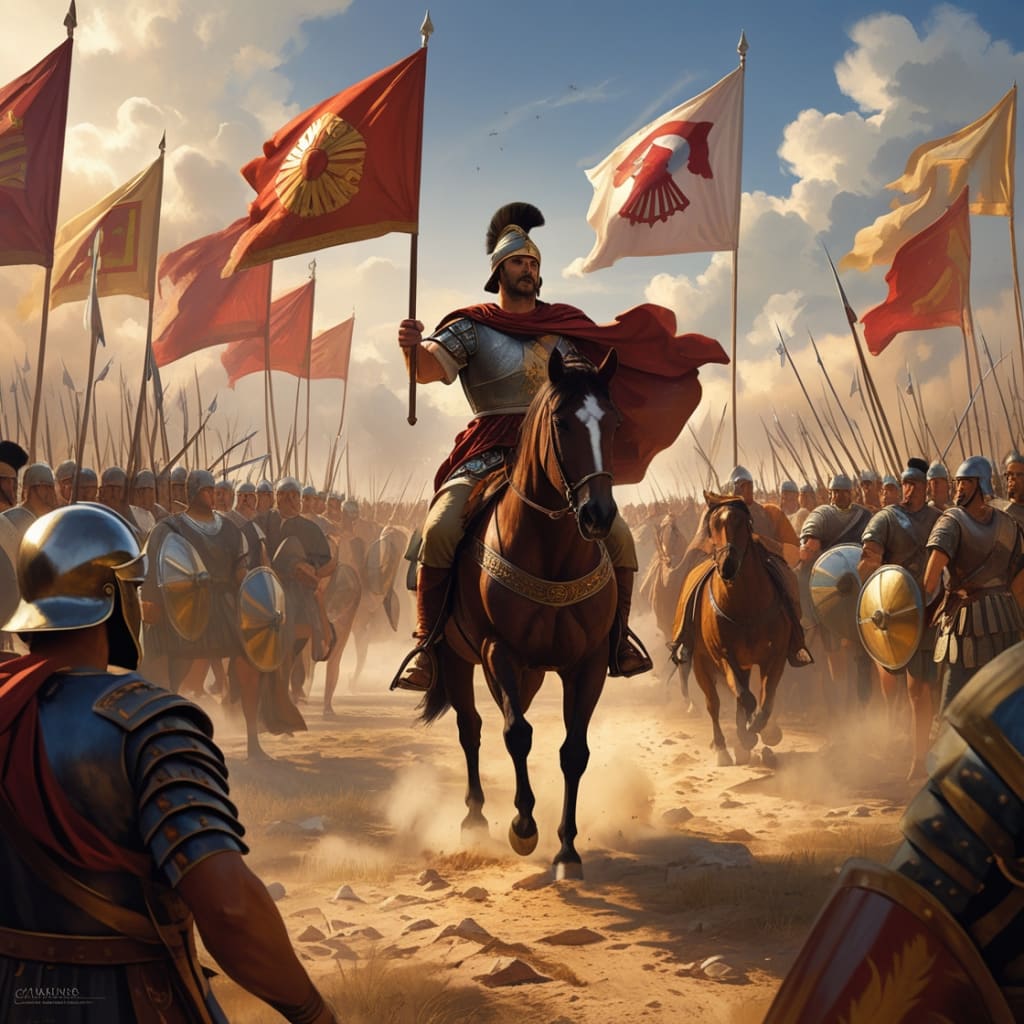
The Ascension of the Macedonian Empire: From Margins to Dominance
The Macedonian Empire, one of the most formidable entities of the ancient era, emerged from the rugged, mountainous landscape of northern Greece to command a significant portion of the known world by the 4th century BCE. While it resided on the outskirts of classical Greek civilization for centuries, the aspirations of two crucial monarchsPhilip II and his progeny, Alexander the Greattransformed Macedonia from a divided kingdom into an empire extending from the Adriatic Sea to the Indus River. This article examines the intricate and impactful ascent of the Macedonian Empire, scrutinizing its political underpinnings, military advancements, and cultural influence.
The Early Kingdom
Macedonia was historically perceived by southern Greek city-states as a semi-barbaric territory, culturally and politically distinct from polities such as Athens and Sparta. The Macedonian aristocracy traced their heritage to the Argead dynasty, believed to descend from Heracles. Their political organization was less sophisticated than the democratic or oligarchic systems of the south, with authority concentrated in the hands of warrior-kings who governed over tribal regions.
In the early 5th century BCE, Macedonia was a minor entity, often ensnared between conflicting Greek states and Persian interests. Nevertheless, its populace was resilient, adept in horseback riding, and proficient in guerrilla tactics. In spite of internal discord and external pressures from neighboring Illyrians, Thracians, and Greeks, the foundations for unity and expansion were being established.
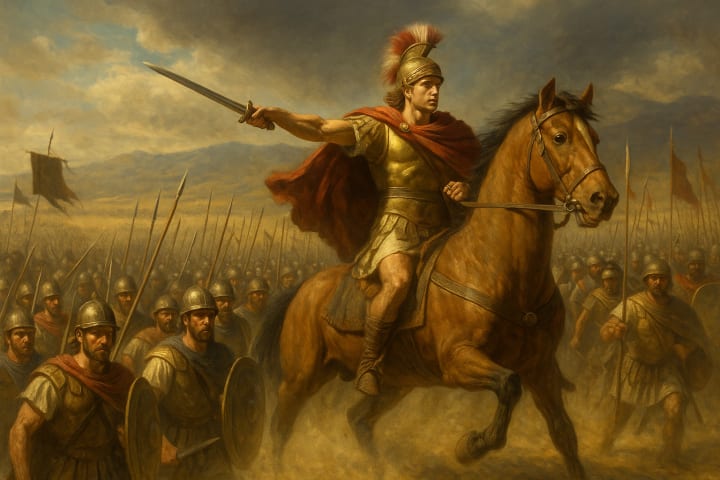
Philip II: Builder of Empire
The genuine rise of Macedonia commenced with the ascendance of Philip II in 359 BCE. A brilliant military tactician and astute negotiator, Philip transformed Macedonia’s fortunes within merely two decades. He began by fortifying his borders and centralizing power domestically. Philip revamped the army, creating the renowned Macedonian phalanx, which featured elongated spears (sarissas) and more compact formations than the conventional Greek hoplite system. This innovation provided his forces a substantial advantage on the battlefield.
Philip also invested in siege technologies, cavalry divisions, and logistical strategies, guaranteeing that Macedonia possessed one of the most modern and effective militaries in the Greek sphere. Diplomatically, he pitted the Greek city-states against each other, intervening where it benefited his interests, employing both marital agreements and military force to enhance Macedonian influence.
By 338 BCE, Philip decisively vanquished a coalition of Greek city-states at the Battle of Chaeronea, cementing Macedonian supremacy over Greece. He established the Corinthian League, with himself as the supreme commander, to unify the Greeks in a campaign against their enduring adversarythe Persian Empire. However, prior to this campaign's initiation, Philip was assassinated in 336 BCE under enigmatic circumstances, bequeathing the throne to his 20-year-old son, Alexander III.
Alexander the Great: Expansion and Conquest
Alexander inherited a formidable kingdom, a disciplined army, and a vision for conquest. He swiftly asserted authority, quelling insurrections in Greece and eliminating threats to the throne. In 334 BCE, he commenced his legendary campaign against Persia.
Alexander’s military brilliance and magnetism allowed him to secure a series of extraordinary victories against significantly larger Persian armies. Notable confrontations included Granicus (334 BCE), Issus (333 BCE), and Gaugamela (331 BCE). Following the conquest of Persepolis, the Persian capital, Alexander adopted the title of Shahanshah (King of Kings), effectively concluding the Achaemenid Empire.
However, Alexander’s aspirations did not end there. He advanced further eastward, traversing the challenging landscape of Central Asia, ultimately arriving in India. At the Battle of the Hydaspes in 326 BCE, he triumphed over King Porus, a formidable local monarch, marking the easternmost extension of the Macedonian Empire.
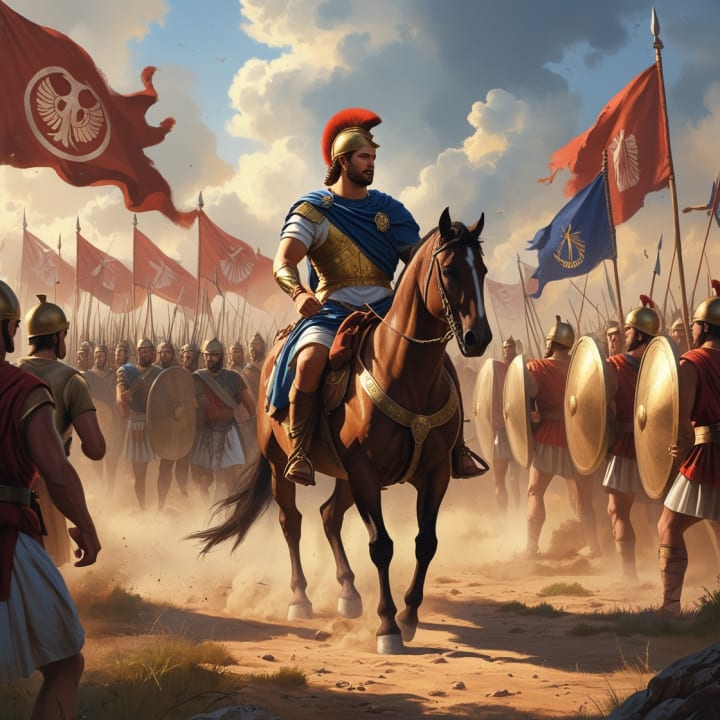
Despite his military achievements, Alexander faced challenges in integrating diverse cultures and governing the extensive territories he had subjugated. His initiatives to amalgamate Greek and Persian traditionssuch as promoting intermarriage and adopting Persian attireincited discontent among his Macedonian commanders. In 323 BCE, Alexander passed away unexpectedly in Babylon, potentially due to fever, poisoning, or overexertion, at the age of only 32.
Legacy and Impact
The Macedonian Empire did not remain unscathed following Alexander’s demise. His commandersreferred to as the Diadochipartitioned the empire into multiple Hellenistic realms, including the Seleucid Empire in Persia, the Ptolemaic Kingdom in Egypt, and the Antigonid dynasty in Macedonia.
Despite the disintegration, Alexander’s conquests produced enduring cultural repercussions. Greek emerged as the lingua franca across a significant portion of the Near East. Cities like Alexandria in Egypt evolved into hubs of learning and culture. The Hellenistic era witnessed a blossoming of science, art, and philosophy, merging Greek and Eastern influences.
Conclusion
The ascent of the Macedonian Empire narrates a tale of evolutionfrom a peripheral kingdom to the center of one of history's most remarkable empires. Under Philip II and Alexander the Great, Macedonia harnessed military innovation, strategic diplomacy, and relentless ambition to transform the ancient world. Although the empire itself was brief, its cultural and political influence resonated through civilizations for centuries to follow.
civilization.
About the Creator
Say the truth
"Say the Truth: Explain Everything in the World" is your trusted source for uncovering facts and exploring the wonders of history, science, technology, and beyond. We simplify complex ideas and reveal truths to inspire curiosity .
Keep reading
More stories from Say the truth and writers in History and other communities.
"From Highlands to Hegemony: The Rise of the Macedonian Empire"
The Emergence of the Macedonian Empire: From Margins to Dominance The Macedonian Empire, one of the most formidable powers of the ancient era, ascended from the rugged, mountainous regions of northern Greece to dominate a significant portion of the known world by the 4th century BCE. Although it existed on the fringes of classical Greek civilization for centuries, the aspirations of two critical monarchsPhilip II and his son, Alexander the Greattransformed Macedonia from a fragmented realm into an empire that extended from the Adriatic Sea to the Indus River. This article examines the intricate and remarkable ascent of the Macedonian Empire, analyzing its political foundations, military advancements, and cultural influence.
By Say the truth 9 months ago in History
World War I
The morning fog lay thick over the trenches of northern France, clinging to the earth as if it too feared what was about to happen. Private Thomas Hale pulled his coat tighter around himself, though it did little to stop the cold from seeping into his bones. He had been in the trenches for six months, yet the damp smell of mud, smoke, and fear still felt unfamiliar, like a nightmare he could not wake from.
By Maavia tahir6 days ago in History
Chicago Hospital Held Newborn Baby for 8 Months Over an Unpaid Medical Bill
Debts were handled much differently in the 19th and early 20th century. Back then, people who accrued debt had more to fear than letters and calls from collection agencies the same way we do today, especially if they owed a hospital or doctor money.
By Criminal Matters6 days ago in History
How to Succeed at the Benson Directory®
Congratulations and welcome to the Benson Directory® employee #22391! As our newest call handler, you will have the privilege of speaking with dozens of unique and interesting people on a daily basis as well as the opportunity to earn bonuses for high performance. Contained within this handbook you will find a set of ease to follow instructions designed to help you settle in to your new role and begin paving the way to success.
By S. A. Crawford2 days ago in Fiction



Comments
There are no comments for this story
Be the first to respond and start the conversation.