
The Evolution of Trains: From Ancient Tracks to Modern High-Speed Rails
The Evolution of Trains: From Ancient Tracks to Modern High-Speed Rails

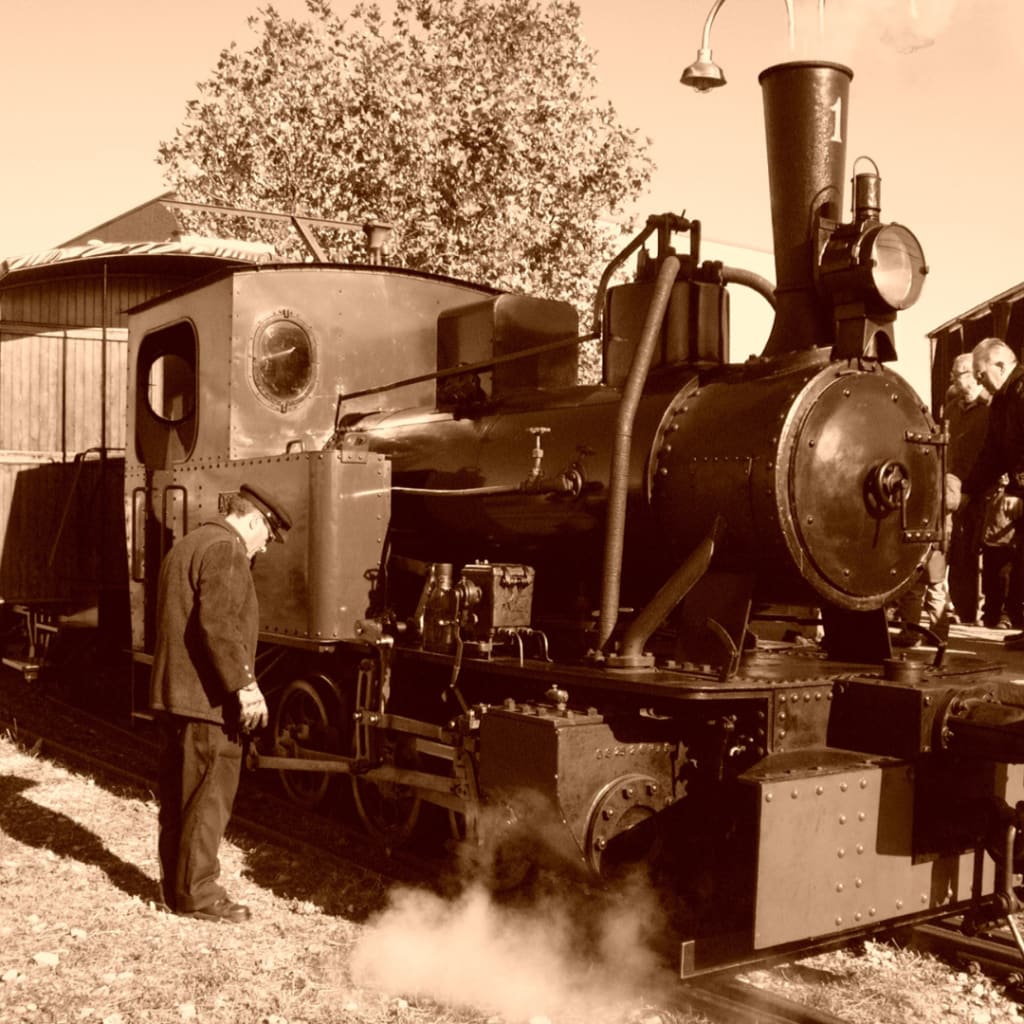
The history of trains spans millennia, evolving from simple wooden tracks to sophisticated high-speed networks that revolutionized global transportation. Ancient civilizations laid the groundwork for rail systems. As early as 600 B.C., the Greeks created grooves in limestone roads to guide wheeled vehicles, facilitating the transport of boats across the Isthmus of Corinth. This primitive form of rail fell into disuse after the Roman conquest in 146 B.C., vanishing for over 1,400 years. Railways reemerged in the 16th century in Germany as "wagonways"—wooden rails that allowed horse-drawn carts to move goods more efficiently than on dirt roads. By the 1700s, these evolved into iron-railed tramways across Europe, still powered by horses.
The Industrial Revolution marked a pivotal shift with the advent of steam power. In 1804, Richard Trevithick built the world's first steam locomotive in Wales, hauling 10 tons of iron and 70 men over nine miles. Though rudimentary, it proved steam's potential. George Stephenson advanced this in 1814 with his locomotive for the Stockton and Darlington Railway. On September 27, 1825, Stephenson's Locomotion No. 1 inaugurated the first public railway, carrying passengers and goods between Stockton and Darlington in England. This event, celebrated with fanfare, sparked "railway fever," leading to rapid expansion. Stephenson's Rocket won the 1829 Rainhill Trials, setting standards for future steam engines with its speed and efficiency.
In the United States, railroads emerged in the 1820s, influenced by British innovations. Colonel John Stevens demonstrated steam locomotion in 1826, and Peter Cooper's Tom Thumb became the first American-built steam locomotive in 1830. Railroads fueled the American Industrial Revolution, connecting cities and enabling massive economic growth. By the late 19th century, the Bessemer process made steel rails affordable, replacing brittle cast-iron and wrought-iron. The "Golden Age" of railroads in the U.S. lasted from the 1880s to the 1920s, when trains were the primary mode of transport before cars and airplanes gained prominence.
Steam locomotives dominated the 19th century but had drawbacks, like smoke pollution in tunnels. Electric alternatives emerged slowly. Robert Davidson's battery-powered locomotive appeared in 1837, but it was Werner von Siemens' 1879 electric passenger train in Berlin that gained traction. Electric trams spread in the 1880s, and by 1890, London's underground adopted electricity. In the U.S., the Baltimore and Ohio Railroad electrified lines in 1895. Diesel engines entered in the 1930s, offering cleaner, more efficient power, gradually phasing out steam by the 1980s.
The 20th century brought innovation and challenges. World Wars highlighted railways' strategic role: in WWI, they transported troops and supplies; in WWII, they evacuated children and moved essential goods despite bombings. Post-war, Britain's railways were nationalized in 1948 under British Railways, aiming for modernization. The 1950s saw diesel and electric transitions, but the 1963 Beeching Report led to closures of over 2,000 stations to cut costs. High-speed rail debuted in 1964 with Japan's Shinkansen, reaching over 130 mph. Europe followed, with France's TGV and Britain's InterCity 125 in the 1970s.
Social and cultural impacts were profound. Railways standardized time (Greenwich Mean Time in 1847), boosted tourism (e.g., Blackpool holidays in the 1860s), and enabled mail-order shopping. They influenced art, like J.M.W. Turner's 1844 painting, and literature, such as Rev. W. Awdry's Thomas the Tank Engine in 1945. Safety improved with inventions like the shunter's pole in 1886 and signaling upgrades after accidents. Women entered the workforce, with Karen Harrison becoming one of Britain's first female drivers in 1979. Preservation movements in the 1970s saved heritage lines, while events like the Stockton and Darlington's centenary in 1925 and 150th in 1975 celebrated milestones.
Today, trains emphasize speed and sustainability. Maglev technology, tested in the 1970s, enables speeds over 300 mph. The Channel Tunnel opened in 1994, linking Britain and France. HS2 construction began in 2020 for greener, faster travel. The Elizabeth Line debuted in 2022, enhancing London's connectivity. Amid climate concerns, railways aim for net-zero emissions by 2050, with innovations like vegetable oil-powered trains in 2023. Privatization in 1994 and planned renationalization in 2024 reflect ongoing reforms.
Trains have shaped civilizations, economies, and societies, from ancient grooves to hyperloops projected at 700 mph. As we mark 200 years since 1825, the railway's legacy endures, promising a simpler, greener future.
References
Bellis, Mary. "The History of Railroad Technology." ThoughtCo, May 13, 2025, https://www.thoughtco.com/history-of-railroad-4059935.
Postlethwait, Hannah. "Trains: A History." InTrans, August 16, 2016, https://www.intrans.iastate.edu/news/trains-a-history/.
"History Timeline." Railway 200, accessed August 27, 2025, https://railway200.co.uk/timeline/.
About the Creator
Keep reading
More stories from jahidul Islam Sifat and writers in History and other communities.
Napoleon Bonaparte: A Biography
Napoleon Bonaparte (1769–1821), a Corsican-born military genius and statesman, reshaped Europe through his audacious campaigns and revolutionary reforms. His life, marked by meteoric rise, unparalleled ambition, and eventual exile, remains one of history’s most compelling narratives. This biography explores his early years, rise to power, military triumphs, domestic achievements, and downfall, drawing on historical sources to provide a balanced perspective.
By jahidul Islam Sifat7 months ago in History
The Rise and Fall of Nicolae Ceaușescu
Nicolae Ceaușescu’s rise to power was initially marked by promise, even optimism. Born in 1918 into a poor peasant family, he entered politics early, shaped by the ideological rigidity of interwar and wartime communism. When he became General Secretary of the Romanian Communist Party in 1965, following the death of Gheorghe Gheorghiu-Dej, many Romanians saw in him a younger leader, one who might soften the harsh Stalinist legacy that had defined the previous decades. For a society weary of repression and deprivation, Ceaușescu appeared to embody the possibility of cautious change.
By Pure childabout 20 hours ago in History
A woman from a vanished female dynasty was discovered buried with 270,000 beads.
In a Copper Age tomb close to Seville, Spain, the Montelirio bead assemblage contains over 270,000 beads that identify the ladies buried there as elites. The discovery is the biggest collection of beads ever
By Francis Dami3 days ago in History

Comments
There are no comments for this story
Be the first to respond and start the conversation.