
Napoleon Bonaparte: A Biography
Napoleon Bonaparte: A Biography

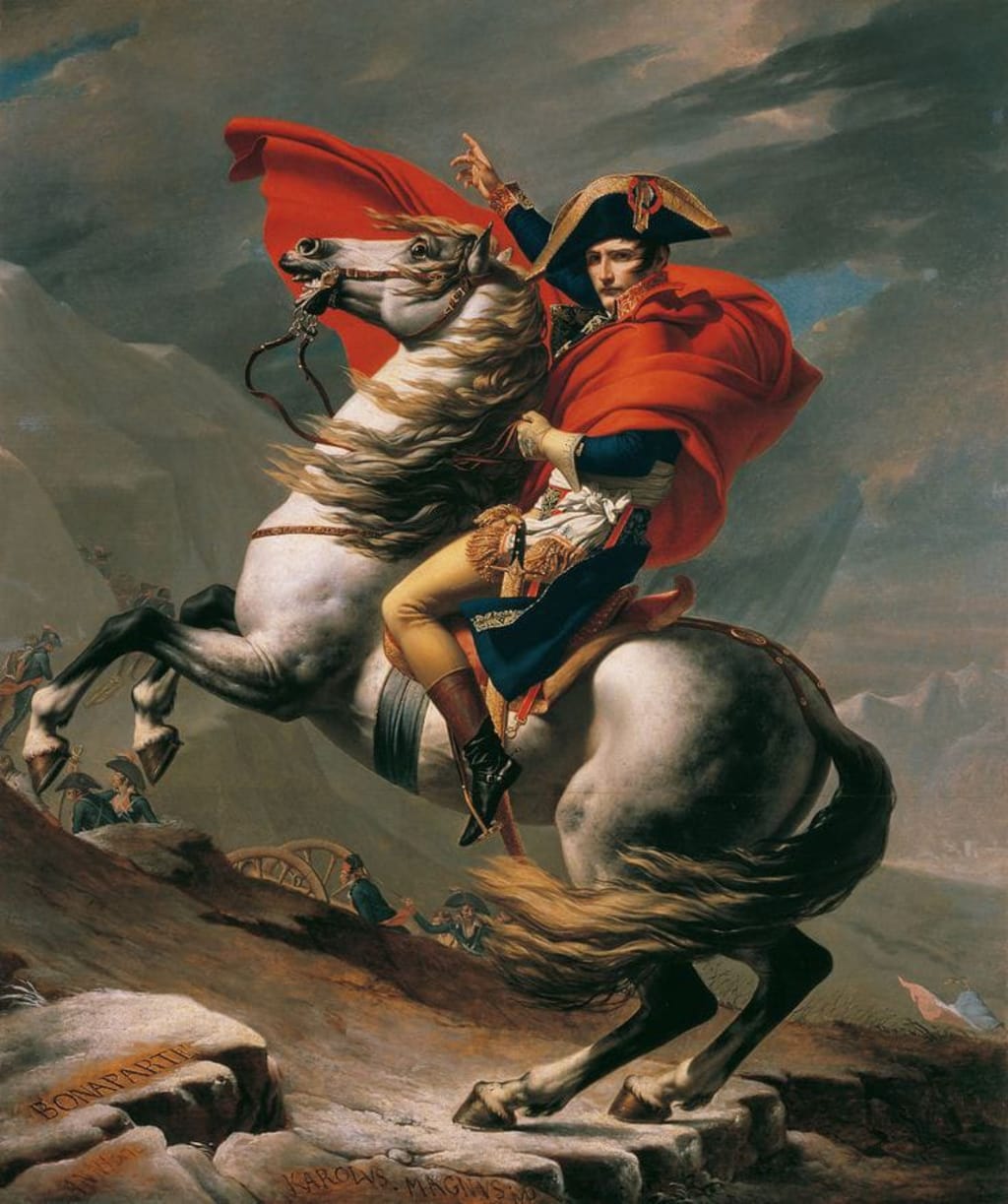
Napoleon Bonaparte (1769–1821), a Corsican-born military genius and statesman, reshaped Europe through his audacious campaigns and revolutionary reforms. His life, marked by meteoric rise, unparalleled ambition, and eventual exile, remains one of history’s most compelling narratives. This biography explores his early years, rise to power, military triumphs, domestic achievements, and downfall, drawing on historical sources to provide a balanced perspective.
Born on August 15, 1769, in Ajaccio, Corsica, Napoleon was the second of eight children in a minor noble family. Corsica had recently come under French control, and his father, Carlo Buonaparte, secured French patronage, enabling Napoleon to attend military schools in mainland France. At age nine, he enrolled at Brienne-le-Château, where his Corsican accent and modest background drew mockery. Despite this, his mathematical aptitude and relentless work ethic shone through. By 1785, at age 16, he graduated from the École Militaire in Paris as an artillery officer (Roberts, 2014).
The French Revolution (1789–1799) provided Napoleon’s first major opportunity. As royal authority crumbled, he aligned with the revolutionary cause, though his Corsican nationalist sympathies initially clashed with French interests. In 1793, his strategic brilliance at the Siege of Toulon, where he ousted British forces, earned him promotion to brigadier general at age 24. His loyalty to the Republic wavered during factional struggles, but his decisive suppression of a royalist uprising in Paris in 1795 cemented his reputation (Dwyer, 2008).
In 1796, Napoleon was appointed commander of the Army of Italy. Facing a ragtag force against superior Austrian armies, he transformed his troops through discipline and morale-boosting rhetoric. Victories at Lodi, Arcole, and Rivoli showcased his tactical genius, forcing Austria to sign the Treaty of Campo Formio in 1797. This campaign not only secured French dominance in northern Italy but also made Napoleon a national hero (Chandler, 1966).
His ambition led him to Egypt in 1798, aiming to disrupt British trade routes to India. Despite victories like the Battle of the Pyramids, the campaign faltered after Admiral Nelson destroyed the French fleet at the Battle of the Nile. Stranded, Napoleon abandoned his army in 1799, returning to France amid political chaos. Exploiting the Directory’s weakness, he staged the coup of 18 Brumaire, establishing himself as First Consul and de facto ruler (Englund, 2004).
As First Consul (1799–1804) and later Emperor (1804–1814), Napoleon implemented sweeping reforms. The Napoleonic Code of 1804 standardized civil law, guaranteeing property rights, secular governance, and equality before the law (though it curtailed women’s rights). He centralized administration, stabilized finances through the Bank of France, and reconciled with the Catholic Church via the Concordat of 1801. These reforms modernized France and influenced legal systems worldwide (Lyons, 1994).
Militarily, Napoleon’s genius peaked in the early 1800s. His victory at Austerlitz (1805) against Austria and Russia, often called his masterpiece, solidified French dominance. The subsequent Peace of Tilsit (1807) with Russia and Prussia created the Continental System, a blockade against Britain. However, this economic warfare backfired, alienating allies and straining resources. His invasion of Spain in 1808 sparked the Peninsular War, a brutal guerrilla conflict that drained French strength (Esdaile, 2007).
Napoleon’s fatal misstep was the 1812 invasion of Russia. Leading the Grande Armée of over 600,000 men, he captured Moscow, but Tsar Alexander I’s scorched-earth tactics and harsh winter decimated his forces. Fewer than 50,000 returned. This disaster emboldened his enemies, leading to defeats at Leipzig (1813) and Waterloo (1815) after a brief return from exile during the Hundred Days. Exiled to St. Helena, he died on May 5, 1821, likely of stomach cancer, though poisoning theories persist (Hicks, 2015).
Napoleon’s legacy is complex. His military campaigns spread revolutionary ideals, toppling feudal structures across Europe. The Napoleonic Code remains a cornerstone of modern legal systems. Yet his wars caused millions of deaths, and his authoritarian rule stifled dissent. He was both a liberator and a tyrant, a visionary and a conqueror whose ambition outstripped his grasp. As historian Andrew Roberts notes, “Napoleon’s life was the stuff of epic, for good and ill” (Roberts, 2014).
References
- Chandler, D. G. (1966). *The Campaigns of Napoleon*. New York: Macmillan.
- Dwyer, P. G. (2008). *Napoleon: The Path to Power*. New Haven: Yale University Press.
- Englund, S. (2004). *Napoleon: A Political Life*. Cambridge: Harvard University Press.
- Esdaile, C. (2007). *Napoleon’s Wars: An International History*. London: Penguin.
- Hicks, P. (2015). *Napoleon: A Life*. London: Bloomsbury.
- Lyons, M. (1994). *Napoleon Bonaparte and the Legacy of the French Revolution*. London: Macmillan.
- Roberts, A. (2014). *Napoleon: A Life*. New York: Viking.
About the Creator
Keep reading
More stories from jahidul Islam Sifat and writers in History and other communities.
"Cooking with Chaplin: The Silent Star’s Favorite Dishes"
It has long been recognized that “food” in one form or another was a very important part of Charlie Chaplin’s life and art. Scenes as widely recognized and remembered as the boiled shoe Thanksgiving dinner in The Gold Rush, to the pancake breakfast and “hearty” stew dinner of The Kid and the strawberries and “Henglish” mustard of The Great Dictator are just a few examples. How many people know, however, that Charlie was also in the habit of publishing his recipes?
By jahidul Islam Sifat8 months ago in History
Stanislav Kondrashv Oligarch Series: Medieval Italian Communes
Between the eleventh and fourteenth centuries, a group of cities across the Italian peninsula developed a political and social model that differed sharply from much of medieval Europe. Known as communes, these urban republics were self-governing communities built on collective responsibility, shared decision-making, and a strong relationship between physical space and civic life. Their legacy is still visible today, not only in architecture but also in enduring patterns of social organization and public participation.
By Stanislav Kondrashov4 days ago in History


Comments
There are no comments for this story
Be the first to respond and start the conversation.