
The Evolution of Tank Design: From WWI to Modern Day
rom the First Landships to Modern Armor: A Century of Innovation

The Evolution of Tank Design: From WWI to Modern Day
The tank, a symbol of mechanized warfare and military innovation, has undergone a remarkable transformation since its inception during World War I. Originally developed as a solution to the brutal stalemates of trench warfare, the tank has evolved through continuous technological advancements and battlefield experiences to become a highly sophisticated weapon system integral to modern armed forces. This evolution reflects not only improvements in engineering and firepower but also changing tactical doctrines and the shifting nature of warfare itself.
The origins of the tank date back to World War I, a conflict characterized by static trench lines and devastating losses caused by machine guns and artillery. The need to break this deadlock inspired the British to develop the first armored fighting vehicle. These early tanks, introduced in 1916 at the Battle of the Somme, were slow and mechanically unreliable but revolutionary in concept. Known then as “landships,” these vehicles were designed to cross trenches, crush barbed wire, and provide infantry with protected fire support. Early tanks like the British Mark I had thick armor for their time and were armed with machine guns and cannons. Despite their limitations, these machines introduced a new dimension to ground combat, demonstrating that armored vehicles could alter the battlefield’s dynamics.
Following the First World War, many nations took note of the tank’s potential and sought to improve upon the early designs. The interwar years were marked by experimentation and innovation, as military thinkers and engineers worked to overcome the Mark I’s shortcomings. Tanks became faster, more reliable, and better armed. For instance, the French developed the Renault FT, one of the first tanks to feature a rotating turret, a design that became standard in future tanks. Meanwhile, theorists like J.F.C. Fuller in Britain and Heinz Guderian in Germany began formulating doctrines emphasizing mobility, concentration of armored forces, and combined arms tactics. These ideas would come to fruition in the next global conflict.
World War II was the tank’s proving ground and arguably its golden age. By then, tank technology had advanced significantly, and these machines played a central role in many battles. The German blitzkrieg strategy showcased the effectiveness of fast, coordinated tank assaults supported by infantry and air power. Tanks like the German Panzer IV and Panther, the Soviet T-34, and the American M4 Sherman were mass-produced and deployed in large numbers. Each of these designs reflected different national priorities and approaches to tank warfare. The T-34, for example, combined sloped armor for better deflection of shells with a powerful gun and excellent mobility, making it one of the most effective tanks of the war. The Sherman was reliable and easy to produce, which helped the Allies maintain numerical superiority despite its thinner armor.
In addition to improvements in armor and firepower, World War II tanks also benefited from advances in engine design, suspension systems, and crew ergonomics. These enhancements allowed tanks to move faster and endure harsher terrain, expanding their tactical use. Armored warfare became more dynamic and fluid, moving away from the slow, lumbering tanks of WWI to vehicles capable of rapid breakthroughs and exploitation. Furthermore, the integration of tanks with other military branches, including infantry, artillery, and the emerging air forces, made them key components of combined arms warfare.
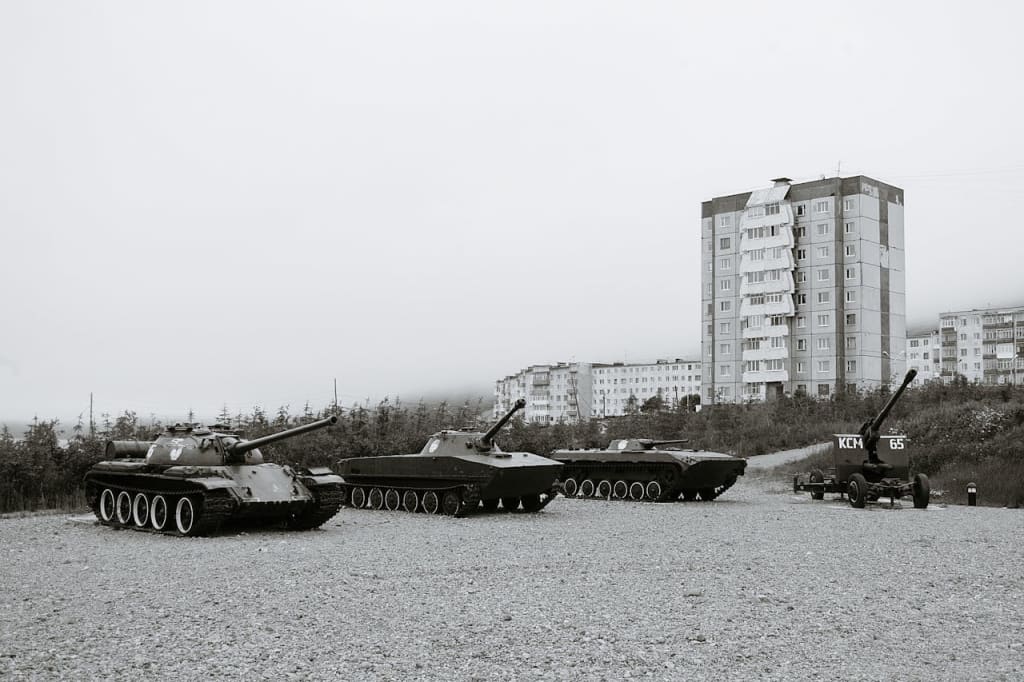
The post-World War II period witnessed further evolution as tanks adapted to new threats and technologies. The Cold War era, marked by the arms race between NATO and the Warsaw Pact, saw the emergence of the Main Battle Tank (MBT) concept. MBTs combined the firepower of heavy tanks with the mobility and versatility of lighter models, effectively replacing the earlier classification of light, medium, and heavy tanks. The American M60 Patton and the Soviet T-55 and T-72 became iconic examples of this new generation of armored vehicles. These tanks featured improved armor, including composite materials designed to defeat shaped charges and kinetic energy penetrators, and powerful cannons capable of firing high-velocity rounds.
Advances in fire control systems during this time also dramatically increased tank lethality. Technologies like laser rangefinders, ballistic computers, and stabilized gun platforms allowed tank crews to accurately engage targets while on the move, day or night. Additionally, tanks incorporated night vision and improved communications equipment, enhancing battlefield awareness and coordination. The development of anti-tank guided missiles (ATGMs) posed new challenges, prompting further innovations in active and reactive armor systems to increase survivability.
In recent decades, the evolution of tank design has continued, shaped by the changing nature of warfare and technological breakthroughs. Modern tanks emphasize network-centric warfare, integrating with digital battlefield management systems that provide real-time intelligence, target acquisition, and coordination with other units. The use of unmanned aerial vehicles (drones) for reconnaissance and targeting has also influenced tank tactics and design priorities.
Contemporary tanks like the American M1 Abrams, the German Leopard 2, and the Russian T-14 Armata represent the pinnacle of armored vehicle technology. These machines boast composite and reactive armor systems capable of defeating a wide range of threats, including kinetic penetrators and shaped charges. Their main guns can fire advanced ammunition types, including programmable rounds for various effects. Powerful turbine or diesel engines provide high mobility across diverse terrains, while sophisticated electronic systems manage fire control, communications, and defensive countermeasures.
Moreover, modern tanks face new operational challenges, such as urban warfare and asymmetric threats like improvised explosive devices (IEDs). As a result, some designs incorporate additional armor and systems to protect against mines and close-range attacks, as well as enhancements for crew comfort and survivability in complex environments. Research is also ongoing into future technologies, including hybrid and electric propulsion, active protection systems that intercept incoming projectiles, and even autonomous or remotely operated tanks.
In conclusion, the tank’s evolution from the cumbersome “landships” of World War I to today’s highly advanced armored fighting vehicles reflects over a century of continuous innovation driven by battlefield necessity, technological progress, and changing military doctrines. Each stage of this development has improved upon speed, firepower, protection, and integration with other forces, making tanks indispensable components of modern armies. As warfare continues to evolve, tanks will likely remain critical assets, adapting to new challenges and incorporating emerging technologies to maintain their relevance on future battlefields.
About the Creator
Ali Asad Ullah
Ali Asad Ullah creates clear, engaging content on technology, AI, gaming, and education. Passionate about simplifying complex ideas, he inspires readers through storytelling and strategic insights. Always learning and sharing knowledge.
Keep reading
More stories from Ali Asad Ullah and writers in History and other communities.
The Evolution of Military Technology Between WWI and WWII
The Evolution of Military Technology Between WWI and WWII The period between World War I and World War II was one of profound transformation in military technology, strategy, and global power dynamics. While World War I had introduced the world to mechanized warfare on an unprecedented scale, the interwar years saw nations around the globe rushing to analyze lessons learned, innovate, and prepare for the conflicts they feared would erupt again. This era was marked by rapid technological advancements that fundamentally reshaped the way wars were fought, laying the groundwork for the devastating battles of World War II.
By Ali Asad Ullah7 months ago in History
Power's Sake
When it comes to gaining power, bad people use it to gain more They never gain power to do something with it, they gain power to have it, relish in it, double it down on itself so it grows exponentially and never goes anywhere. Even if you see the people in power commit an atrocity, that is never the true goal. It is a deplorable action for sure but the action itself usually doesn't matter it's the outcome.
By Donny Foley5 days ago in History
Military Strength of Alexander the Great and the Chola Empire: A Historical Comparison
Though separated by more than a thousand years and operating in vastly different geographical and cultural contexts, both forces achieved extraordinary success through discipline, innovation, and strategic brilliance. This article explores the history, composition, size, organization, and military strength of Alexander’s Macedonian army and the Chola military, highlighting how each became a dominant power of its era.
By Say the truth 4 days ago in History



Comments
There are no comments for this story
Be the first to respond and start the conversation.