
The Etruscan Civilization
Foundations of Western Culture

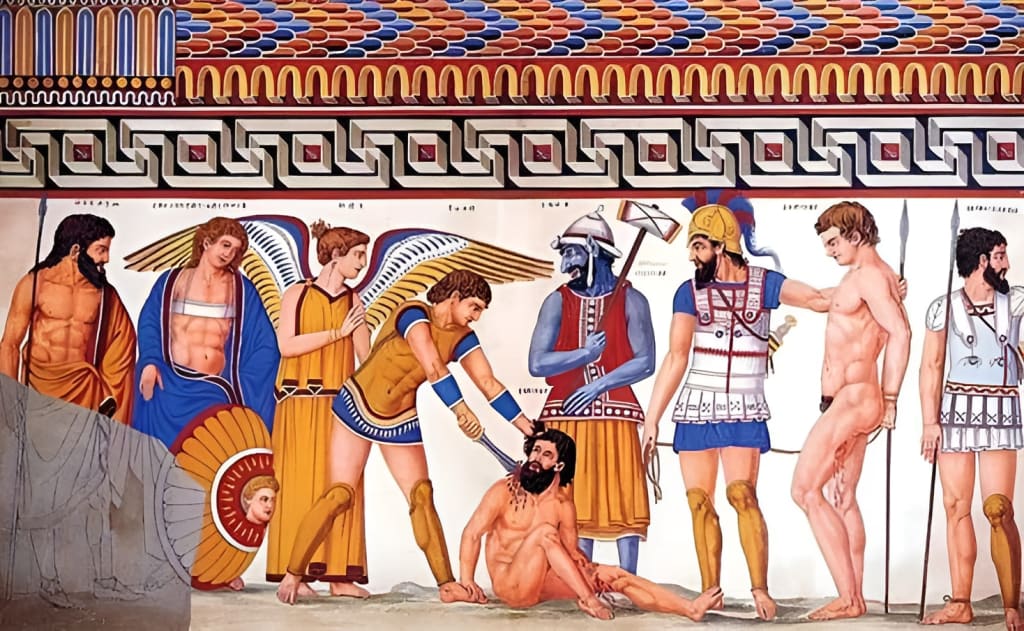
The Etruscan civilization, a vibrant society that flourished in Europe, played a crucial role in shaping Western culture. This ancient people, who lived in Etruria—modern-day Tuscany, parts of Lazio, and Umbria—left a profound mark on history. Though their culture was eventually overshadowed by the rise of Rome, the Etruscans' contributions to art, governance, and religion resonate even today.
Etruria stretched from the Arno River in the north to the Tiber River in the south, encompassing fertile lands and rich mineral resources. While Greek and Roman sources debated the Etruscans’ origins—some, like Herodotus, linked them to Asia Minor—modern evidence suggests they were likely an indigenous Italic culture. Emerging during the Bronze Age, the Etruscans developed a distinct identity, shaped by limited external influences and interactions with neighboring civilizations like the Phoenicians and Greeks.
By the 8th century BCE, the Etruscans established a network of independent city-states, forming the first urban society in Italy. These city-states were connected by a shared language, religion, and culture, though each maintained political independence. Etruscan cities thrived on agriculture, metallurgy, and trade, with exports of iron and their unique bucchero pottery creating a bustling Mediterranean commerce.
Their society was marked by skilled craftsmanship in metalwork, ceramics, and jewelry, leaving behind exquisite artifacts, especially in burial sites. Tombs adorned with frescoes provide invaluable insights into Etruscan life, revealing their social hierarchy, traditions, and even attitudes toward women and slaves.
The Etruscan society was notably progressive for its time. Women enjoyed greater social freedoms than in many other ancient cultures, participating in public banquets alongside men—a practice rarely seen in contemporary societies. However, Etruscan city-states often competed for resources, leading to internal conflicts and shifting alliances.
Religiously, the Etruscans were polytheistic, worshiping deities like Tinia, the god of the sky, and Voltumna, associated with vegetation. Rituals such as augury and haruspicy, which interpreted omens from birds and animal entrails, were central to their spiritual practices. Their architectural achievements, including temples and tombs, demonstrate an evolving sophistication influenced by Mediterranean interactions.
The 7th century BCE marked the Etruscan culture’s zenith, a time known as the Orientalizing Period. Increased contact with Greek and Near Eastern civilizations brought profound changes in art, religion, and governance. Etruscan artisans adopted and adapted foreign styles, creating a unique cultural synthesis that set their civilization apart.
Etruscan power began to wane in the 5th century BCE due to external pressures from the Greeks, who challenged their maritime dominance, and from the rising Roman Republic. The 4th and 3rd centuries BCE saw Etruscan city-states succumb to Roman conquest, culminating in their assimilation into Roman society.
Despite their decline, the Etruscans left an indelible mark on Roman culture. The Romans inherited Etruscan architectural styles, religious practices, and even their alphabet, which influenced Latin and other European languages. Etruscan traditions, such as the triumphal procession and elements of clothing like the toga, became integral to Roman identity and, by extension, Western heritage.
Much of what we know about the Etruscans comes from archaeological discoveries, particularly tombs with well-preserved artifacts and frescoes. These findings have illuminated a culture rich in art, trade, and innovation, offering a glimpse into a world that profoundly shaped ancient and modern civilizations.
The Etruscans may have faded into history, but their legacy endures in the cultural and political foundations of Europe. Their story reminds us of the interconnectedness of ancient peoples and the enduring impact of their achievements on the world we know today.
About the Creator
A História
"Hi. My name is Wellington and I'm a passion for general history. Here, I publish articles on different periods and themes in history, from prehistory to the present day.
Keep reading
More stories from A História and writers in History and other communities.
The Dawn of Civilization
The history of cities is the history of human progress. Cities have transformed the way we live, offering better living conditions, increased food storage, and enhanced knowledge transfer across generations. This transformation set the stage for the society we know today, complete with its unique challenges and triumphs. But have you ever wondered: What was the first city in history?
By A Históriaabout a year ago in History
Royal Blood and the Survival of the Throne: The Ottoman Tradition of Fratricide
Among the many powerful dynasties in world history, the Ottoman Empire stands out for its longevity, political sophistication, and vast territorial reach. At its peak, the empire stretched across parts of Europe, Asia, and Africa, ruling over diverse peoples and cultures for more than six centuries. Yet behind the grandeur of its palaces and the power of its sultans lay a grim and controversial tradition: the execution of royal brothers to secure the throne.
By Irshad Abbasi a day ago in History


Comments
There are no comments for this story
Be the first to respond and start the conversation.