
The Dawn of Civilization
Exploring the World’s First Cities

The history of cities is the history of human progress. Cities have transformed the way we live, offering better living conditions, increased food storage, and enhanced knowledge transfer across generations. This transformation set the stage for the society we know today, complete with its unique challenges and triumphs. But have you ever wondered: What was the first city in history?
Let’s embark on a journey through time to uncover the origins of urbanization and explore the fascinating history of the first human settlements.
Humanity’s transition from nomadic life to agriculture began around 9,000 BCE in the Fertile Crescent, an area encompassing parts of modern-day Iraq, Syria, and Turkey. Early hunter-gatherer groups discovered methods for cultivating grains like wheat and barley, as well as legumes such as lentils and peas.
Archaeological evidence suggests women, who primarily managed plant gathering, played a key role in discovering agriculture. Observing that discarded seeds sprouted into new plants, they initiated a revolutionary shift. This control over food production led to the development of agricultural practices, ultimately ending millennia of nomadic existence.
The term "Agricultural Revolution," coined by Gordon Childe, implies a relatively quick transition to settled life. However, archaeological findings paint a different picture. The shift to agrarian lifestyles was gradual, marked by systematic organization, improved technology, and the eventual establishment of permanent settlements.
Monumental sites like Göbekli Tepe, the world’s oldest known Neolithic site, suggest that early human communities used shared spaces for storage and rituals long before building homes. This cultural shift marked the first steps toward urbanization.
Before cities as we know them, there were proto-cities—large villages or settlements with some urban characteristics but lacking centralized planning. Examples include:
Jericho: Dating back to 10,000 BCE, Jericho began as a Natufian hunting and gathering camp. By 9,400 BCE, it evolved into a permanent settlement, featuring circular mud-brick houses and evidence of organized food storage.
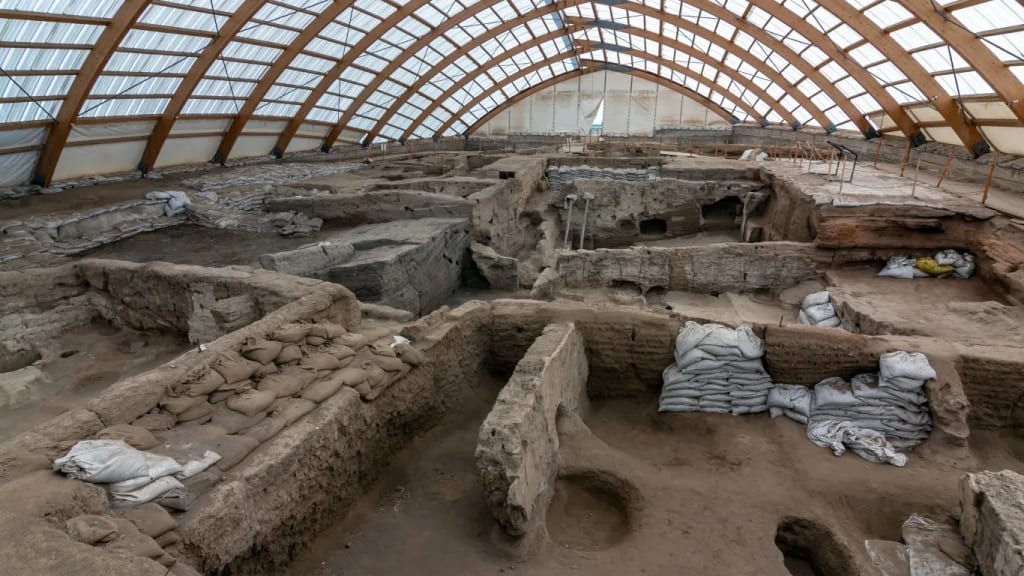
Çatalhöyük: Discovered in the 1960s, this site in modern-day Turkey dates back to around 7,500 BCE. It featured densely packed homes with elaborate wall paintings, evidence of religious rituals, and the worship of a “Mother Goddess.”
While these settlements showcased remarkable sophistication for their time, they lacked the hallmarks of fully developed cities, such as centralized governance and urban infrastructure.
By 4,000 BCE, the Sumerian city of Eridu in Mesopotamia emerged as a strong candidate for the world’s first city. According to the Sumerian King List, Eridu was where kingship first “descended from heaven,” symbolizing divine authority.
Excavations in the 20th century revealed:
14 temples built over time, reflecting religious significance.
Urban planning, with evidence of organized governance and societal structure.
Although Eridu laid the groundwork for urban life, its influence waned as Uruk, another Sumerian city, rose to prominence around 3,100 BCE.
Often considered the first true city, Uruk was founded around 4,500 BCE. It featured:
Specialized architecture for trade, governance, and religion.
Social stratification, including a ruling elite.
Written records, marking the dawn of history.
Uruk’s innovations became a blueprint for future urban centers, cementing its place as a cradle of civilization.
While Uruk and Eridu dominate discussions of early cities, other ancient settlements also vie for recognition:
Jericho: Its early permanent structures and community organization make it a compelling candidate.
Çatalhöyük: A cultural hub with striking religious artifacts, though lacking urban planning.
The Indus Valley Civilization: Cities like Mohenjo-Daro and Harappa, known for their advanced water systems and grid layouts, showcase unparalleled sophistication for their time.
The emergence of cities signaled profound changes in human society. Urban centers became hubs of cultural exchange, economic activity, and technological innovation. They also introduced social complexities, including class hierarchies and governance systems.
While debates continue about which settlement deserves the title of the first city, the legacy of these ancient urban centers is undeniable. They shaped the trajectory of human civilization, leaving a lasting impact on the world we inhabit today.
The story of the world’s first cities is still being written. Archaeological discoveries continue to uncover new insights, reshaping our understanding of early human settlements. From Jericho to Uruk, these ancient cities remind us of humanity’s resilience and ingenuity.
Whether you’re a history enthusiast or simply curious about our shared past, exploring these milestones offers a deeper appreciation of how far we’ve come.
About the Creator
A História
"Hi. My name is Wellington and I'm a passion for general history. Here, I publish articles on different periods and themes in history, from prehistory to the present day.
Keep reading
More stories from A História and writers in History and other communities.
The Foundations of Japanese Civilization
Japan, an island nation situated in East Asia, boasts one of the world's oldest civilizations. Its distinctive influences on global culture, encompassing areas such as architecture, religion, and politics, have endured throughout history. This article explores Japan's ancient past, charting its evolution from prehistoric periods to the beginning of the medieval age.
By A Históriaabout a year ago in History
The Partition of the Ottoman Empire: How Britain and France Reshaped the Middle East
The collapse of the Ottoman Empire after World War I dramatically transformed the political map of the Middle East. For more than four centuries, the Ottoman Empire had ruled vast territories stretching across the Middle East, North Africa, and parts of Europe. However, by the early twentieth century, the empire had weakened politically, economically, and militarily. When the Ottomans joined Germany and the Central Powers in World War I, Britain and France saw an opportunity to reshape the region according to their own strategic and economic interests. The result was the partition of Ottoman lands, an event that still shapes Middle Eastern politics today.
By Irshad Abbasi 8 days ago in History



Comments
There are no comments for this story
Be the first to respond and start the conversation.