


Throughout history, humanity has encountered a myriad of governance systems, ideologies, beliefs, and languages, leading to the emergence of diverse civilizations worldwide. However, one enduring element has persisted across all cultures and eras: war. In contemporary times, we observe ongoing conflicts reported by various media, with the war in Ukraine, following Russia's invasion, standing out prominently. Other significant conflicts, such as the enduring civil war in Syria and escalating tensions involving nations like China and Taiwan, as well as Niger, Nigeria, and Ghana, serve as reminders that war remains a fundamental aspect of human existence.
In examining the current geopolitical situation, it is easy to overlook that war has been a fundamental component of human civilization since its beginnings. Although it is a tragic reality, war has played a crucial role in shaping history, influencing nations, societies, and even technological progress. This raises important questions: How did war originate? What insights do history and archaeology provide regarding its beginnings and evolution?
The origins of the first war in history have been a topic of extensive discussion among historians. Evidence of early organized conflict has been uncovered at a Mesolithic burial site in Jebel Sahaba, located in modern-day Sudan, which dates back roughly 12,000 years. The skeletal remains discovered at this location show significant injuries, indicating that violent encounters occurred. Researchers propose that these confrontations were likely motivated by competition for essential resources such as water, food, and land. Alternatively, some scholars suggest that these conflicts may have held symbolic meanings related to identity, honor, or revenge.
Another important archaeological find was in the Tollense Valley, Germany, where the remains of approximately 200 individuals, dating back 3,300 years, were discovered. The skeletons exhibited severe injuries, including arrowheads lodged in the bones, pointing to instances of large-scale organized warfare. This discovery has called into question the earlier assumption that warfare in Northern Europe during this period was confined to minor skirmishes. Genetic analysis indicates that the warriors came from various regions across Europe, marking an early example of extensive conflict.
War is commonly defined by many dictionaries as a condition of armed conflict between nations or states. This definition suggests that organized warfare began to take shape only after societies transitioned from a nomadic lifestyle to settled agricultural communities. The shift to permanent settlements facilitated the accumulation of resources, which became valuable enough to protect or capture.
Historical records from Sumer, recognized as one of the earliest civilizations, offer the first documented instances of structured warfare. Approximately 2700 BCE, the Sumerian monarch Enmebaragesi of Kish reportedly launched military operations against the neighboring region of Elam. Subsequently, in 2525 BCE, the city-state of Lagash was involved in a territorial conflict with Umma. As civilizations grew, the nature and scale of warfare evolved correspondingly.
The earliest recorded peace treaty, known as the Treaty of Kadesh, was established in 1259 BCE between Pharaoh Ramses II of Egypt and Hattusili III of the Hittite Empire, highlighting initial efforts to manage warfare and diplomatic relations.
War, despite its inherently destructive characteristics, has paradoxically contributed to the development of societies. The unification of China under Qin Shi Huang in 221 BCE was a direct consequence of the Warring States period, during which numerous states vied for dominance. The emergence of national identities frequently arose from military conquests, fostering a shared sense of community.
Additionally, military advancements spurred technological progress. For instance, the Egyptians incorporated horse-drawn chariots and composite bows from the Hyksos, significantly altering their military tactics. The Greeks refined the phalanx formation, while the Romans transformed warfare through their organized legions and sophisticated siege methods. The evolution of naval warfare was marked by the rise of battle fleets, with the earliest documented instance being the naval confrontation between the Hittites and a Cypriot fleet around 1210 BCE.
As societies advanced, their ability to engage in warfare expanded correspondingly. In medieval Europe, the emergence of castles, knights, and siege tactics marked a significant evolution in military strategy. The advent of gunpowder brought transformative changes to combat dynamics. By the 18th and 19th centuries, the motivations for war were increasingly shaped by nationalism, imperial ambitions, and economic rivalries. The 20th century experienced an unparalleled increase in both the scale and destructiveness of warfare, highlighted by the catastrophic impacts of World Wars I and II. The Cold War period was characterized by ideological confrontations and the persistent threat of nuclear conflict.
The nature of warfare has transformed significantly with the advent of advanced technologies, including drones, cyber warfare, and weapons powered by artificial intelligence. The Uppsala Conflict Data Program, in partnership with the United Nations, reports that the world is currently facing its most tumultuous period of conflict since the Cold War's conclusion. In 2022, there were 55 recorded conflicts across 38 nations, with several resulting in over 1,000 fatalities annually, thereby qualifying as full-scale wars.
The persistent conflict in Ukraine, the Syrian Civil War, and ongoing strife in Afghanistan and Iraq underscore the enduring effects of warfare on global stability. Various political, economic, and religious dynamics continue to fuel these conflicts, leading to severe repercussions for civilian populations.
The roots and reasons behind war are often enigmatic, yet its consequences are clear and significant. War has catalyzed advancements in technology, albeit at a staggering human toll. While some argue that conflict is an inherent part of human existence, others maintain that through diplomacy, global collaboration, and technological progress, it may be possible to achieve a future free from extensive warfare.
Nevertheless, history illustrates that war is a fundamental aspect of the human saga. As long as issues of power, resources, and ideology persist, the threat of war will remain a constant in our lives. The irony of war lies in its ability to inspire remarkable human creativity, which is frequently harnessed for destructive ends.
About the Creator
A História
"Hi. My name is Wellington and I'm a passion for general history. Here, I publish articles on different periods and themes in history, from prehistory to the present day.
Keep reading
More stories from A História and writers in History and other communities.
The Lionheart’s Legacy
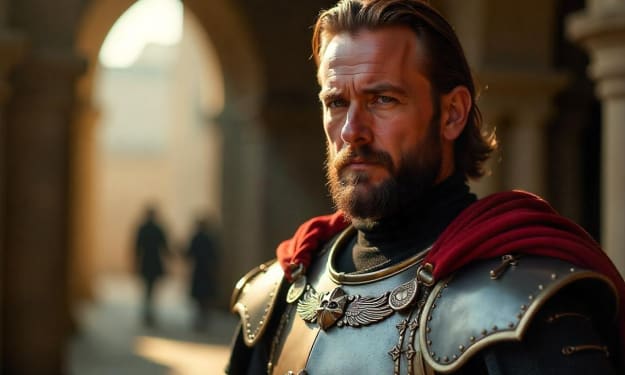
You have likely encountered representations of Richard the Lionheart in various forms of media, including films, literature, and video games. Officially recognized as Richard I, he ascended to the throne of England on September 3, 1189, and is celebrated as one of the most esteemed rulers in English history. His legacy, however, is woven with threads of bravery, intrigue, and controversy, rendering him a figure as captivating as any from the realm of fantasy. This is the tale of Richard the Lionheart—the monarch who achieved legendary status.
By A Históriaabout a year ago in History
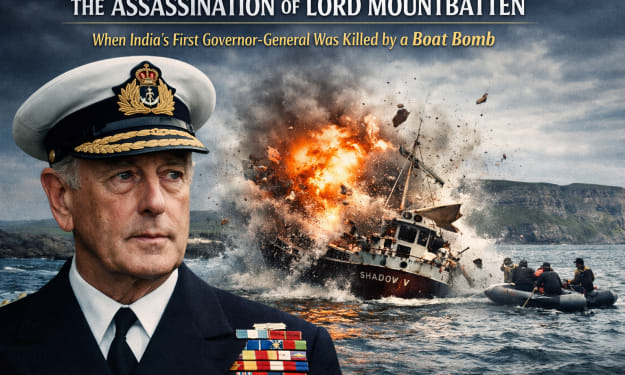
The Assassination of Lord Mountbatten: When India’s First Governor-General Was Killed by a Boat Bomb
The assassination of Louis Mountbatten in 1979 was one of the most shocking acts of political violence in modern British history. A decorated naval officer, royal family member, and the last Viceroy of British India, Mountbatten had played a key role in overseeing the partition and independence of the Indian subcontinent in 1947. More than three decades later, his life ended in a violent attack when a bomb planted on his fishing boat exploded off the coast of Ireland.
By Irshad Abbasi 5 days ago in History
TUS NUA - ch 53
TUS NUA – ch 53 New Beginnings – Mia and Midnight (*)(*)(*) Finola knew Ali’s brother-in-law needed to put his mind at rest. She fed her arm through his and led him outside. “We’ll sit here. If you like, I can put a block around us so our conversation will be private.”
By Margaret Brennan3 days ago in Fiction


Comments
There are no comments for this story
Be the first to respond and start the conversation.