
The Enigma of the Sea Peoples
Unraveling the Mysteries of Ancient Maritime Invaders

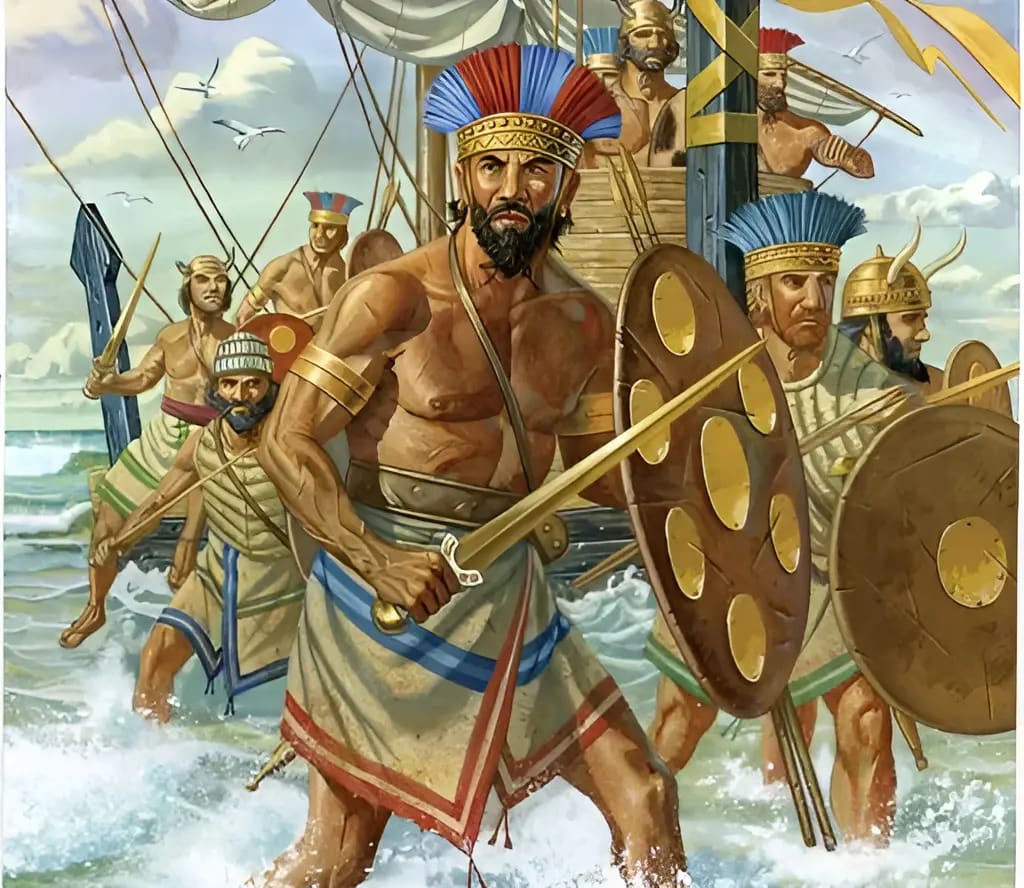
Throughout history, tales of grand empires and civilizations have been punctuated by stories of conquest and upheaval. Among these narratives, the enigmatic Sea Peoples stand out as a formidable force that reshaped the Mediterranean landscape at the twilight of the Bronze Age.
Archaeological evidence points to a significant disruption in the Eastern Mediterranean around the end of the Bronze Age, largely attributed to the Sea Peoples. Interestingly, no ancient inscriptions explicitly refer to these invaders as the "Sea Peoples"; this term was popularized by French Egyptologist Gaston Maspero in 1881. Ancient Egyptian records describe these groups as coming "from the sea" or "from the islands," without pinpointing specific origins, thus opening the door to various hypotheses.
Three Egyptian pharaohs documented their encounters with the Sea Peoples: Ramesses II (Ramesses the Great), his successor Merneptah, and later Ramesses III. In the Stele of Tannis, Ramesses II recounts how these invaders arrived "from the sea in their warships," posing a threat that no force could withstand. These descriptions suggest a coalition of different groups rather than a singular entity.
In 1274 BCE, Ramesses II faced the Hittites at the Battle of Kadesh, during which groups aligned with the Sea Peoples acted as mercenaries. The following years saw continued clashes, with Merneptah claiming victory over a coalition that included the Libyans and the Sea Peoples. His triumph is immortalized on the Karnak Inscription, celebrating the security of Egypt's borders after defeating over 6,000 enemies.
Under Ramesses III, Egypt witnessed the last significant incursion of the Sea Peoples. Around 1178 BCE, they attempted to establish permanent settlements in Egypt, bringing domestic goods and construction tools. However, Ramesses III's strategic use of guerrilla tactics, including naval ambushes and land-based assaults, culminated in their defeat near the city of Jahy. This marked the end of their recorded presence, with survivors assimilated into Egyptian society or sold as slaves.
The identity and origin of the Sea Peoples have long intrigued historians and archaeologists. Some theories suggest they were displaced Mycenaeans, driven to piracy and migration by the Dorian invasion and climatic changes that led to widespread famine. Others propose they were a multi-ethnic coalition seeking new lands, as evidenced by similarities in armament and tactics described in Egyptian records.
Notably, the linguist John Chadwick argued that the Sea Peoples might have been pushed southwards by Anatolian groups, contrary to the theory of a northward Dorian invasion. This notion finds support in various ancient texts, including the Hittite records that describe naval threats consistent with the activities of the Sea Peoples.
The period of the Sea Peoples' incursions coincides with broader societal collapse across the Eastern Mediterranean. Recent paleoclimatological studies indicate increased aridity in the region, leading to resource scarcity and social upheaval. This environmental stress likely contributed to the nomadic and piratical lifestyle adopted by various displaced groups, culminating in the widespread disruptions attributed to the Sea Peoples.
Despite their mysterious origins, the Sea Peoples left an indelible mark on history. Their raids contributed to the fall of significant Bronze Age centers, such as Ugarit and the Hittite Empire, achievements even the mighty Egyptians could not claim. Yet, the true identity and fate of the Sea Peoples remain shrouded in mystery, inviting continuous exploration and speculation.
As we delve into the past, the story of the Sea Peoples serves as a reminder of the complex interplay between environmental, societal, and military factors in shaping history. The allure of their mystery continues to captivate historians and enthusiasts alike, prompting further research and discussion.
About the Creator
A História
"Hi. My name is Wellington and I'm a passion for general history. Here, I publish articles on different periods and themes in history, from prehistory to the present day.
Keep reading
More stories from A História and writers in History and other communities.
The Odyssey of Greek Civilization
The Greeks, a people known for their rich mythology, enduring language and captivating culture, have left an indelible mark on history. Their architectural wonders and philosophical musings have transported us to a past filled with heroic tales and monstrous challenges, imparting powerful lessons passed down through the millennia. Delving into the dawn of Greek civilization, from its archaic roots to its classical grandeur, exploring the formation and legacy of this extraordinary culture.
By A Históriaabout a year ago in History
The London Smog of 1952: The "Great Smog" that killed 12,000 people in four days of absolute, yellow darkness.
The taste of a copper penny coated in rotten egg yolk. That was the first warning. It was Friday, December 5, 1952. A blind man led a sighted businessman across Euston Road, tapping his white cane against the invisible curb. The businessman couldn't see his own shoes. The air had turned into a thick, yellowish-green soup that smelled of burning hair and raw sulfur. It was not a fog. It was an executioner. Over the next four days, twelve thousand Londoners would choke to death in their own beds, murdered by the very fireplaces they lit to keep warm.
By The Chaos Cabinet4 days ago in History



Comments
There are no comments for this story
Be the first to respond and start the conversation.