
The Dog Immortalized by a Volcanic Eruption
The Tragic Tale of Pompeii

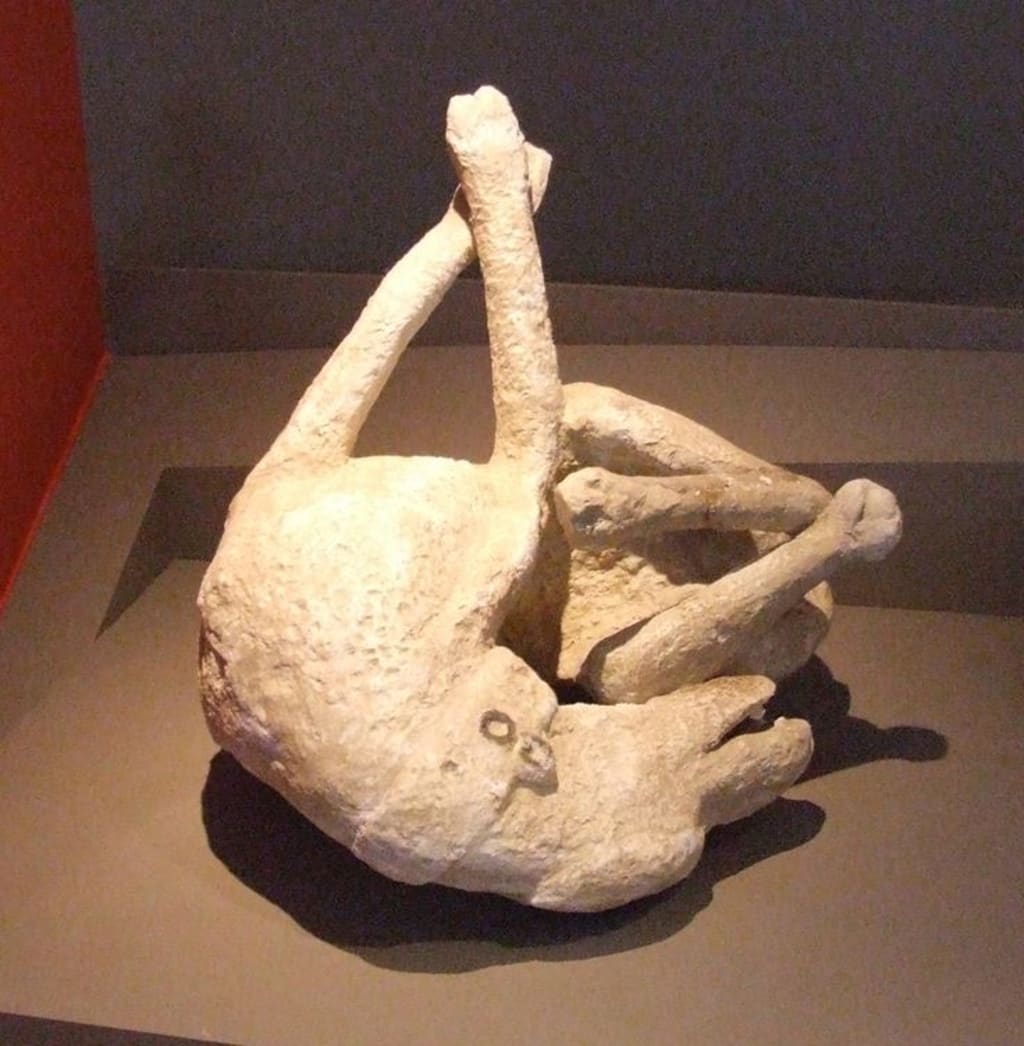
The year was 79 AD. The location was Pompeii, a bustling Roman city at the base of Mount Vesuvius in what is now modern-day Italy. Life in Pompeii was vibrant and full of activity—until disaster struck. One day, without warning, Mount Vesuvius erupted with a deafening explosion, spewing ash and molten rock into the sky. Within hours, the thriving city was buried under a thick layer of volcanic ash, taking the lives of thousands of its residents.
Among the tragic stories of that day is the tale of a dog chained outside a house, unable to escape the catastrophe.
A City Frozen in Time
The eruption of Mount Vesuvius was so sudden and intense that it buried Pompeii under several meters of ash. The heat from the eruption was unimaginable, and the ash that rained down was even hotter than the lava itself. The city and its inhabitants were instantly frozen in time, preserved under a thick blanket of volcanic debris.
Over time, the ash hardened into a solid shell, encasing everything it touched—humans, animals, and even plants. As the organic material inside these shells decayed over centuries, hollow cavities were left behind, capturing the exact shapes of the victims.
The Discovery of Pompeii
For centuries, Pompeii was lost to history. The volcanic ash had utterly transformed the landscape, and the city's ruins were hidden from sight. While ancient Italian tales spoke of a town buried under volcanic debris, many experts believed Pompeii's remains might be lost forever, possibly submerged under the sea.
The first clues to Pompeii's existence emerged in 1549 when local workers digging a well stumbled upon some ruins. However, these findings were quickly ignored. It wasn't until 1599 that a renowned architect discovered more ruins, sparking a systematic excavation effort. Over the next few centuries, archaeologists uncovered the entire city, revealing a snapshot of life in ancient Rome.
The Hollow Casts of Pompeii
Among the most haunting discoveries were the hollow cavities left by the eruption victims. These cavities, formed by the hardened ash, perfectly preserved the outlines of the bodies that had once occupied them. When archaeologists broke these cavities, they found them empty—centuries of decay had turned the organic matter to dust.
To preserve these shapes, plaster of Paris was poured into the cavities, creating detailed casts of the victims. These casts, now displayed in local museums, offer a poignant glimpse into the final moments of Pompeii's residents. Among them is the cast of the chained dog, forever immortalized in its final, desperate struggle.
The Dog That Couldn't Escape
The dog's story is particularly heartbreaking. Chained outside a house, it could not flee when the eruption began. As the ash rained down, the dog succumbed to the intense heat, its body buried and preserved under the volcanic debris. Centuries later, its hollow cavity was discovered, and a plaster cast was made, capturing its final moments in heartbreaking detail.
This cast and hundreds of others serve as a stark reminder of the human and animal lives lost in the tragedy.
Pompeii Today: A Window to the Past
Pompeii is a UNESCO World Heritage Site and a major tourist attraction today. Millions of visitors flock to the ruins each year to walk through the ancient streets, explore the preserved homes, and witness the haunting casts of the eruption's victims.
The story of Pompeii is not just one of destruction but also preservation. It offers a unique glimpse into the daily life of an ancient Roman city frozen in time by a natural disaster. Among the many stories of tragedy and resilience, the tale of the chained dog stands out as a poignant symbol of the lives lost on that fateful day.
A Legacy of Resilience
The eruption of Mount Vesuvius was a catastrophic event, but it also left behind a legacy of resilience and discovery. Pompeii's ruins remind us of life's fragility and nature's enduring power. They also serve as a testament to the human spirit's ability to uncover and preserve history, even in the face of unimaginable loss.
So, the next time you hear about Pompeii, remember the dog that couldn't escape, the lost lives, and the preserved stories. It's a tale of tragedy but also of enduring memory and the unyielding quest to understand our past.
About the Creator
Muhammad Ashfaq Bhatti
I am Ashfaq, a professional content writer and researcher from Pakistan. I have 9 years of experience in this field. I am fond of reading books on multiple topics specially biographies of successful profiles to make best conclusions.
Keep reading
More stories from Muhammad Ashfaq Bhatti and writers in History and other communities.
No Legs, No Limits
A Childhood Dream Born in the Mountains Hari Budha Magar grew up in the breathtaking mountains of Nepal, where towering peaks were more than just a scenic backdrop—they were a source of inspiration. From a young age, he dreamed of conquering Mount Everest, a goal that felt almost destined for someone who had spent his childhood in the shadow of the world's tallest mountain. But as life would have it, his journey to the summit would take an unimaginable turn.
By Muhammad Ashfaq Bhatti12 months ago in Motivation
Julius Caesar: The Rise and Fall of a Legend
The Rise and Fall of Julius Caesar In the first century BCE, the Roman Republic stood as one of the most powerful states in the ancient world. Its armies conquered vast territories, its laws shaped civilizations, and its Senate governed through a delicate balance of tradition and authority. Into this complex political world was born Gaius Julius Caesar in 100 BCE—a man whose ambition, brilliance, and fate would forever change Roman history.
By The best writer 6 days ago in History
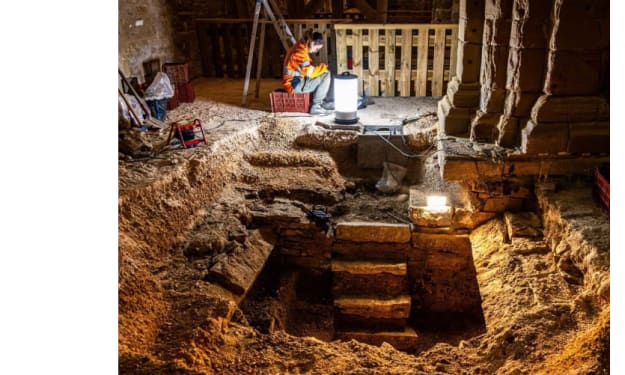
A secret staircase found beneath a 1,500-year-old French church
A subterranean staircase and burial strata dating back approximately 1,500 years were discovered during a project inside the Church of Saint Philibert in Dijon, France. The stairs were discovered by restoration workers inside the church when repairs were being made, and the excavation soon ensued.
By Francis Dami2 days ago in History



Comments
There are no comments for this story
Be the first to respond and start the conversation.