
Orion Comes Alive: NASA Capsule Throws Off Its Cover in Major Test
NASA successfully tests Orion’s critical parachute cover separation paving the way for future crewed missions to the Moon and beyond.

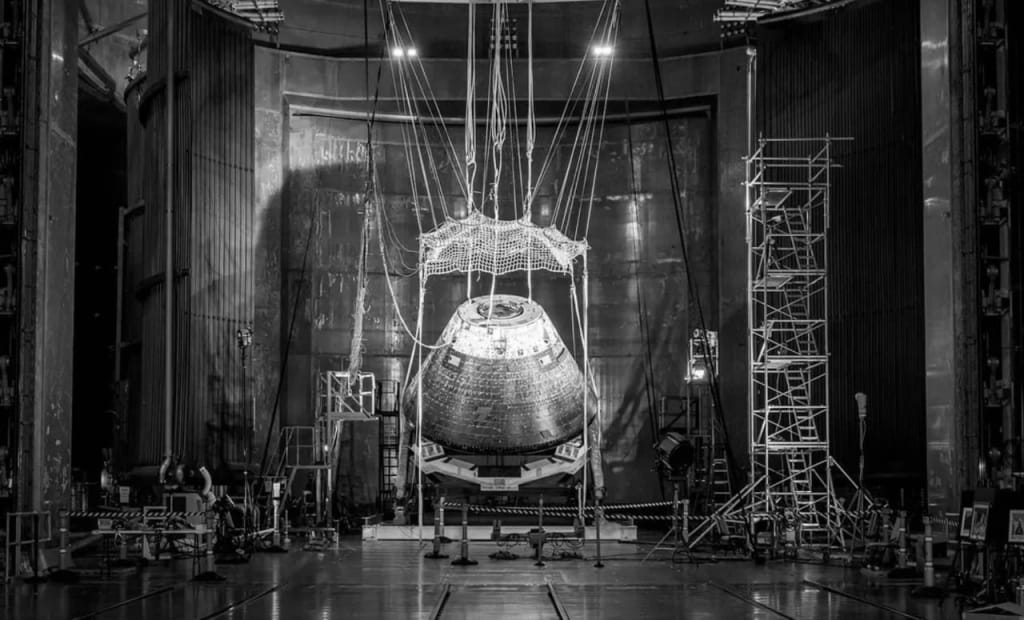
Orion Comes Alive: NASA Capsule Throws Off Its Cover in Major Test
NASA has achieved a major breakthrough in its ambitious Artemis program with a successful and critical test of the Orion spacecraft's forward bay cover (FBC) separation system. This achievement marks an essential milestone toward the goal of returning humans to the Moon, and eventually venturing further into deep space, including Mars.
A Crucial Test for Future Crewed Missions
The test, conducted at NASA’s Neil Armstrong Test Facility in Sandusky, Ohio, was designed to simulate the intense conditions Orion will face during atmospheric re-entry. During this high-stakes procedure, engineers replicated launch abort-level acoustics and dynamic stresses to ensure the spacecraft could perform flawlessly under extreme conditions.
The Forward Bay Cover plays a vital role in protecting the capsule’s parachute system during its fiery re-entry through Earth's atmosphere. Before the parachutes can safely deploy and slow the capsule down for splashdown, the FBC must detach cleanly and precisely. If it fails to separate properly, it could interfere with parachute deployment, placing the crew at serious risk. That’s why this test was so important — and so carefully orchestrated.
The successful separation of the FBC during this test validates that the Orion capsule is on track for future crewed missions. Engineers and mission managers now have stronger confidence that when astronauts are finally aboard, the spacecraft will be capable of bringing them back to Earth safely.
How the Forward Bay Cover Works
The Forward Bay Cover is an ingenious piece of spacecraft engineering. Constructed to endure high temperatures and extreme aerodynamic forces during re-entry, it shields Orion’s delicate parachutes until the precise moment they need to deploy.
The separation system uses a combination of pyrotechnic devices (small explosive charges) and mechanical actuators. At a pre-calculated altitude and speed during descent, the charges detonate, activating actuators that push the FBC away from the capsule. Timing is everything. If the FBC separates too early or too late, it could jeopardize the entire landing sequence.
In this recent test, every component performed exactly as intended. The pyrotechnics fired correctly, the actuators functioned smoothly, and the cover flew clear of the spacecraft, clearing the way for a safe parachute deployment.
This success didn’t happen overnight. It took years of design, multiple redesigns, simulations, and smaller-scale tests to get to this moment. But in the end, the payoff was massive: a critical system for human safety proved ready.
Importance for the Artemis Program
The Orion spacecraft is the centerpiece of NASA’s Artemis program, which seeks to return humans to the lunar surface for the first time since the Apollo era. Unlike Apollo, however, Artemis has an eye on sustainability. NASA’s vision is to build a long-term presence on the Moon, creating a stepping stone for future missions to Mars.
Every system on the Orion spacecraft must work perfectly to achieve these goals. Testing systems like the Forward Bay Cover ensures that no weak link exists in the chain that will support human explorers far from home.
Following this successful test, NASA is one step closer to launching Artemis II — the first crewed mission of the Orion capsule. Scheduled to carry astronauts around the Moon and back without landing, Artemis II will validate Orion’s ability to support human life and perform critical operations in deep space.
NASA’s thorough and systematic approach to testing ensures that every piece of equipment is flight-proven before humans are aboard. This methodical rigor stands in contrast to the rapid, trial-and-error style some newer space companies might employ. When lives are on the line, NASA leaves nothing to chance.
Looking Ahead
The road to the Moon and beyond is not a short one, but each successful test like this brings humanity a step closer. After Artemis II, NASA plans Artemis III — the mission that will land astronauts on the Moon. It will be the first crewed lunar landing since 1972 and will include the first woman and the first person of color to step on the lunar surface.
The excitement surrounding these upcoming missions is palpable, both within the space community and among the general public. This recent Orion test reminds us that while space exploration demands cutting-edge technology and scientific genius, it also requires perseverance, patience, and a relentless commitment to safety.
NASA’s motto for the Artemis missions is "We Are Going." After watching Orion’s forward bay cover fling itself free in a flawless test, it’s easier than ever to believe that humanity’s next giant leap is not just a dream, but an approaching reality.
About the Creator
Adnan Rasheed
Author & Creator | Writing News , Science Fiction, and Worldwide Update| Digital Product Designer | Sharing life-changing strategies for success.
Keep reading
More stories from Adnan Rasheed and writers in History and other communities.
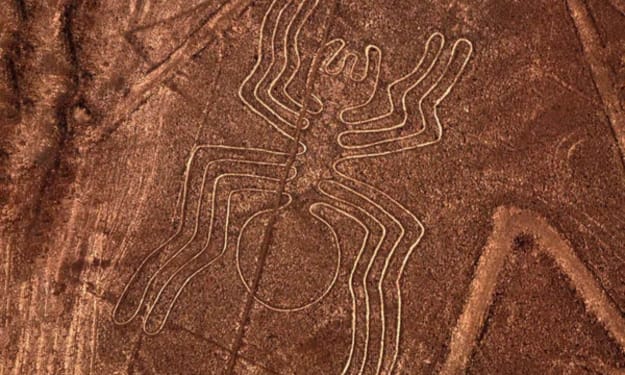
Artificial Intelligence Solves One of Archaeology’s Greatest Puzzles.
Artificial Intelligence Solves One of Archaeology’s Greatest Puzzles. For centuries archaeology has been a discipline built on patience careful excavation and painstaking analysis. Every shard of pottery ancient inscription and ruined structure tells a story but understanding these fragments often requires years if not decades of study. Today however a new player has entered the field Artificial Intelligence (AI). In a groundbreaking development AI has recently helped solve one of archaeology’s greatest puzzles revolutionizing the way we uncover humanity’s ancient past. One of the most elusive challenges in archaeology has been the deciphering of ancient scripts. Languages like Egyptian hieroglyphs were famously decoded with the help of the Rosetta Stone but many others such as Linear A the Indus Valley script and early Mesoamerican glyphs have remained stubbornly mysterious. Traditional methods of decipherment often rely on finding bilingual inscriptions or large amounts of contextual material luxuries that are not always available.
By Adnan Rasheed9 months ago in History
Military Strength of Alexander the Great and the Chola Empire: A Historical Comparison
Though separated by more than a thousand years and operating in vastly different geographical and cultural contexts, both forces achieved extraordinary success through discipline, innovation, and strategic brilliance. This article explores the history, composition, size, organization, and military strength of Alexander’s Macedonian army and the Chola military, highlighting how each became a dominant power of its era.
By Say the truth 3 days ago in History
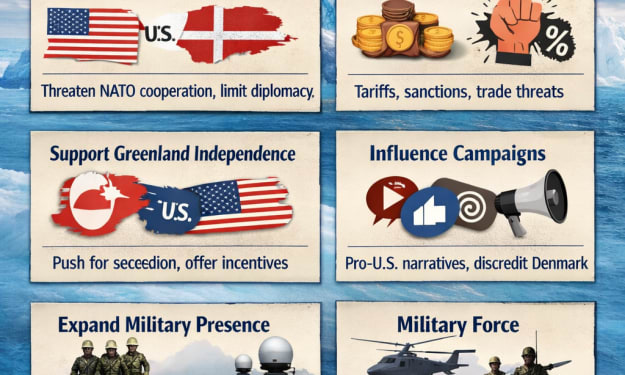
The Hard Ways Trump Could Try to Take Greenland
When Donald Trump was president of the United States, he shocked the world by saying he wanted to buy Greenland. Many people laughed, but others took the idea seriously. Greenland is a huge island in the Arctic. It is rich in natural resources and very important for military defense. Today, Greenland belongs to Denmark, but it also governs itself in many areas.
By sehzeen fatima7 days ago in History


Comments
There are no comments for this story
Be the first to respond and start the conversation.