
The Chilean Revolution: The Fall of Allende
Introduction: Chile at a Crossroads of History

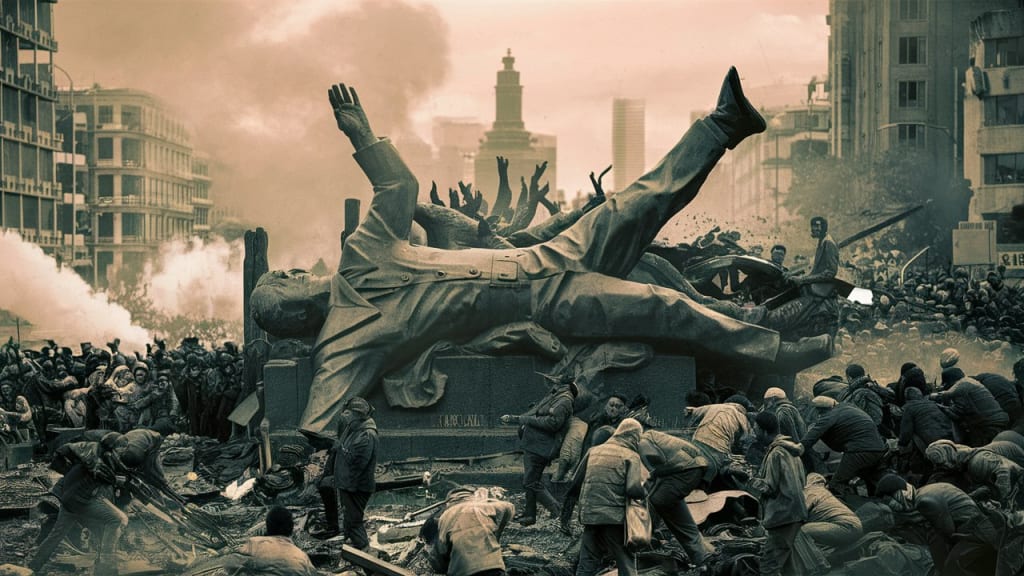
The Chilean Revolution: The Fall of Allende
Introduction: Chile at a Crossroads of History
Chile, the long, narrow country stretching along the western coast of South America, witnessed one of the most controversial periods in its modern history during the 1970s. This era was marked by political and social upheavals that forever changed the face of the nation. At the heart of these events was Salvador Allende, the first democratically elected Marxist president in the world. However, his presidency was far from smooth and ended in a tragic downfall that continues to spark debate to this day.
Who Was Salvador Allende?
His Political Beginnings
Salvador Allende was born in 1908 in the Chilean city of Valparaíso. He came from an upper-middle-class family and worked as a physician before turning to politics. He began his political career in the 1930s, becoming involved in socialist and Marxist movements that were gaining traction across Latin America at the time.
His Rise to Power
After several unsuccessful attempts to win the presidency, Allende finally succeeded in 1970 as the leader of the Unidad Popular (Popular Unity) coalition. His victory came as a surprise to many, especially given the international political tensions of the Cold War era. Allende promised wealth redistribution and radical agrarian reforms, which earned him significant support among the poor and working classes.
Allende's Economic and Social Policies
Nationalization and Redistribution
From the outset of his presidency, Allende implemented a series of economic reforms aimed at reducing the gap between the rich and the poor. He nationalized key industries, including the copper industry, which was the backbone of Chile's economy. He also carried out extensive land reforms, redistributing land to poor peasants.
International Reactions
These reforms were not welcomed by everyone, particularly the United States, which viewed Allende as a threat to its interests in the region. The U.S. began imposing economic sanctions on Chile, exacerbating the economic crisis the country was already facing.
Economic and Social Crisis
Inflation and Unemployment
By 1972, Chile was suffering from hyperinflation, with rates exceeding 300%. Unemployment also rose, and protests and social unrest began to spread across the country. Allende attempted to address the crisis by increasing government spending, but this only worsened the situation.
Protests and Unrest
Protests began to escalate in the streets, with right-wing groups and opposition forces organizing massive demonstrations against Allende. In response, leftist groups held rallies in support of the president. The country was on the brink of civil war.
The Military Coup and the Fall of Allende
The Role of the Military
On September 11, 1973, the Chilean military, led by General Augusto Pinochet, staged a coup that overthrew Allende's government. The presidential palace was bombed, and Allende was killed during the attack. It was a tragic end for a president who had dreamed of achieving social justice.
International Reactions
The coup elicited mixed reactions internationally. While some countries, including the United States, welcomed the overthrow, others, particularly socialist-leaning nations, condemned it as a violation of democracy.
The Pinochet Era: Dictatorship and Repression
Political Repression
Following the coup, Pinochet established a repressive dictatorship. Thousands of political opponents were arrested, and many were tortured or forcibly disappeared. Chile became a police state, with fear dominating daily life.
Economic Reforms
Despite the political repression, Pinochet implemented a series of neoliberal economic reforms that led to significant economic growth. However, these reforms came at the expense of the poor, as the gap between the rich and the poor widened.
The Return to Democracy
The End of Pinochet's Rule
After 17 years of dictatorship, Chile began its transition back to democracy in the late 1980s. Democratic elections were held in 1989, and Patricio Aylwin was elected president.
The Legacies of Allende and Pinochet
The legacies of both Allende and Pinochet remain controversial in Chile to this day. While some view Allende as a martyr for democracy and social justice, others see him as a failed politician whose policies led to economic disaster. Similarly, while some regard Pinochet as a savior who rescued the country from chaos, others see him as a repressive dictator.
Lessons from the Chilean Revolution
The Importance of Balanced Economic Policies
One of the key lessons from Chile's experience is the importance of balanced economic policies. Radical reforms without consideration of economic realities can lead to disaster.
The Role of the International Community
Chile's experience also highlights the significant role of the international community in domestic affairs. Foreign intervention, whether in support or opposition, can have a profound impact on the course of events.
Conclusion: Chile Between Past and Future
Today, Chile is a vastly different country from what it was in the 1970s. It has achieved significant economic growth and has become one of the most stable nations in Latin America. However, the legacy of the Chilean Revolution and the fall of Allende remain deeply ingrained in the collective memory of the Chilean people. These events remind us that democracy and social justice are values that must always be defended and that striking a balance between the two is key to building a better future.
This article aims to provide a comprehensive overview of one of the most significant events in Chile's modern history. By understanding these events, we can draw valuable lessons that help us navigate the complexities of politics and economics in our world today.
About the Creator
💓 Pulse of Stories 💓
The world of short and inspiring stories! Here you will find stories that touch hearts, ignite the imagination, and take you on quick yet deep journeys.
Keep reading
More stories from 💓 Pulse of Stories 💓 and writers in History and other communities.
Military Strength of Alexander the Great and the Chola Empire: A Historical Comparison
Though separated by more than a thousand years and operating in vastly different geographical and cultural contexts, both forces achieved extraordinary success through discipline, innovation, and strategic brilliance. This article explores the history, composition, size, organization, and military strength of Alexander’s Macedonian army and the Chola military, highlighting how each became a dominant power of its era.
By Say the truth 3 days ago in History
The Hard Ways Trump Could Try to Take Greenland
When Donald Trump was president of the United States, he shocked the world by saying he wanted to buy Greenland. Many people laughed, but others took the idea seriously. Greenland is a huge island in the Arctic. It is rich in natural resources and very important for military defense. Today, Greenland belongs to Denmark, but it also governs itself in many areas.
By sehzeen fatima7 days ago in History


Comments (6)
The Mystery of the Japanese Plane "Kagoshima 505" (1980): An Unsolved Enigma https://shopping-feedback.today/history/the-mystery-of-the-japanese-plane-kagoshima-505-1980-an-unsolved-enigma%3C/span%3E%3C/span%3E%3C/span%3E%3C/a%3E%3C/p%3E%3C/div%3E%3C/div%3E%3C/div%3E%3Cstyle data-emotion-css="w4qknv-Replies">.css-w4qknv-Replies{display:grid;gap:1.5rem;}
The Mongol Empire: Reasons for Its Rapid Rise and Sudden Collapse https://shopping-feedback.today/history/the-mongol-empire-ay3ln0cib%3C/span%3E%3C/span%3E%3C/span%3E%3C/a%3E%3C/p%3E%3C/div%3E%3C/div%3E%3C/div%3E%3Cdiv class="css-w4qknv-Replies">
The Chilean Revolution: The Fall of Allende Introduction: Chile at a Crossroads of History Chile, the long, narrow country stretching along the western coast of South America, witnessed one of the most controversial periods in its modern history during the 1970s. This era was marked by political and social upheavals that forever changed the face of the nation. At the heart of these events was Salvador Allende, the first democratically elected Marxist president in the world. However, his presidency was far from smooth and ended in a tragic downfall that continues to spark debate to this day.
This article aims to provide a comprehensive overview of one of the most significant events in Chile's modern history. By understanding these events, we can draw valuable lessons that help us navigate the complexities of politics and economics in our world today.
The Chilean Revolution: The Fall of Allende
Great to learn about the revolution!