
The Battle of Waterloo: Napoleon Bonaparte’s Dramatic End
Napoleon Bonaparte’s Dramatic End

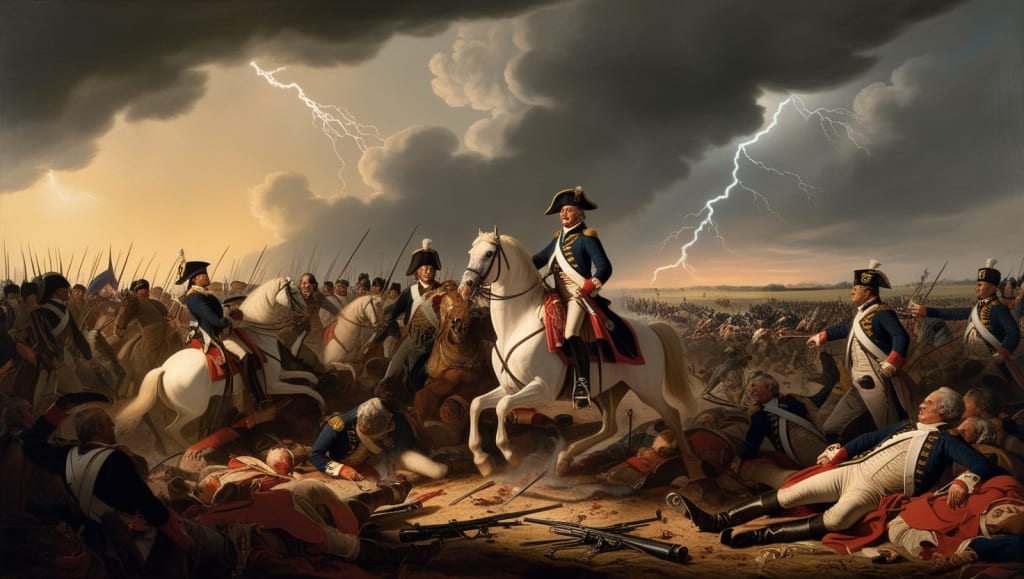
The Battle of Waterloo: Napoleon Bonaparte’s Dramatic End
Introduction
The Battle of Waterloo, fought on June 18, 1815, stands as one of the most pivotal events in European history. This decisive clash marked the end of Napoleon Bonaparte’s reign and reshaped the political landscape of Europe for decades to come. In this article, we will delve into the key events, players, and consequences of this legendary battle, unraveling the factors that led to Napoleon’s dramatic fall.
1. Historical Background: Europe on the Brink of Change
By 1815, Europe was a continent in turmoil. After years of dominance, Napoleon’s power began to crumble. Following his initial abdication in 1814, he was exiled to the island of Elba. However, his return during the Hundred Days Campaign reignited tensions among the major European powers.
The Coalition Against Napoleon: Britain, Prussia, Austria, and Russia formed a united front to prevent Napoleon’s resurgence.
Napoleon’s Goal: To re-establish his empire and secure a lasting peace under his terms.
2. The Players in the Battle
Several key figures played crucial roles in the Battle of Waterloo:
Napoleon Bonaparte: The French Emperor who sought to reclaim his throne.
Duke of Wellington: Commanding the British-led coalition forces, he was renowned for his strategic brilliance.
Gebhard Leberecht von Blücher: The Prussian Field Marshal whose timely intervention was critical to the coalition’s success.
3. The Battlefield: A Strategic Location
Waterloo, a small village in present-day Belgium, became the site of this epic confrontation. Its geographical features played a significant role in the battle:
Elevated Terrain: Provided strategic advantages for defensive positions.
Dense Forests: Limited maneuverability and forced armies into specific engagement zones.
Mud and Rain: Heavy rainfall the night before created challenging conditions for troop movements and artillery.
4. Napoleon’s Strategy
Napoleon’s plan hinged on dividing and conquering the coalition forces before they could unite:
Divide and Destroy: Engage the British and Prussian armies separately to prevent their combined strength.
Swift Attack: Utilize his superior artillery and well-trained troops to overwhelm opponents.
5. The Coalition’s Defense Plan
The coalition forces coordinated to counter Napoleon’s maneuvers:
Wellington’s Defensive Tactics: His forces adopted a strong defensive position, utilizing the natural terrain.
Blücher’s Coordination: Prussian forces marched tirelessly to reinforce Wellington’s troops.
6. Key Moments of the Battle
The Battle of Waterloo unfolded in dramatic stages:
Morning Assaults: French forces launched fierce attacks on the coalition’s fortified positions, such as Hougoumont.
Middle of the Battle: Intense cavalry charges and artillery exchanges defined the mid-day conflict.
Arrival of the Prussians: Blücher’s army arrived in the late afternoon, turning the tide against the French.
7. Napoleon’s Defeat
Despite his tactical genius, Napoleon faced insurmountable challenges:
Underestimating the Prussians: Napoleon’s failure to neutralize the Prussian army proved fatal.
Exhaustion of Troops: His soldiers, worn from previous battles, could not sustain prolonged combat.
Wellington’s Leadership: The Duke of Wellington’s steadfast strategy outmaneuvered Napoleon.
8. Aftermath and Consequences
The defeat at Waterloo marked the end of Napoleon’s reign:
Napoleon’s Exile to Saint Helena: After his capture, he was exiled to a remote island where he spent the remainder of his life.
The Congress of Vienna: European powers convened to redraw boundaries and restore balance.
Impact on Europe: The battle solidified the decline of French dominance and ushered in a new era of relative peace.
9. Legacy of the Battle
Waterloo’s impact resonates to this day:
Cultural Significance: The battle inspired numerous works of literature, art, and music.
Military Lessons: Tactics and strategies from Waterloo continue to be studied in military academies.
Symbol of Resolve: The battle is often referenced as a metaphor for ultimate defeat or a turning point.
10. Myths and Misconceptions
Several myths surround the Battle of Waterloo:
Napoleon’s Mistakes: While often blamed entirely for the defeat, factors like weather and coalition unity were significant.
Wellington Alone: The Duke’s victory was possible only with the timely support of Blücher’s Prussian forces.
Conclusion
The Battle of Waterloo stands as a defining moment in history, symbolizing the end of an era and the resilience of unified efforts. Napoleon Bonaparte’s ambitions reshaped Europe, but his defeat showcased the limits of individual power against collective resolve. This legendary battle serves as a timeless lesson in strategy, determination, and the ever-shifting tides of history.
About the Creator
💓 Pulse of Stories 💓
The world of short and inspiring stories! Here you will find stories that touch hearts, ignite the imagination, and take you on quick yet deep journeys.
Keep reading
More stories from 💓 Pulse of Stories 💓 and writers in History and other communities.
The Story of the Great Wall of China: A Symbol of Strength and Determination
The Story of the Great Wall of China: A Symbol of Strength and Determination Introduction The Great Wall of China stands as one of humanity’s most extraordinary architectural feats. Stretching over 13,000 miles, it symbolizes strength, resilience, and cultural unity. Built over centuries, this monumental structure aimed to protect China from invasions, regulate trade, and solidify the empire’s boundaries. In this article, we will explore the history, purpose, and legacy of the Great Wall, highlighting how it became a timeless emblem of perseverance.
By 💓 Pulse of Stories 💓about a year ago in History
Three Pakistani Women Explore Egypt in Wheelchairs, Challenging Stereotypes
Traveling across a foreign country can be challenging for anyone, but for three Pakistani women who use wheelchairs, it became a powerful statement of courage, independence, and resilience. Their journey to Egypt was not just a vacation—it was a mission to challenge social perceptions and inspire others living with disabilities.
By Irshad Abbasi 7 days ago in History




Comments
There are no comments for this story
Be the first to respond and start the conversation.