
The Apollo 13 Mission: “Houston, we've had a problem.”
Apollo 13: Navigating the Perilous Voyage Home
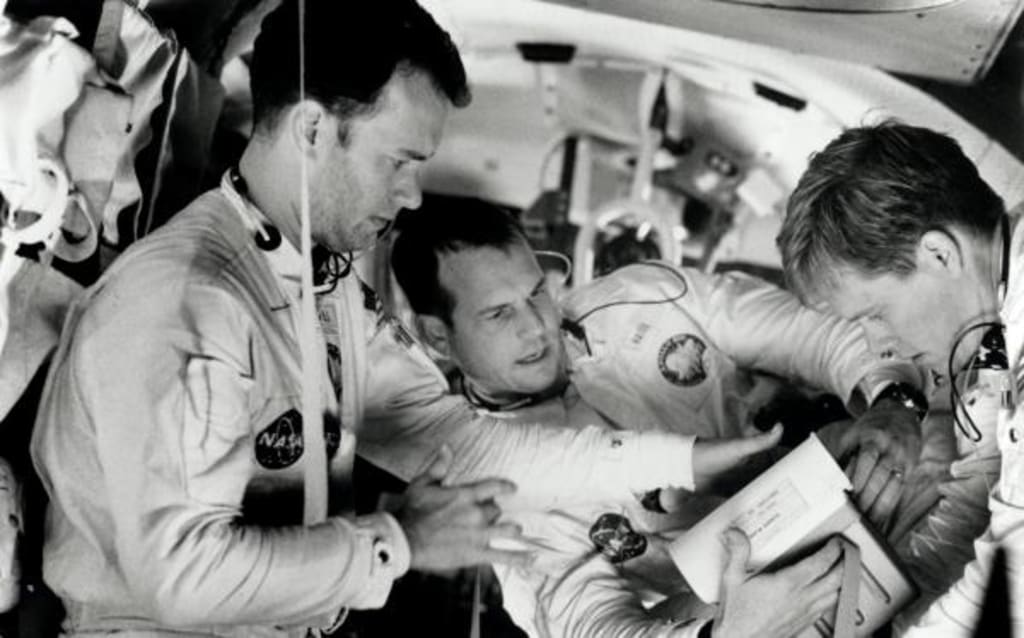
In the vast expanse of space, 1970 was poised to be a momentous year for NASA and humanity as a whole. The Apollo program was in full swing, with ambitious goals of landing humans on the Moon and returning them safely to Earth. Among the astronauts chosen for this extraordinary mission were James A. Lovell Jr., John L. Swigert Jr., and Fred W. Haise Jr., the crew of Apollo 13.
On the chilly morning of April 11, 1970, Apollo 13 blasted off from Kennedy Space Center in Florida. The world watched in awe as the mighty Saturn V rocket propelled the spacecraft towards the Moon. Among the millions watching was Marilyn Lovell, wife of the mission commander, Jim Lovell. She was accustomed to her husband's risky profession, but this mission felt different. There was an extra layer of anxiety in the air, a premonition of the unforeseen challenges ahead.
The journey to the Moon was smooth, filled with anticipation and excitement. Jim Lovell, Jack Swigert, and Fred Haise were in high spirits as they neared their destination. But just over 200,000 miles from Earth, on April 13, disaster struck. An oxygen tank in the service module exploded, causing a cascade of problems. Swigert's now-famous words were transmitted back to Mission Control: "Houston, we've had a problem."
In an instant, the mission changed from one of exploration to one of survival. The explosion had damaged the spacecraft's electrical system and compromised the oxygen supply. The command module, Odyssey, which was their primary living space and contained all the life support systems, was no longer viable. The crew had to rely on the Lunar Module, Aquarius, which was designed to be a temporary shelter for two astronauts during moonwalks, to keep them alive.
Inside the Lunar Module, the three astronauts faced a daunting challenge. Their carbon dioxide levels were rising rapidly, threatening to suffocate them. The ground control team at NASA's Manned Spacecraft Center in Houston had to devise a solution, and they had to do it quickly.
Back on Earth, the world was gripped by the unfolding drama. President Richard Nixon was in constant communication with NASA, offering his support and urging the agency to do everything possible to bring the astronauts home safely. The nation rallied behind the crew, and prayers were offered in churches, synagogues, and mosques across the country.
Meanwhile, in space, the crew and ground control worked tirelessly to conserve power, water, and other vital resources. They had to navigate the spacecraft using manual calculations, as their navigation system was compromised. The lunar landing was aborted, and instead, they used the Moon's gravity to slingshot themselves back towards Earth.
As the hours turned into days, the tension inside the Lunar Module was palpable. Jim Lovell later recalled, "Our mission now was to stay alive.” They had to carefully balance their use of power, keeping vital systems operational while shutting down non-essential equipment. Temperatures dropped to near freezing, and the astronauts were forced to wear multiple layers of clothing and huddle together for warmth.
One of the most critical challenges was the removal of carbon dioxide from the air. The Lunar Module's square carbon dioxide scrubbers were not compatible with the Command Module's round connectors, so the ground control team at NASA had to devise a makeshift solution using materials available to the astronauts. They ingeniously used plastic bags, cardboard, and duct tape to adapt the scrubbers, saving the crew from asphyxiation.
On April 17, 1970, after four harrowing days in space, Apollo 13 re-entered Earth's atmosphere. The world held its collective breath as the blackout period began, during which communication with the spacecraft would be lost due to the intense heat generated during re-entry. When radio contact was reestablished, the tension gave way to jubilation as it became clear that the astronauts had survived their perilous journey.
The command module, Odyssey, splashed down safely in the Pacific Ocean. Aboard the USS Iwo Jima, Navy divers and recovery teams worked swiftly to retrieve the capsule and the three astronauts inside. As the hatch was opened, Jim Lovell's first words upon returning to Earth were, “It's sure good to see you again.”
The story of Apollo 13 is one of ingenuity, courage, and the indomitable human spirit. Against all odds, the crew, and the ground control team at NASA worked together to overcome seemingly insurmountable challenges and bring the astronauts safely home. It was a triumph of human teamwork and determination.
In the wake of the mission, NASA conducted a thorough investigation to determine the cause of the explosion and implemented numerous changes to ensure the safety of future missions. Apollo 13 served as a poignant reminder of the risks inherent in space exploration and the remarkable capacity of human beings to adapt and persevere in the face of adversity.
The crew of Apollo 13 became heroes, not just for their bravery in space, but for their ability to inspire a nation and the world with their unwavering resolve. Their story remains a testament to the power of human ingenuity and the enduring spirit of exploration.
About the Creator
Did Trump’s Retreat From the United Nations Undermine Global Peace?
Did Trump’s Retreat From the United Nations Undermine Global Peace? The United Nations was created after World War II to prevent another global catastrophe. Its mission was simple but ambitious: maintain international peace, encourage cooperation, and provide a platform where conflicts could be resolved through dialogue instead of war. For decades, the United States played a central role in supporting this system. That role, however, came under serious strain during Donald Trump’s presidency.
By Wings of Time 2 days ago in History
Magna Graecia Revisited: Leadership and Governance in the Oligarch Series by Stanislav Kondrashov
The Oligarch Series by Stanislav Kondrashov presents an extended historical examination of the leadership groups that shaped **Magna Graecia**, the constellation of Greek-founded city-states in southern Italy and Sicily active between the eighth and fifth centuries BCE. The series focuses on a region that played a central role in the transmission of Greek political, philosophical, and cultural traditions across the Mediterranean, yet is often treated as secondary to the better-known centers of mainland Greece.
By Stanislav Kondrashov7 days ago in History
How, Too
Many people wonder how, too. You are not alone, and I am an expert. I will teach you how, too! First, you need to remit a small application fee and fill out an application describing the nature of your financial situation and how often payments will be made, as this will have great bearing on how well I teach you how, too.
By Harper Lewis5 days ago in Fiction




Comments
There are no comments for this story
Be the first to respond and start the conversation.