
Temple Architecture
Different Temple Architecture in India
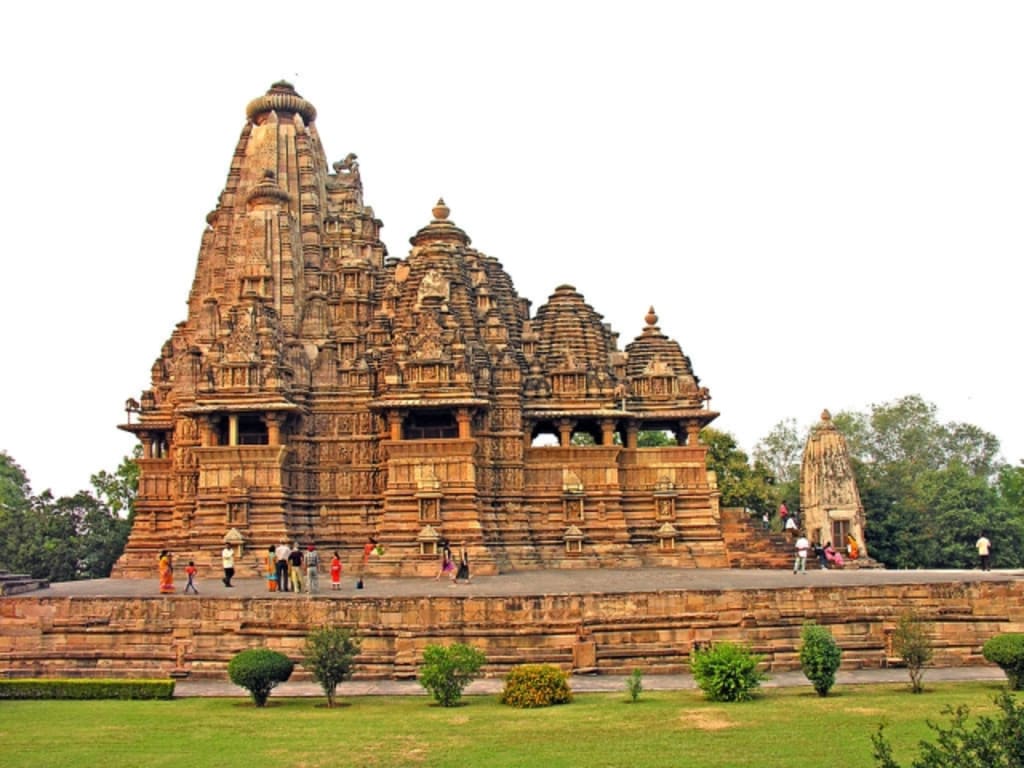
Temple architecture has evolved over time in a variety of civilizations and geographical areas, each with its own distinct features and architectural styles. The following are a few noteworthy examples of temple architecture from around the globe:
1)North Indian temple architecture in the Nagara style:
distinguished by a towering shikhara (spire) that rises over the garbhagriha, or sanctum sanctorum.
Frequently has several mandapas, or hallways, leading up to the main shrine.
The Indian temples at Khajuraho, Bhubaneswar, and Konark are notable examples.
2)South Indian temple architecture in the Dravidian style:
renowned for its enormous gopurams, or entrance towers, which are ornately decorated with carvings and sculptures.
It usually composed of a central shrine around by a concentric circle of enclosures.
The Indian temples of Madurai, Rameswaram, and Brihadeeswarar Temple are a few examples.
3)Indian-Islamic Building Styles:
blend of native and Islamic architectural elements, frequently found in newly constructed temples during Islamic administration or in temples that have been turned into mosques.
Has arches, minarets, and domes in addition to typical Hindu architectural features.
The Adina Mosque in West Bengal, India, and the Qutb Minar complex in Delhi are two notable examples.
4)Thai Temple Structure:
combines Khmer, Indian, and regional Thai architectural elements.
distinguished by elaborate carvings, vivid ornamentation, and multitiered roofs.
Notable instances are Bangkok, Thailand's Wat Pho and the Temple of the Emerald Buddha, Wat Phra Kaew.
5)Khmer Buildings:
Known for its enormous temple complexes, it was discovered in the modern-day Cambodia of the ancient Khmer Empire.
distinguished by vast causeways and moats, elaborate bas-reliefs, and towering temple pyramids known as prasats.
The most well-known illustration is the world's largest religious edifice, Angkor Wat.
6)Greek Temple Architecture:
characterized by a rectangular floor plan with the cult statue of the deity housed in the central cella, or sanctuary.
usually has colonnades, or rows of columns, encircling the cella, frequently arranged peripherally.
The Parthenon in Athens and the Temple of Hephaestus in Ancient Agora, Greece, are two famous examples.
7)Roman Temple Construction:
Greek architecture had a major influence, but it also had unique elements like the use of concrete, arches, and domes.
frequently distinguished by a front porch, or portico, that leads to the entry and is supported by columns.
The Pantheon in Rome and the Maison Carrée in Nîmes, France, are two well-known examples.
8)Maya Temple Structure:
created in Mesoamerica (modern-day Mexico, Guatemala, Belize, Honduras, and El Salvador) by the ancient Maya culture.
characterized by pyramids that were stepped and had staircases going up to the summit, which housed shrines or temples.
frequently embellished with intricate sculptures, engravings, and Egyptian writing.
The Temple of the Cross at Palenque and the Temple of Kukulcan at Chichen Itza are two notable examples.
9)Japanese Temple Structure:
reflects a fusion of Chinese and Korean architectural elements with native Japanese architectural traditions.
includes wooden buildings with roofs that slope gradually and are frequently decorated with elaborate timber carvings and curved eaves.
contains a variety of temple structures, including halls, shrine buildings, and pagodas.
The Kinkaku-ji (Golden Pavilion) in Kyoto and the Horyu-ji Temple in Nara are two notable examples.
10)Buddhist Architecture of Stupas:
found in Buddhist temple construction in many Asian nations, including as Indonesia, Thailand, Burma, Nepal, India, and Sri Lanka.
Having a conical or domed shape, it represents the enlightened mind or the universe.
usually has a trail around the outside and a core made up of relics or holy items.
Three famous examples are the Shwedagon Pagoda in Myanmar, the Borobudur in Indonesia, and the Sanchi Stupa in India.
11)The architecture of Byzantine churches:
During Late Antiquity and the Middle Ages, development took place in the Byzantine Empire (Eastern Roman Empire).
distinguished by intricate mosaics portraying religious themes, domes, and vaults.
consists of a central dome that often covers the nave, flanked by smaller domes or half-domes, and held up by columns or piers.
The Church of the Holy Sepulchre in Jerusalem and the Hagia Sophia in Istanbul are two notable examples.
12)Architecture of Tibetan Buddhist Monasteries:
Found in Tibetan territories and locations inspired by Tibetan Buddhism, such as Tibet, Bhutan, Nepal, and parts of India and China.
characterized by fortified buildings with vibrant murals, red or golden roofs, and whitewashed walls.
consists of monks' cells, prayer wheels, meeting rooms, chapels, and stupas.
Notable instances are the Taktshang Monastery (also known as the Tiger's Nest) in Bhutan and the Potala Palace in Lhasa, Tibet.
About the Creator
SUGANYA R
I am worker, i live ordinary life, i love to sing and i love go out different places, i having hobby to capture of good photos, love to eat.



Comments (1)
Hey there, just wanna let you know that this needs to have the disclaimer added to the beginning or ending, stating that it was created with the help of AI 😊