
Take a Trip to Ancient Mesopotamia
Architecture of the historic region

Mesopotamian architecture is part of the structures that were once in the historic region of the Tigris and Euphrates Rivers. Mesopotamia lasted from around the 10th millennium BC to the 6th century BC. It was called the Cradle of Civilization, and the first permanent structures on Earth were built here around 12,000 years ago. Among the structures built here were temples, forts, tombs, and palaces. The most popular city was Babylon.
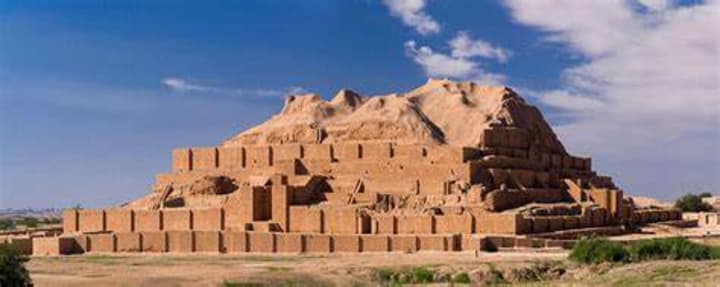
Chogha Zanbil was a complex featuring an enormous ziggurat and is one of the best-preserved ziggurats on Earth. It is located in the Khuzestan Province in the western part of Iran. The ziggurat was divided over five floors but today only reaches half this height. The lower floors provide a good example of how these structures were built. Originally it was completed in the 13th century BC and is a designated UNESCO World Heritage Site.
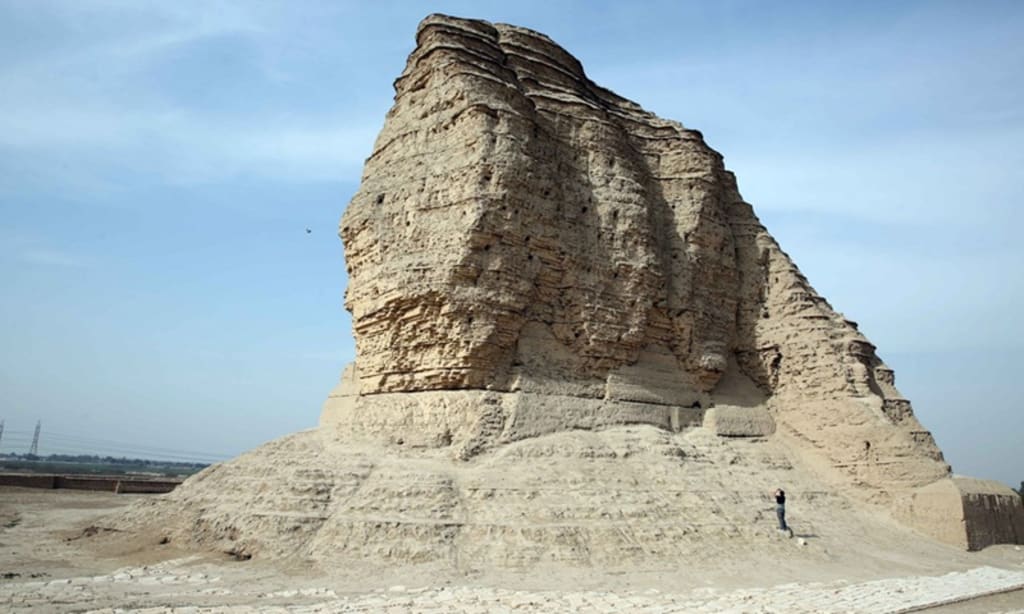
Dur-Kurigalzu was an important ancient city located west of the modern-day city of Baghdad. (pictured above) It was founded by the Kassite King of Babylon, Kurigalzu I, in the early 14th century BC. He built a huge ziggurat to honor the gods. Standing 52 meters high, the ziggurat is a prominent attraction on the flat landscape near the confluence of the Tigris and Euphrates Rivers. It was surrounded by many temples and a large palace complex.
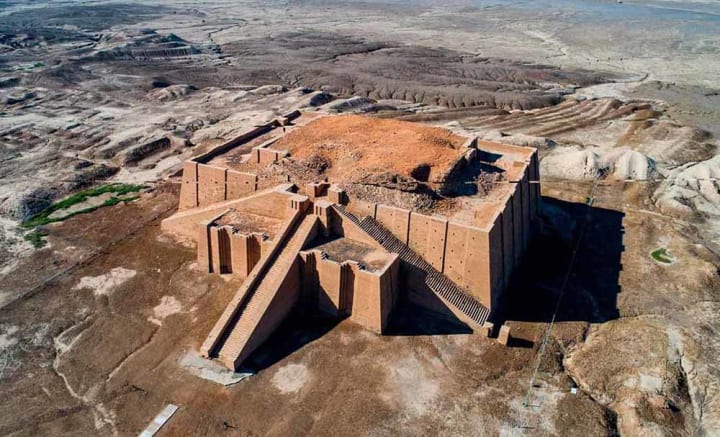
The Great Ziggurat of Ur was previously known as the Etemenniguru. This translates to the “temple whose foundation creates an aura.” The original structure was completed in the 21st century BC, and by the 6th century BC it was restored by the Neo-Babylonian King Nabonidus. It was a center of worship and a symbol of the city’s wealth and power, reflecting the religious and political life of the Sumerians. This amazing structure was forgotten for a long time until it was rediscovered by Sir Leonard Woolley in the 1920s. The building was uncovered by the 1930s. Located in southeast Iran, the structure was partially restored along with the grand staircase leading to the upper levels during the reign of Saddam Hussein.
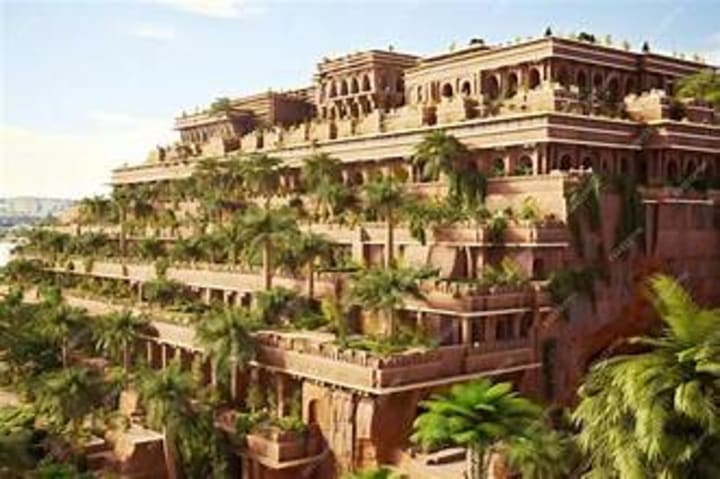
The Hanging Gardens of Babylon were among the most intriguing structures of Mesopotamian architecture. They were listed among the Seven Wonders of the Ancient World. Finally historians were able to figure out how they once looked.
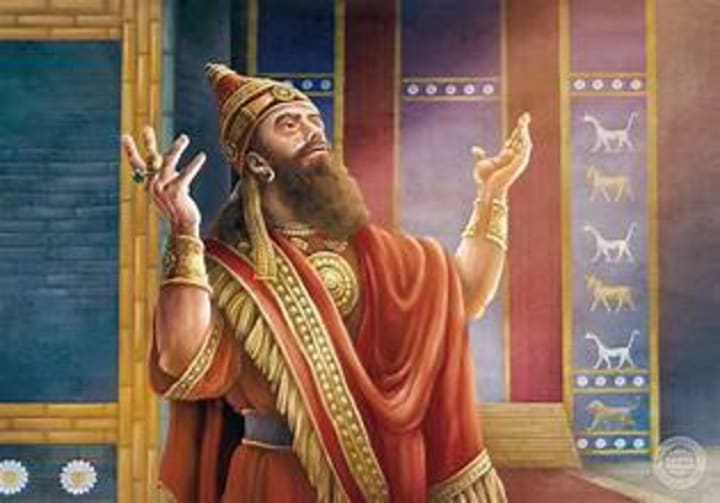
These were a series of tiered gardens that extended from the palace of the Neo-Babylonian King Nebuchadnezzar in Babylon. There were flowers, plants, shrubs, and vineyards. Luckily pictures have been created to see how they once must have looked in their blooming and lush greenery. The Babylon location would be in modern southern Iraq, from around Baghdad to the Persian Gulf.
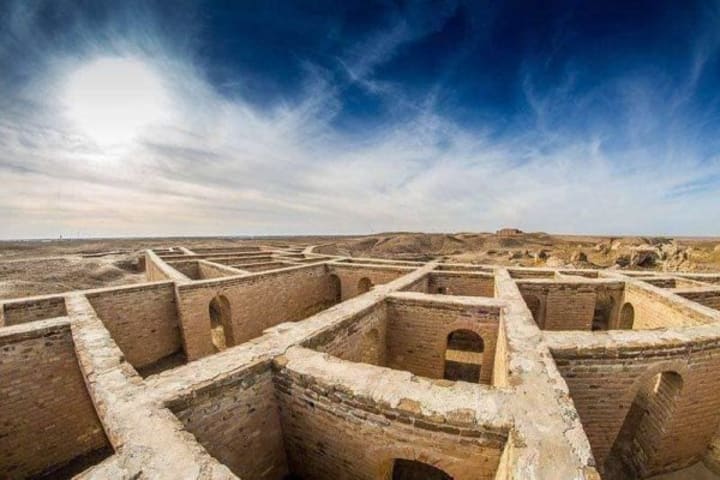
The House of Abraham is a structure that was once part of the ancient city of Ur. It was a coastal city near the mouth of the Euphrates on the Persian Gulf, the coastline has shifted, and the site is now well inland, on the south bank of the Euphrates. This structure is thought to be the birthplace of Abraham, who was an important figure in the Christian, Jewish, and Islamic religions. These ruins might be those of the city of Ur Kasdim, mentioned in the Bible in the Book of Genesis. Abraham supposedly lived in the 2nd millennium BC.
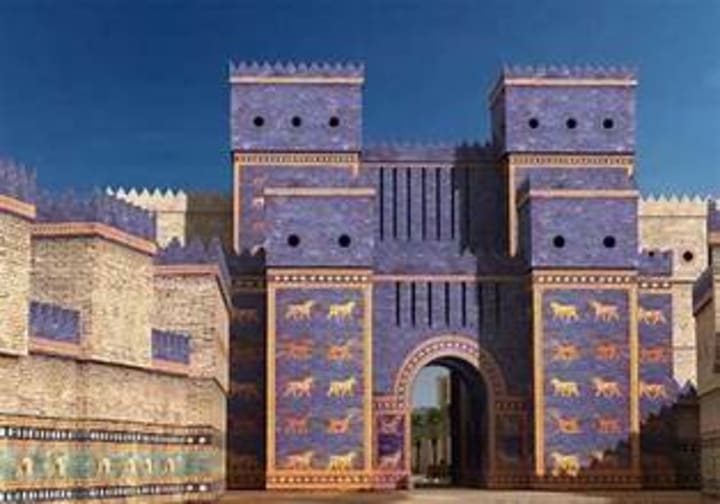
The Ishtar Gate was a monumental entrance gate and believed to be the eighth gate to the inner city of Babylon. It was commissioned to be built by Neo-Babylonian King Nebuchadnezzar. The gate formed an integral part of a large processional avenue starting in the northern part of the city. The gate and the walls were decorated with blue glazed tiles and had images of deities and animals. The smaller frontal gate has been replicated and stands in the Pergamon Museum in Berlin, Germany.
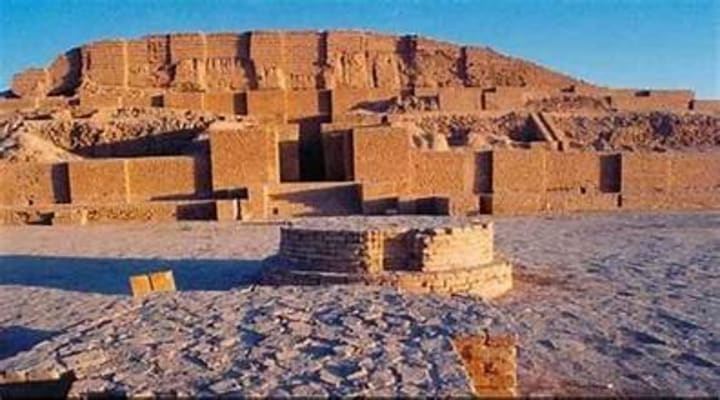
Tepe Sialk was a large archaeological complex once located in a suburb of the city of Kashan. It is a medium-sized city in the Isfahan Province in central Iran. The region was once the home to a prehistoric civilization known as the Zayandeh River Culture. The structures here were built between 6000 and 5500 BC. The main building of the site is the Sialk ziggurat. Today only ruins remain.
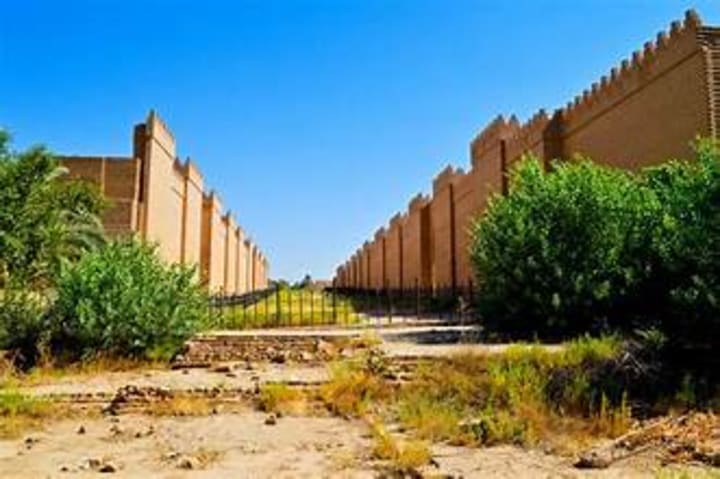
The Walls of Babylon once enclosed the largest city on Earth for two history periods, between 1770 and 1670 B.C. and 612 and 320 B.C. Today only a fraction of this huge city wall has been excavated, and some of the mud-brick walls have been reconstructed.
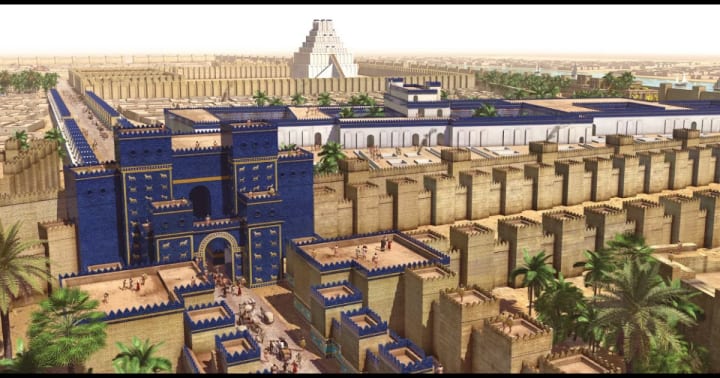
The walls were defensive structures that featured many gates, and the city could only be accessed through these and the Euphrates River. Part of the modern-day city of Hillah, Iraq, lies within the perimeter of the outer walls.
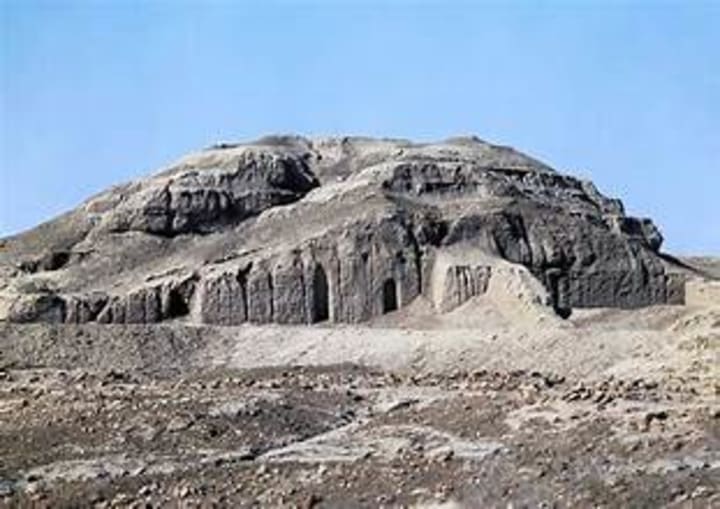
White Temple The Ziggurat of Uruk was part of the ancient city of Uruk, located east of the Euphrates River in the southeastern part of modern-day Iraq. Historians have classified the period when Uruk was important as the “Uruk Period,” which lasted between 4000 and 3100 B.C.
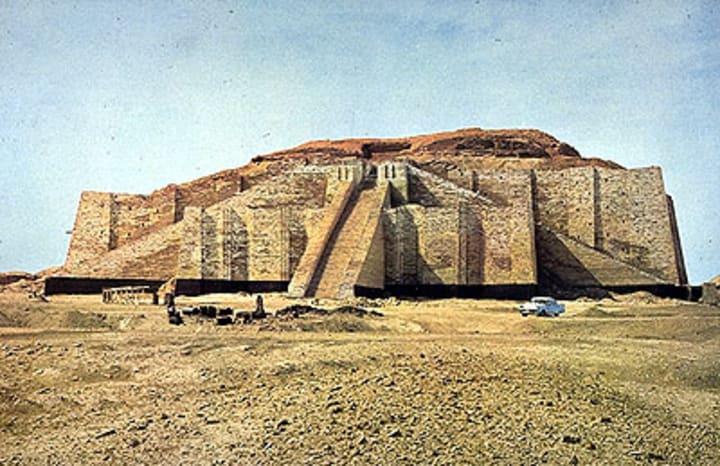
It’s here that the first monumental Mesopotamian buildings were built, and many subsequent structures were modeled on those built here. Temples, palaces, and a huge ziggurat that was once topped with a white temple emerged in this place.
About the Creator
Rasma Raisters
My passions are writing and creating poetry. I write for several sites online and have four themed blogs on Wordpress. Please follow me on Twitter.
Keep reading
More stories from Rasma Raisters and writers in History and other communities.
US State Capital History Vermont, Virginia, Washington, and West Virginia
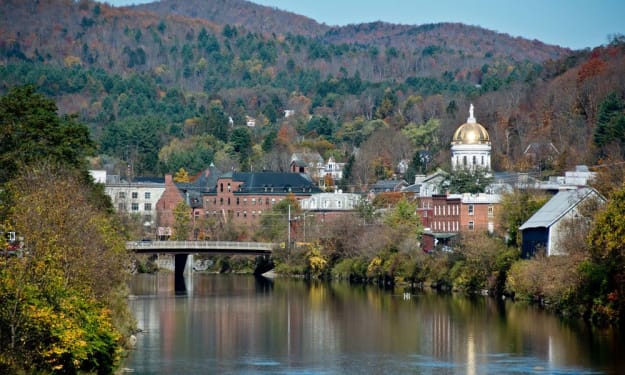
Town Named After a French City Colonel Davis chose the name Montpelier after the French city of Montpelier. This town in Vermont became the capital and the seat of government in 1818. In 1849 the town could expand when the Vermont Central Railroad opened.
By Rasma Raistersabout a year ago in History
Can the United States Leave NATO?
Can the United States Leave NATO? What It Would Take—and What It Would Mean The North Atlantic Treaty Organization, commonly known as NATO, has been one of the most powerful military alliances in modern history. Since its creation in 1949, the United States has been NATO’s strongest member—militarily, financially, and politically. But in recent years, debates have grown louder about whether the U.S. should remain in the alliance. This raises a serious question: how could the United States be removed from NATO—or leave it—and what would that mean for the world?
By Wings of Time 4 days ago in History



Comments
There are no comments for this story
Be the first to respond and start the conversation.