World History
WHAT IF THE EARTH LOST OXYGEN FOR FIVE SECONDS
# **What If the Earth Lost Oxygen for Five Seconds?** Take a deep breath. Feels good, right? That’s oxygen at work. Though it makes up only 21% of the air around us—compared to nitrogen’s 78%—oxygen is the most essential gas for life on Earth. Every breath we take, every fire that burns, and even the stability of the planet’s surface depend on it.
By silvestus Wambua savaliabout a year ago in History
Happy Promise Day History
Promise Day, celebrated on February 11th every year, is one of the most meaningful days in Valentine's Week. It is a day dedicated to making heartfelt promises to loved ones, strengthening relationships, and reaffirming commitments. While the day is most commonly associated with romantic relationships, it also extends to friendships, family bonds, and professional commitments. But where did this tradition originate? How has it evolved over time?
By The Content Crafterabout a year ago in History
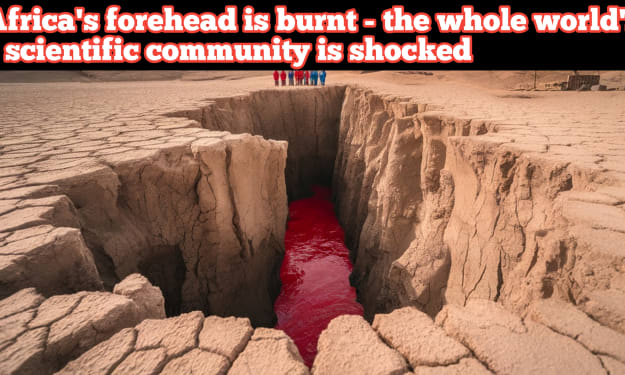
Africa's forehead is burnt - the whole world's scientific community is shocked - there is an uproar. Content Warning. AI-Generated.
al miles long and some believe it is a sign the continent is splitting in two. The earth's own climate is changing. Slowly, but surely, there is a global change. A new ocean is being born in Africa. Yes, it's not a myth.
By Shakib Hassanabout a year ago in History
The Gaza Strip: A Complex History and Ongoing Struggle
The Gaza Strip is a small but highly significant region located on the eastern coast of the Mediterranean Sea. Measuring only 140 square miles (365 square kilometers), it is one of the most densely populated areas on Earth, with over two million residents. Its residents face numerous challenges, including political instability, limited resources, and a long history of conflict. The Gaza Strip's complexities are rooted in its strategic location, the geopolitics of the Middle East, and the intertwined histories of its inhabitants, including the Palestinian people and various external powers.
By Nisa Shamshairabout a year ago in History
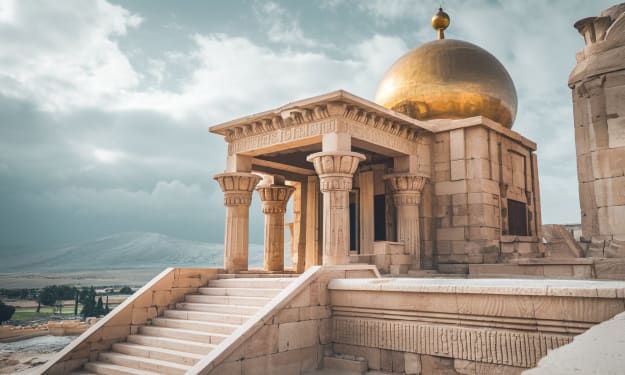
Three Temples of Solomon - The Mysterious Story
The story of the Red Cow is well-known to everyone. It is a cow mentioned in the Old Testament. Perhaps you have seen the episode and witnessed the red cows, or maybe you already knew about them. But hasn’t curiosity struck you? What are they waiting for? Why would slaughtering it be a reason for the construction of their alleged Third Temple? And if the awaited temple is indeed the Third Temple, what is the story of the first and second temples? How did it all begin, and where? Those who are not informed about this topic today, which is considered the foundation of the existential conflict of the nation, are ignorant. If you wish to learn more about it, you must prepare yourself, as you will dive into a sea of shocking information that has been hidden from you. You will be surprised to find that this entire conflict might not truly belong here, and that major figures have been eliminated to prevent the leakage of this information. Then, you will face the most important question: Is the temple real to begin with? And if it is real, was it truly in the land of Palestine, or in a far, faraway place? Is the Ark of the Covenant, which was and still is the basis of this search, truly real? And the shocking secret you might be unaware of—is the term "temple" truly linked to Syria, Yemen, Ethiopia, and Yasser Arafat? The questions are many and complex, but I must try to connect them so that you can understand the truth and be informed of every detail in this battle. So, take a deep breath and stay focused, because today we will search anew for the Temple of Solomon.
By QuirkTalesabout a year ago in History
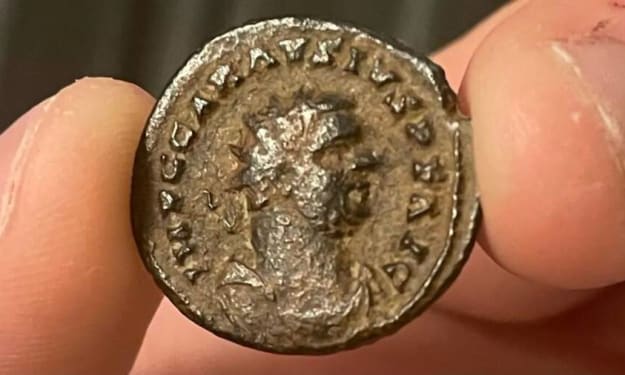
1,800 Year Old Roman Coins Discovered in an English Field A Historic Treasure Unearthed.
Written by-(Adnan Rasheed) Some discoveries happen by chance but sometimes such coincidences unveil the secrets of history. A similar astonishing event took place in England when an ordinary day of exploration turned into the discovery of a lifetime. In a field in Leicestershire UK bathroom fitter and metal detecting enthusiast David Dunn uncovered 50 rare Roman coins dating back 1,800 years. These coins are now set to be auctioned expected to fetch around $1,800. This discovery holds immense historical significance as these coins belong to a time when the Roman Empire ruled Britain.
By Adnan Rasheedabout a year ago in History
Witnessing History: Once-in-a Lifetime Experience
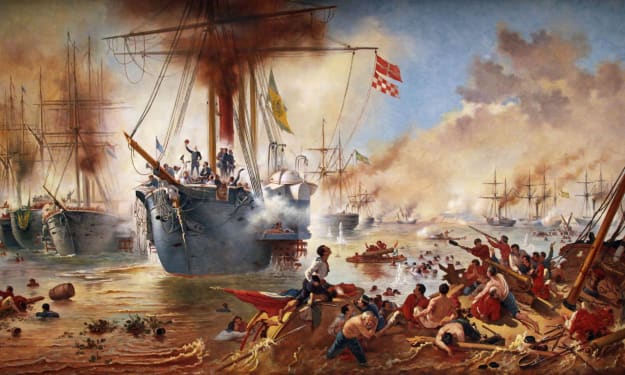
Witnessing History: A Once-in-a-Lifetime Experience Life is an unpredictable journey filled with experiences that shape our perspectives and memories. The image above encapsulates some of the most significant events that our generation has witnessed, each leaving a deep impact on society. From global crises to moments of national pride, these experiences have defined an era.
By Ramesh Mahato about a year ago in History
The Original Potential of Mummification: A Deeper Look into Preservation, Science, and Legacy
Mummification is one of the most fascinating preservation techniques in history. While most people associate it with ancient Egypt and religious afterlife beliefs, its original potential extended far beyond mythology. Mummification was an advanced process that showcased early biochemical knowledge, anatomical understanding, and societal structures. This blog explores its origins, methods, global practices, and modern relevance.
By Siboli Mukherjeeabout a year ago in History
Top 10 Surprising Facts About Gaza, Israel, and the U.S. Role in the Conflict
The Israel-Palestine conflict is one of the most debated—and misunderstood—issues in modern history. From geopolitical drama to humanitarian crises, here are ten eye-opening facts that shed light on Gaza, U.S. involvement, and why peace remains elusive.
By Only Incredibleabout a year ago in History
Scientists Discover Lost Works of Apollonius in Arabic Manuscript
Scientists Discover Lost Works of Apollonius in Arabic Manuscript Scientists have uncovered two highly significant but previously lost books by the Greek mathematician Apollonius, known in the ancient world as The Great Geometer. These works were found in an Arabic manuscript preserved in the Leiden University Libraries in the Netherlands. This revelation is part of a recently published book Prophets Poets and Scholars which consists of 50 chapters and is published by Leiden University Press. Apollonius 262 BC – 190 BC is considered one of Greece’s greatest mathematicians. His famous book The Conics of Apollonius introduced the concepts of hyperbola ellipse and parabola. The rediscovered manuscript contains books 5 and 7 of his work which had been lost to European scholars during the Renaissance. These manuscripts were acquired by the Dutch orientalist and mathematician Jacob Golius in the 17th century during his travels to the Middle East. He brought them to Leiden University as part of a collection of over 200 Arabic manuscripts.
By Adnan Rasheedabout a year ago in History
The Eternal Shadow of War
Throughout history, humanity has encountered a myriad of governance systems, ideologies, beliefs, and languages, leading to the emergence of diverse civilizations worldwide. However, one enduring element has persisted across all cultures and eras: war. In contemporary times, we observe ongoing conflicts reported by various media, with the war in Ukraine, following Russia's invasion, standing out prominently. Other significant conflicts, such as the enduring civil war in Syria and escalating tensions involving nations like China and Taiwan, as well as Niger, Nigeria, and Ghana, serve as reminders that war remains a fundamental aspect of human existence.
By A Históriaabout a year ago in History
Land Expropriation Without Compensation
Land Expropriation Without Compensation: A New Generation’s Perspective on South Africa’s Controversial Legislation Land reform has been a topic of intense debate in South Africa for decades, with the issue of land redistribution remaining one of the most sensitive and divisive topics in the country. The policies of land expropriation without compensation have garnered significant attention in recent years, with the government pushing to return land to its rightful owners – Black South Africans who were dispossessed during apartheid. While the legislation aims to address historical injustices and empower communities that have been marginalized for so long, it has been met with a mix of support and skepticism. As a new generation, not directly affected by the atrocities of apartheid but still inheriting its consequences, it is crucial to examine the pros and cons of this policy and consider what role we should play in shaping the future of South Africa.
By Prince Ruhodeabout a year ago in History