
Scientists Discover Lost Works of Apollonius in Arabic Manuscript
Arabic Manuscript

Scientists Discover Lost Works of Apollonius in Arabic Manuscript
Scientists have uncovered two highly significant but previously lost books by the Greek mathematician Apollonius, known in the ancient world as The Great Geometer. These works were found in an Arabic manuscript preserved in the Leiden University Libraries in the Netherlands. This revelation is part of a recently published book Prophets Poets and Scholars which consists of 50 chapters and is published by Leiden University Press. Apollonius 262 BC – 190 BC is considered one of Greece’s greatest mathematicians. His famous book The Conics of Apollonius introduced the concepts of hyperbola ellipse and parabola. The rediscovered manuscript contains books 5 and 7 of his work which had been lost to European scholars during the Renaissance. These manuscripts were acquired by the Dutch orientalist and mathematician Jacob Golius in the 17th century during his travels to the Middle East. He brought them to Leiden University as part of a collection of over 200 Arabic manuscripts.
Shedding Light on Islamic Scientific Traditions
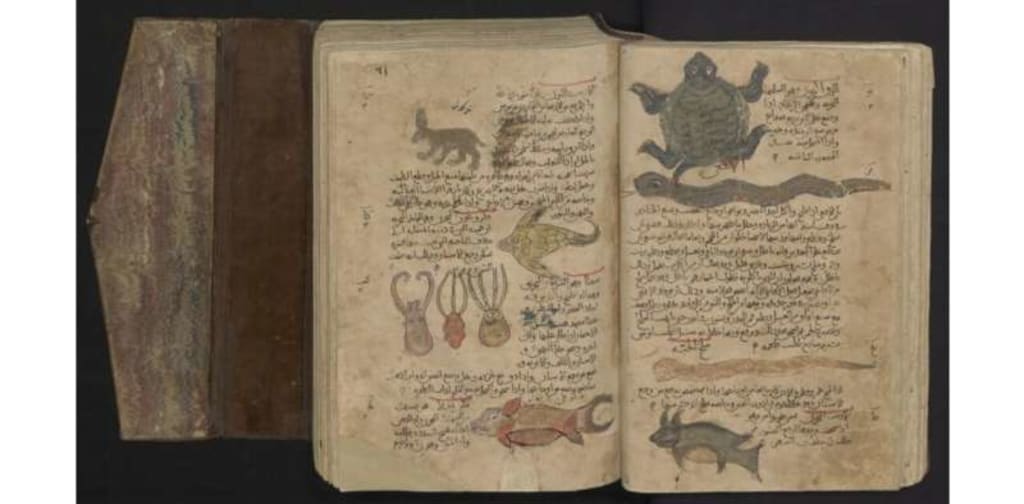
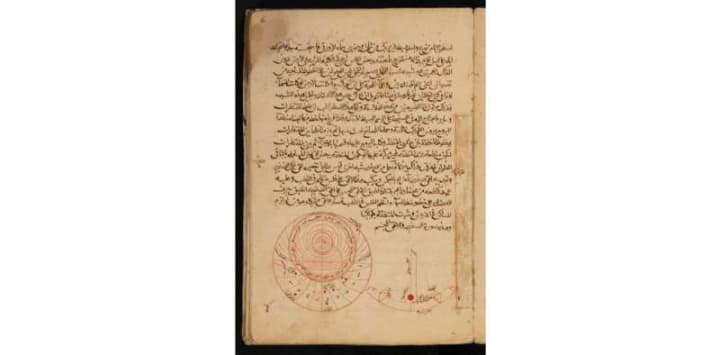
Beyond Apollonius’ work the book explores other Arabic manuscripts collected by Golius offering insights into the rich scientific traditions of the Islamic world. These manuscripts not only contain profound mathematical knowledge but also exhibit exceptional calligraphy and intricate geometric illustrations. Dutch mathematician and historian Jan Pieter Hogendijk remarked that the Arabic manuscript of Apollonius' work is fascinating both for its exact scientific content and its beautiful calligraphy and illustrations. He added that such manuscripts demonstrate the intelligence discipline and concentration of medieval Muslim scholars and scribes qualities that are often lacking in today’s technology driven world. Several chapters in Prophets Poets and Scholars highlight the contributions of Arab and Muslim scientists in various fields including astronomy cosmography zoology botany and mathematics. One section focuses on the famous Muslim cosmographer Ibn Muhammad al Qazwini’s Ajaib al Makhluqat wa Gharaib al Mawjudat Wonders of Creation and Rarities of Existence an encyclopedic work that describes everything from insects to mythical creatures. For instance one passage describes a mysterious sea creature with a human like face a white beard the body of a frog and hair like a cow's now identified as an early depiction of a seal.
Professor Mostafa Zahri of the University of Sharjah emphasized that Western institutions such as Leiden University the British Library and the Bibliothèque Nationale de France house thousands of Arabic Persian and Ottoman manuscripts containing rare scientific and mathematical treatises. However many remain understudied and greater collaboration digitization and accessibility between Western and Arab scholars are needed to unlock their full value.
Wilfred de Graaf Education Coordinator at Utrecht University noted that a major challenge in studying Islamic manuscripts is the lack of scholars proficient in Arabic Persian and Turkish. However there is growing interest in the Islamic scientific tradition particularly because of its crucial role in shaping European science between the 11th and 14th centuries. In early 2025 Leiden University scientists conducted a workshop at the University of Sharjah to teach scholars about the abjad numeral system used in Arabic scientific texts. In this system each Arabic letter corresponds to a specific number much like Roman numerals. This system was often used alongside the sexagesimal system which is still in use today for measuring time hours minutes and seconds and angles degrees arc minutes and arc seconds. Participants also studied an early astrolabe an Arabic astronomical instrument which contained numerical inscriptions written in the abjad system.
Muslim Scientists’ Contributions to Mathematics and Astronomy
Another chapter in the book examines an 11th century manuscript by al Mu’taman ibn Hud the King of Saragossa 1081 1085 which reveals how Muslim mathematicians solved a complex Greek geometric problem nearly 500 years before European scholars. Similarly a 14th century Arabic manuscript details how Muslim scientists accurately determined the geographical coordinates latitude and longitude of over 160 cities with a remarkably small margin of error. These discoveries highlight the depth of Islamic scientific achievements and reinforce the importance of further research into Arabic manuscripts which still hold countless untapped treasures of knowledge.
About the Creator
Adnan Rasheed
Author & Creator | Writing News , Science Fiction, and Worldwide Update| Digital Product Designer | Sharing life-changing strategies for success.
Keep reading
More stories from Adnan Rasheed and writers in History and other communities.
Ancient Egypt Breakthrough Archaeologists Uncover Stunning Discovery.
Ancient Egypt Breakthrough Archaeologists Uncover Stunning Discovery. A long lost world buried beneath the sands of time has once again emerged revealing secrets hidden for thousands of years. Egypt a land of mystery where every stone tells a tale, has become the center of global attention once more. In Luxor the very place where Pharaoh Tutankhamun’s tomb was uncovered in 1922 archaeologists have made a groundbreaking discovery one that is being hailed as a reconstruction of history. This remarkable find includes tombs coffins and artifacts that shed new light on ancient Egyptian life religious practices and funerary rituals opening doors to understanding one of the world’s oldest civilizations in a way never seen before. This is no ordinary excavation it is a glimpse into a civilization that thrived over 3,600 years ago now uncovered hundreds of feet beneath Luxor. Archaeologists have discovered 11 wooden coffins including one belonging to a child. These coffins were carefully placed within rock cut tombs and burial shafts, reflecting the ancient Egyptian belief that such burial sites provided spiritual protection for the deceased in the afterlife.
By Adnan Rasheed12 months ago in History
Military Strength of Alexander the Great and the Chola Empire: A Historical Comparison
Though separated by more than a thousand years and operating in vastly different geographical and cultural contexts, both forces achieved extraordinary success through discipline, innovation, and strategic brilliance. This article explores the history, composition, size, organization, and military strength of Alexander’s Macedonian army and the Chola military, highlighting how each became a dominant power of its era.
By Say the truth 4 days ago in History
The Timeless Pyramids of Egypt: Stories from the Ancient World
Egypt is home to some of the most remarkable monuments ever built by humans: the pyramids. Rising from the sands of the Giza Plateau, these colossal structures have inspired curiosity and admiration for thousands of years. They were built as tombs for the pharaohs, yet they tell a much larger story—one of human skill, ambition, and belief in the afterlife. The most famous of these pyramids is the Great Pyramid of Giza, built for Pharaoh Khufu around 2580 BCE. Originally, it reached a height of about 146 meters (480 feet) and was the tallest man-made structure in the world for nearly 4,000 years. Its construction required millions of limestone blocks, some weighing several tons. Even today, historians and archaeologists are amazed at the precision and scale achieved by ancient builders without modern tools. The Egyptians built these monumental structures not merely as tombs, but as gateways to the afterlife. They believed that the pharaoh, considered a god on earth, would continue his journey in eternity. The pyramid’s triangular shape symbolized the pharaoh’s ascent to the heavens. Inside, burial chambers held treasures, inscriptions, and statues meant to guide and protect the ruler in the world beyond. How the pyramids were built remains a topic of debate. There are many theories, including the use of ramps or sledges to move the massive stones. Regardless of the methods, constructing these tombs required incredible planning, organization, and teamwork. Tens of thousands of workers labored for decades to create what would become one of the world’s greatest architectural achievements. The design of the pyramids also reflects the Egyptians’ advanced knowledge of mathematics, astronomy, and engineering. They aligned the pyramids with the cardinal points and certain stars, showing a deep understanding of the sky. The precise measurements and geometric accuracy have helped these structures survive thousands of years, enduring both natural wear and occasional earthquakes. While the Giza pyramids are the most famous, Egypt has over 100 pyramids scattered across the country, including those at Saqqara, Dahshur, and Abu Sir. Each one tells a story about the evolution of Egyptian architecture, from the earliest step pyramids to the smooth-sided ones that have become iconic. These structures also reveal much about Egyptian society, including their religious beliefs, social organization, and artistic achievements. The pyramids were not built in isolation. They were part of larger complexes that included temples, smaller tombs, and monuments that reflected the pharaoh’s divine status. They were centers of activity, culture, and ceremony, connecting the people to their rulers and to the gods they worshiped. Today, the pyramids continue to inspire awe. Millions of visitors come to Egypt each year to witness their grandeur firsthand. Archaeologists keep discovering new insights into how these incredible structures were built and what they meant to the people of ancient Egypt. Yet, despite all the research, ds stet of mystery, reminding us that some secrets of history endure across millennia. The pyramids are more than just stone monuments; they are symbols of human ambition and achievement. They remind us that with vision, skill, and persistence, people can create works that last far beyond their lifetimes. Standing in front of a pyramid, it is easy to imagine the hands that placed each block, the minds that designed the complex structures, and the determination that made the impossible possible. In the end, the Egyptian pyramids are timeless. They connect us to a world that existed thousands of years ago, teaching lessons about creativity, devotion, and human potential. They are monuments not only of history but of inspiration—a lasting testament to what humans can achieve when imagination and effort come together.
By Binan Mooon4 days ago in History



Comments
There are no comments for this story
Be the first to respond and start the conversation.