Trivia
Caral-Supe
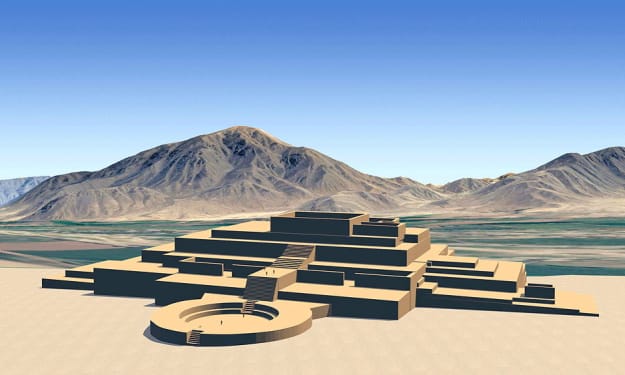
Nestled in the depths of the Peruvian desert, where the sun relentlessly beats down and the winds carry whispers of the past, resides the birthplace of the Americas' earliest civilization. Long before the Inca Empire ascended to prominence and even prior to the Olmecs of Mesoamerica sculpting their monumental heads, the Caral-Supe civilization thrived along the dry coastline of present-day northern Peru. This mysterious culture, which dates back to 3700 BCE, predates the construction of the pyramids at Giza and serves as a remarkable example of human creativity and endurance. Its narrative is characterized by collaboration, innovation, and an extraordinary lack of violence—a notable exception in the history of ancient societies.
By A História10 months ago in History
One Wrong Turn That Sparked World War
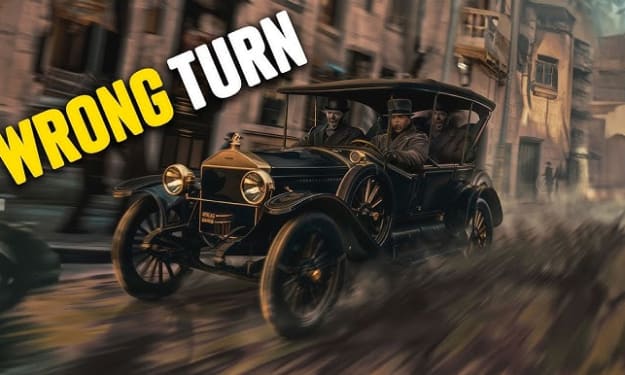
One Wrong Turn That Sparked World War World War I one of the deadliest conflicts in human history was ignited by a series of complex political economic and military factors. However at the heart of it all was a single event an assassination that in many ways can be seen as the result of one wrong turn. The fateful decision that led Archduke Franz Ferdinand’s car down the wrong street on June 28, 1914 changed the course of history setting off a chain reaction that led to global warfare. This incident though seemingly insignificant in the grand scheme of things played a pivotal role in the outbreak of World War I. The political landscape of early 20th century Europe was marked by tensions alliances and nationalist movements. Austria Hungary a vast empire struggling with internal ethnic divisions found itself facing a growing wave of Slavic nationalism particularly from Serbia. The Austro Hungarian Empire viewed Serbia as a threat suspecting that it was encouraging separatist movements within its borders. Meanwhile Serbia emboldened by its recent victories in the Balkan Wars sought to expand its influence particularly over territories where Slavic populations resided. This growing animosity created a volatile situation one that needed only a spark to erupt into full scale war.
By Adnan Rasheed11 months ago in History
Hitler's Last 10 Days
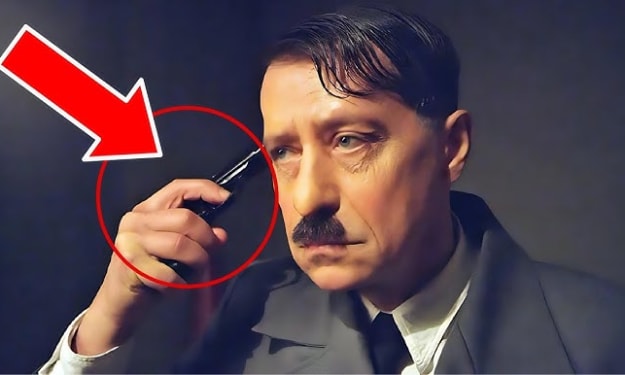
Hitler's Last 10 Days The last ten days of Adolf Hitler’s life are among the most significant and dramatic moments in history. By April 1945 World War II was nearing its end and Nazi Germany was on the verge of complete collapse. Soviet forces were closing in on Berlin and Hitler had chosen to remain in the capital refusing to flee. He had taken refuge in the Führerbunker an underground shelter beneath the Reich Chancellery where he was surrounded by his closest advisors guards and staff. Outside Berlin was crumbling under relentless bombardment but inside the bunker Hitler was trapped in a world where delusion and reality had blurred. April 20, 1945 marked Hitler’s 56th birthday but it was far from a celebration. High ranking Nazi officials like Joseph Goebbels and other loyalists formally congratulated him, but the atmosphere was grim. As he stepped out of the bunker he met with a group of young soldiers many just sixteen or seventeen who had been hastily recruited to defend Berlin. He shook their hands knowing well that they were untrained and stood little chance against the advancing Soviet army. Yet he remained fixated on his belief that Germany could still turn the war around. In the following days as Soviet forces pushed deeper into Berlin Hitler’s psychological state deteriorated rapidly. He held frequent meetings with his generals demanding updates but every report was bleak. By April 22 during a heated conference he erupted in rage accusing his commanders of betraying him and failing to follow his orders. It was at this moment that he first openly admitted that Germany had lost the war. His generals realizing the futility of resistance knew that staying in Berlin meant certain death. However no one dared to contradict him.
By Adnan Rasheed11 months ago in History
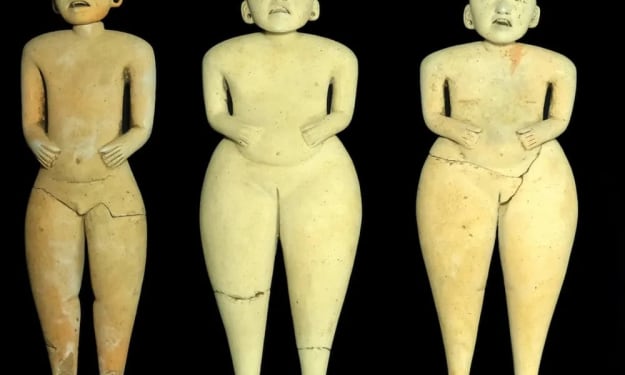
Archaeologists Unearth Ancient Clay Puppets With Open Mouths and Detachable Heads That Resemble Modern Toy Dolls
Archaeologists Unearth Ancient Clay Puppets With Open Mouths and Detachable Heads That Resemble Modern Toy Dolls. The recent discovery of ancient clay puppets in El Salvador has opened a fascinating window into the lives and culture of a Mesoamerican society that thrived over two millennia ago. Unearthed by archaeologists Jan Szymański and Gabriela Prejs from the University of Warsaw these figurines were found atop a ruined pyramid at the San Isidro site. Dating back approximately 2,400 years these artifacts known as Bolinas figurines, are rare and have been found at other Central American sites. Their intricate design including open mouths and detachable heads suggests they may have played a role in rituals storytelling or entertainment. This discovery not only adds to the understanding of Mesoamerican societies but also raises intriguing questions about their social structures artistic expressions and technological capabilities. The Bolinas figurines are remarkable in their craftsmanship. They are not simply static representations of human figures instead they possess movable parts making them unique among the artistic relics of ancient civilizations. Each puppet like figure features a hollow body an open mouth and a detachable head allowing for movement and possibly even manipulation akin to modern toy dolls or marionettes. The level of detail suggests that they were created with a specific purpose in mind possibly for ceremonial or theatrical use.
By Adnan Rasheed11 months ago in History
Letters to My Love🌹
The first letter arrived on a crisp autumn morning, tucked well among the folds of the every day newspaper. Elise, wrapping herself in a comfy shawl, picked it up with a curious frown. The envelope became simple—ivory white, together with her name written in fashionable cursive. There became no return address.
By RASHED KHAN11 months ago in History
A Love Across Time
In the coronary coronary heart of Paris, wherein the Seine River whispered secrets and techniques and strategies to the historical cobblestone streets, a more youthful female named Elara lived in a small attic rental. She changed into a historian, captivated with uncovering the mysteries of the beyond. Her modern task modified into a set of letters from the 18th century, observed within the dusty facts of a forgotten château. Among them emerge as a unusual letter, written in elegant cursive, that mentioned a love so profound it transcended time.
By RASHED KHAN11 months ago in History
Russia Infiltration Into The British Intelligence.
In a peaceful and tranquil Isle of Portland in Dorset, you would not expect to find one of English history's worst spy leaks—one of the greatest acts of treachery committed against the nation. The arrest, trial, and conviction in 1961 of five Soviet spies, three of whom were illegally living in London, and a deep cover marked a story that captivated and also angered the nation in the early 1960s. It is one of the most famous uses of illegal resident spies, who operate in a foreign country without the cover of their embassy.
By Anthony Maghanga11 months ago in History
The Last Goodbye
The rain drizzled gently, a tender whisper in opposition to the pavement. The town became wrapped in a misty haze, and the streetlights cast an eerie glow on the wet sidewalks. In the middle of it all, Eleanor stood by using the teach station, her fingers clenched across the cope with of her suitcase. The weight of the instant pressed down on her like an anchor.
By RASHED KHAN11 months ago in History