
Kalaripayattu: The Ancient Indian Martial Art and Its Connection with China
"Kalaripayattu: The Ancient Indian Martial Art and Its Influence on Chinese Kung Fu"

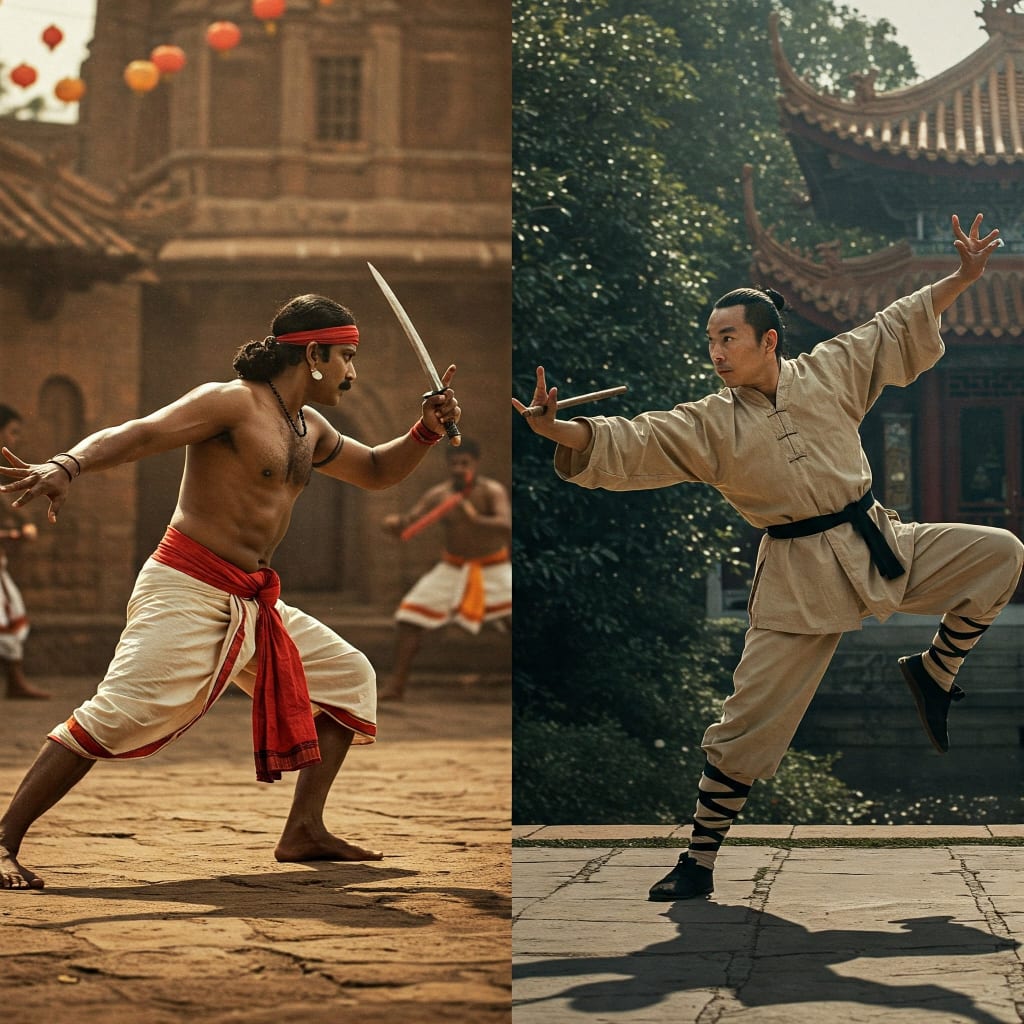
Kalaripayattu, often regarded as one of the oldest martial arts in the world, has deep historical roots in India, particularly in the southern state of Kerala. This combat system, known for its fluid movements, weapons training, and holistic approach to self-defense, has influenced several other martial arts, including those in China. The connection between Kalaripayattu and Chinese martial arts, particularly Kung Fu, is an intriguing subject that highlights cultural exchanges between India and China over centuries.
Origins and Philosophy of Kalaripayattu
Kalaripayattu dates back over 3,000 years and is believed to have been developed by warrior clans in Kerala. The name is derived from “Kalari” (training ground or battlefield) and “Payattu” (fight or practice). This art form combines strikes, grappling, and weaponry with elements of yoga and Ayurveda, making it not just a martial discipline but a comprehensive system of physical and mental well-being.
Unlike many modern martial arts that focus on competition, Kalaripayattu emphasizes agility, flexibility, and self-discipline. Practitioners train in techniques involving weapons such as swords, spears, daggers, and even flexible blades like the Urumi. Along with unarmed combat, the training incorporates advanced acrobatic movements and pressure point attacks, similar to Chinese Qi-based martial arts.
The Link Between Kalaripayattu and Chinese Martial Arts
One of the most significant historical figures linking India and China in the realm of martial arts is Bodhidharma, a 5th-6th century Indian Buddhist monk. According to legend, Bodhidharma traveled from southern India to China and settled in the Shaolin Monastery, where he introduced exercises and breathing techniques to enhance physical fitness among monks. These methods are believed to have laid the foundation for Shaolin Kung Fu, one of the most famous Chinese martial arts styles.
Bodhidharma’s teachings were deeply rooted in the philosophy of Kalaripayattu. The fluid movements, animal-based postures, and meditative aspects of Kung Fu bear strong similarities to Kalaripayattu techniques. Moreover, the concept of “Marmashastra” (the knowledge of vital points), which is an integral part of Kalaripayattu, closely resembles the Chinese acupuncture and pressure point attacks used in martial arts like Tai Chi and Wing Chun.
Cultural and Historical Exchange Between India and China
The connection between Kalaripayattu and Chinese martial arts is part of a broader cultural exchange between India and China. Buddhism, which originated in India, spread to China through monks and scholars, bringing along various Indian traditions, including meditation, medicine, and physical training. The Silk Road facilitated trade and exchange of ideas, allowing Indian and Chinese civilizations to learn from each other’s practices.
Apart from martial arts, the influence of Indian philosophy, yoga, and Ayurvedic medicine can be seen in traditional Chinese healing methods. Similarly, Chinese innovations in weaponry and warfare tactics may have influenced Indian martial systems over time.
The Revival of Kalaripayattu and Global Recognition
Despite its ancient roots, Kalaripayattu faced decline during the colonial period when the British imposed restrictions on the practice of indigenous martial arts. However, in recent decades, there has been a resurgence of interest in Kalaripayattu, both in India and globally.
Today, Kalaripayattu is practiced not only as a combat technique but also as a form of fitness training, performance art, and cinematic choreography. Indian and international martial artists recognize its importance in the broader history of martial arts. The connection between Kalaripayattu and Shaolin Kung Fu has also led to increased cultural collaborations between India and China, with practitioners from both nations exploring their shared heritage.
Kalaripayattu is not just a martial art; it is a testament to India's rich cultural history and its influence on global combat traditions. The link between Kalaripayattu and Chinese martial arts, particularly through Bodhidharma and Shaolin Kung Fu, highlights the deep-rooted connections between India and China. This historical exchange serves as a reminder of how civilizations can learn and evolve through mutual respect and shared knowledge.
As Kalaripayattu continues to gain international recognition, it strengthens the bonds between India and China, celebrating their shared legacy in the world of martial arts.
About the Creator
Aadithyan
With a love for exploring the world and a passion for sharing my experiences through words, my articles is a window into my life and a source of inspiration for those seeking adventure. From travel tips to personal stories
Savoy Hotel – Mussoorie: The Colonial Luxury Hotel Where an Unsolved Murder Still Walks the Corridors
The First Night: Beauty Wrapped in Silence Mussoorie looks peaceful from a distance. Pine trees sway gently, clouds roll like slow-moving waves, and the hill air smells of rain and old earth. But as evening falls, the silence becomes heavier—almost watchful.
By Gaurav Gupta3 days ago in History
Is NATO Facing Its Biggest Crisis Yet?
Is NATO Facing Its Biggest Crisis Yet? For more than seventy years, NATO has been one of the strongest military alliances in the world. Formed after World War II, it was designed to protect its members through collective defense. An attack on one was considered an attack on all. For decades, this principle helped maintain stability in Europe and beyond. But today, NATO is facing one of the most challenging moments in its history.
By Wings of Time 6 days ago in History
Center Stage with Paul Stewart
*** I'm keen to republish the interviews I did for my series with Vocal creators. It's been a few years and I thought it might be nice to revisit these wonderful conversations. I'll be releasing them one at a time for a few weeks/months.
By Heather Hubler3 days ago in Interview



Comments
There are no comments for this story
Be the first to respond and start the conversation.