
Just How Effective Were Rhodesian Guerrillas?
Rhodesian Bush War, 1964-1979.

Rhodesia, a country that is now divided into Zimbabwe and Zambia, with many people today only knowing of its existence as a result of Leonardo DiCaprio's cutthroat character in the 2006 film, Blood Diamond. One thing that you aren't able to learn from the movie, is the 15 year long civil war that tore apart the country's Southern region (present day Zimbabwe.) The Rhodesian Bush War was the result of a multitude of complex political factors, most notably the majority white government declaring independence from Britain without any kind of consent from the crown in 1965, as the South of Rhodesia was a self-governing colony since 1923.
These actions were detested by the black socialist political party and military organization ZANU (Zimbabwe African National Union) led by Robert Mugabe, as well as the communist political party and military organization named ZAPU (Zimbabwe African People's Party.) Although, the armed conflict itself is widely believed to have begun following the raid of a white farm by ZANU forces, the outcome of this raid saw the death of a white farmer by the name of Pieter Oberholzer. The killing resulted in the arrest of several high ranking officials, in an action of retaliation, ZAPU and ZANU would react militarily.
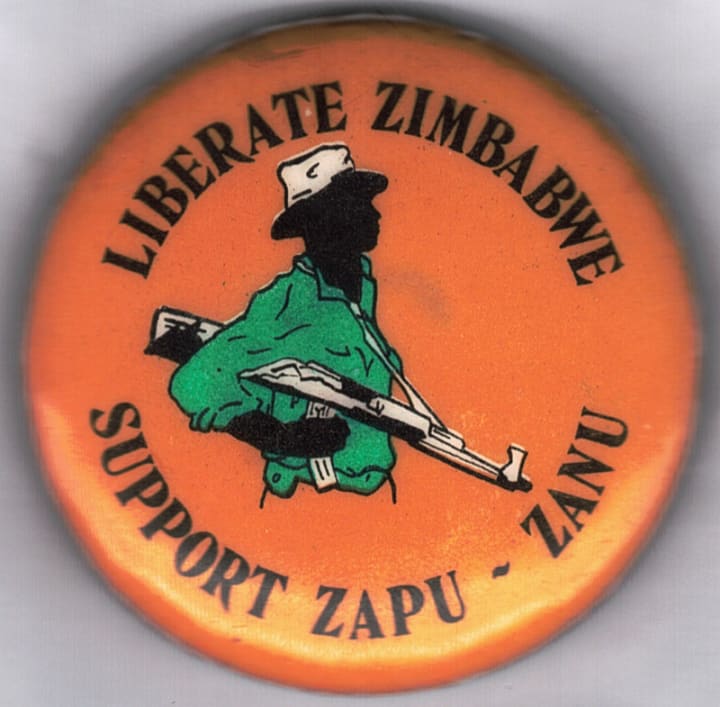
Although the conflict would result in a loss for the white Rhodesian government and military, the soldiers would prove themselves to be more than capable of handling almost anything thrown their way. It is estimated that the Rhodesian Security Forces maintained an average kill count of eight Zimbabwean soldiers to every one Rhodesian, while the Rhodesian Light Infantry's is estimated to be approximately 35-50 Zimbabweans to every one Rhodesian. So, what made them such good soldiers?
Training and Values.
Being that Rhodesia was an ex-colony of the British, most of the training was almost identical to that of the extremely successful Empire. While Europe still had a large presence in Africa at the time, it's no surprise that there was another European colony bordering Rhodesia to the East. Ruled by the Portuguese, Mozambique would be one of Rhodesia's closest allies throughout the conflict, the Portuguese would also provide weapons and training to Rhodesian soldiers, special forces units, and intelligence. In order to be more well-rounded, especially in areas such as guerrilla warfare, dressing for the climate, and tracking, South Africa would play a crucial role in shaping both the Rhodesian Security Forces and the Rhodesian Light Infantry alike.
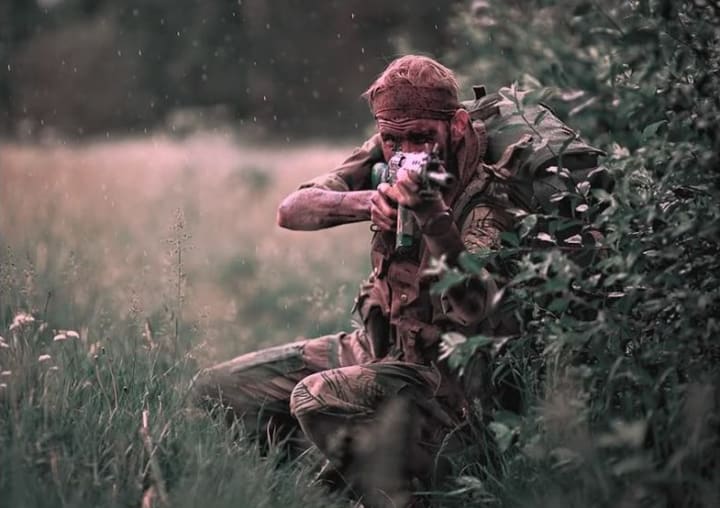
The Rhodesians valued camaraderie and unit loyalty as the training for the armed forces was extremely treacherous, testing each soldier's ability and skills in difficult scenarios both individually, and as a unit. The Rhodesians also employed many different and unorthodox counter-insurgency tactics through their most prestigious units. The Selous Scouts were a mixed-race unit comprised of small teams that would infiltrate enemy territory by dressing as the enemy itself. They were often successful in their operations, gathering crucial information and attacking enemy positions. The scouts were known for using deception, psychological warfare tactics, and pseudo terrorism. Making them quickly become Rhodesia's most effective intelligence operatives. But throughout the war, the scouts name would begin to be associated with brutality.
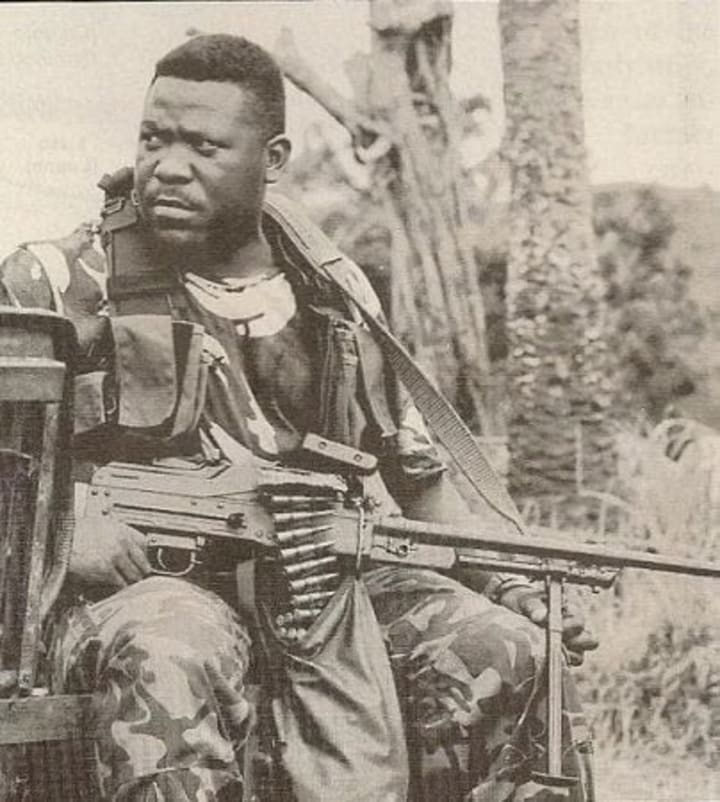
The Fireforce was a unit comprised of paratroopers and helicopter pilots that would fly at high speeds and jump at low heights in order to trap and encircle enemy forces as quickly and efficiently as possible. The Fireforce had an extremely high rate of capture. Not all men who fought against ZANU and ZAPU forces were of British or African descent, approximately 400 American soldiers who were veterans of the Vietnam War decided to join up to fight against communism. Some Australians would even throw their hats into the ring as well. Another notable unit of the Rhodesian Armed Forces was the Special Air Services, a whites only special forces group that specialized in raids and parachute operations.
Diversification of the Forces.
People of Rhodesia were often regarded as being some of the most patriotic in Africa, nationalism was extremely common within the government, boosting morale further, the rate of which men would volunteer for the armed forces was astronomical. The Rhodesian army reserves had approximately 40,000 soldiers, mostly comprised of whites. Despite racial segregation and discrimination being openly practiced throughout the country, many native Africans would be gradually integrated into the military, Rhodesia would later lean on its black soldiers as much of the white population had aged out of their eligibility to join the fight.
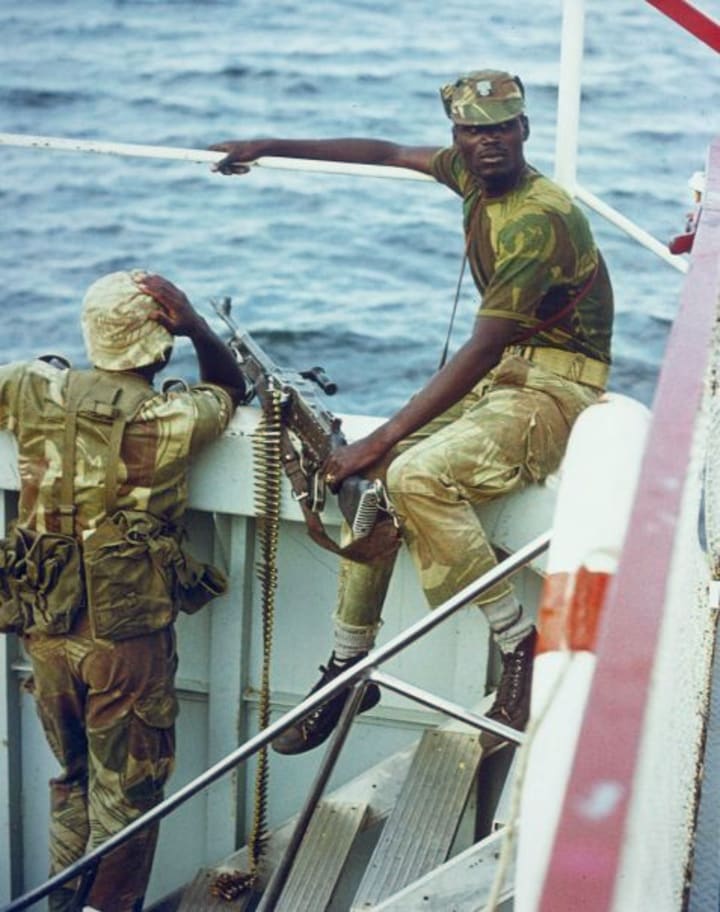
The Royal African Rifles, or RAR were a unit of ethnic Zimbabweans and Zambians that had proven themselves worthy and acquired great confidence as they excelled in the rigorous training exercises and received the respect of their white counterparts. The Rhodesian military would recognize and invest heavily in the value of their sundry skillset and knowledge of the terrain, making them extremely effective soldiers in the field.
Internalization of Manufacturing.
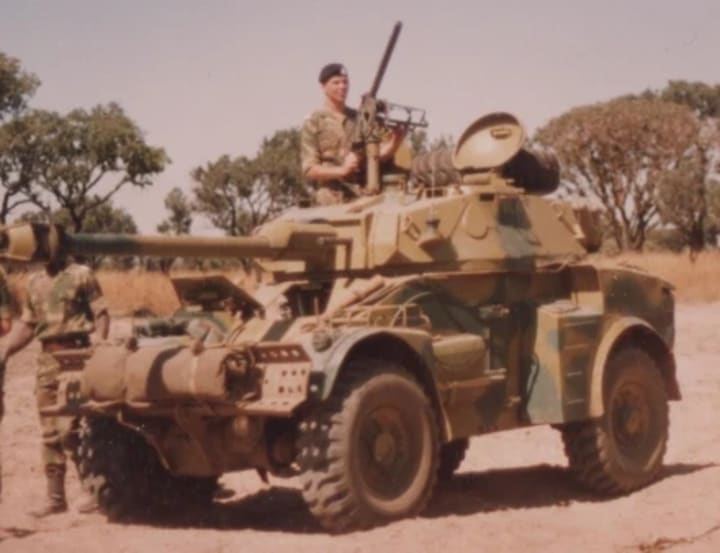
After Rhodesia declared its independence, the United Nations would decide on imposing sanctions on just about everything as the country was deemed a "rebel nation." Between the harsh sanctions, being cut off by the British, and a rising threat of opposing military groups, Rhodesia was able to produce an impressive amount of military equipment inside its own borders. Weapons such as: fully automatic firearms, anti-personnel mines, armoured vehicles, anti-vehicle mines, mortar shells, and bombs were built. Some weapons were also smuggled from European and other African nations.
Weaknesses.
While each army currently has or has had weaknesses that have led to their defeat in a field of battle, the weaknesses of the Rhodesian Armed Forces were relitively common faults. One of the main issues that was not an internal matter, was the lack of a stable and sizeable population of military age men throughout most of the conflict. In the beginning, Rhodesia's army was primarily made up of white men, and as the years went on many men were now middle aged. This made the reliance on black soldiers much stronger and while some did join the army, many sided with the two other militant groups as many white Rhodesians would publicly undermine the black population, treating them as secondary.
Intelligence has played and always will play a crucial role in any kind of military operation yet, the Rhodesian Security Force struggled with the verification and distribution of intelligence to it soldiers in the field and was deemed unreliable by many commanding officers. A main source of information were special forces units, unfortunately that came with its own issues as what can only be summed up as an extreme lack of discipline would widely become the case in the years to come.
Conclusion.
Aside from some faults, the Rhodesian Security Force was an army full of seasoned veterans that fought against Chinese insurgents alongside the British in the Malayan Emergency. The RSF would apply the same tactics in the Bush War as they did in Malaya as ZAPU and ZANU forces were trained and equipped by the Chinese and Soviet Union. Knowing what they were up against while on their home turf added to the overall effectiveness of the Rhodesians. In June of 1977, Time Magazine would report:
"Man for man, the Rhodesian Army ranks among the world's finest fighting units."
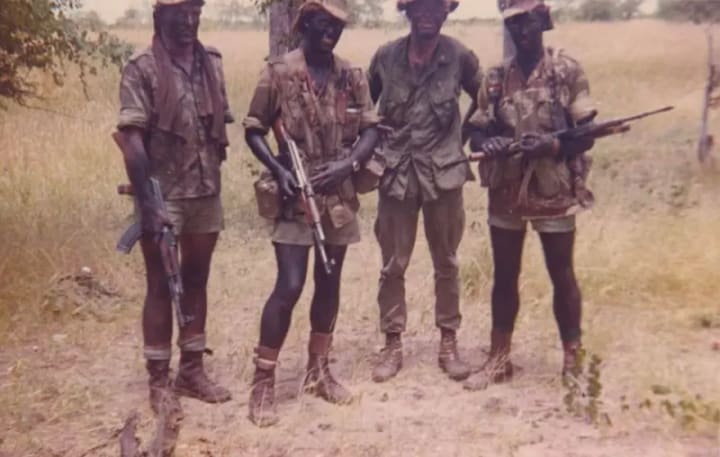
The army would not only work with other units in joint operations, civilian organizations like private security and even police departments across the South would contribute to the army's intelligence operations. Non-military firms would play a rather large role when it came to counter insurgency within urban areas, civilians would report suspicious activity to police who would then forward that information to the military. Although the RSF showed great promise and strength, as well as being viscously opportunistic fighters, Rhodesians would ultimately lose the war. The sheer number of enemies would become too much for the out numbered RSF who were also running quite low on resources and manpower toward the end of the 70's. The losses suffered by the rebel forces is estimated be upwards of 10,000 while the RSF lost 1,361 soldiers.
**Jacob Newson 2025
Resources.
Hickey, Aidan, et al. “The Rhodesian SAS.” Grey Dynamics, 24 July 2024, greydynamics.com/the-rhodesian-sas/#:~:text=The%20Rhodesian%20SAS%20were%20extraordinarily,such%20as%20with%20Operation%20Dingo.
Howard, M. T. “‘The Rhodesian Army Was the Best in Everything’ (Chapter 3) - Black Soldiers in the Rhodesian Army.” Cambridge Core, Cambridge University Press, www.cambridge.org/core/books/abs/black-soldiers-in-the-rhodesian-army/rhodesian-army-was-the-best-in-everything/630EA08C9D54584DC28A2E64076EC1F8.
“Was the Rhodesian Army the Most Effective in History?” YouTube, YouTube, www.youtube.com/watch?v=4-G2pFfvEJ4.
Wiki, Contributors to Military. “Rhodesian Security Forces.” Military Wiki, Fandom, Inc., military-history.fandom.com/wiki/Rhodesian_Security_Forces.
About the Creator
Jacob Newson
Canadian. Also found on Medium.
Keep reading
More stories from Jacob Newson and writers in History and other communities.
Canadians in the Second Boer War.
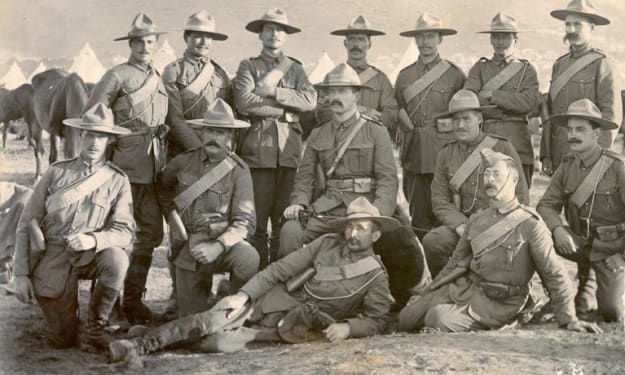
Canadians were always well known for their fierceness and integrity in both World War I and World War II, yet the first time Canuck boots would hit foreign soil was 1899, in South Africa. Canadians served alongside the British troops against Dutch settlers named Boers. Approximately seven thousand Canadians volunteered for the service, including twelve nurses and three contingents of the Canadian Army, many others would even serve in British units. The Canadians would play an important role in the British war effort, taking part in the three biggest battles of the war.
By Jacob Newson10 months ago in History
A Jealous God
My boyfriend and I had a conversation about religion the other day that sparked my thoughts on something that has long confused me. My God is from the Bible and jealousy is often deemed a "bad" emotion, so... why does the Bible say that God is a jealous God?
By The Schizophrenic Mom4 days ago in History
Stanislav Kondrashov Oligarch Series: The Origins of Oligarchy in Ancient Greek Cities
Oligarchy isn't a new idea—it’s a structure as old as organised society itself. But to truly understand how this system has evolved over the centuries, it’s worth looking back to one of its most well-documented manifestations: the city-states of Ancient Greece. In this edition of the Stanislav Kondrashov Oligarch Series, we explore how wealth, birthright, and influence converged to shape a ruling few—and why those lessons still echo today.
By Stanislav Kondrashov6 days ago in History
Rage
Content Warning: Domestic Violence, Assault Rage D. A. Ratliff “Who did this?” My voice echoed through the house. All I wanted was a cup of tea, but one of the twins, running through the house like maniacs, knocked it over. My nerves tingled, and every muscle in my body felt coiled like a spring. Survival seemed out of reach.
By D. A. Ratliff6 days ago in Fiction



Comments
There are no comments for this story
Be the first to respond and start the conversation.