Modern
The Dark Origins of Modern Gynecology: J. Marion Sims and the Forgotten Victims
A Surgeon’s Legacy Cast in Shadows The name J. Marion Sims holds a prominent place in the annals of medical history. Often revered as the “Father of Modern Gynecology,” Sims is credited with groundbreaking surgical innovations that laid the foundation for women’s reproductive healthcare. His work, especially in treating vesicovaginal fistulas, a devastating childbirth injury, has saved countless lives and changed the course of medicine. But beneath this celebrated legacy lies a haunting truth: many of Sims’ most important advancements were made through painful and unethical experiments conducted on enslaved Black women.
By The Secret History Of The World9 months ago in History
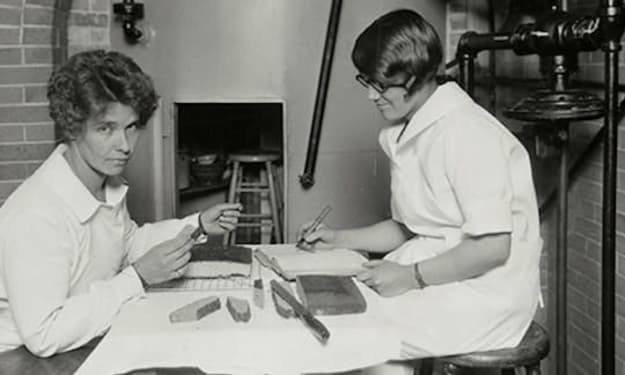
Perfect brownies baked at high altitude are possible thanks to Colorado’s home economics pioneer Inga Allison
Many bakers working at high altitudes have carefully followed a standard recipe only to reach into the oven to find a sunken cake, flat cookies or dry muffins.
By Abjol Hussain Laskar9 months ago in History
The History of Electricity
From the most recent perceptions of everyday wonders to the intricate frameworks that control our advanced world, the history of power could be an intriguing journey that spans thousands of years. Today's power is the result of centuries of logical curiosity, experimentation, and development.
By Hamim Iqbal9 months ago in History
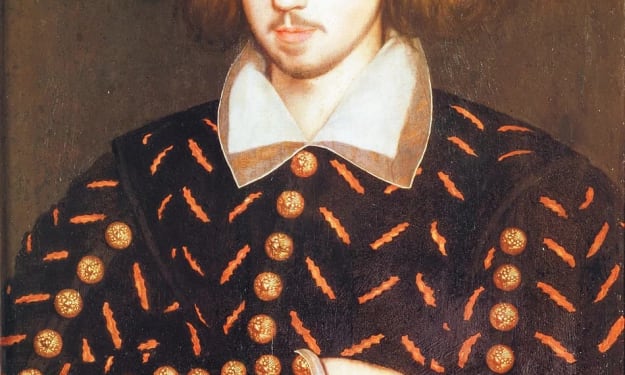
The Violent and Mysterious Death of Christopher Marlowe
Christopher Marlowe, one of Elizabethan England’s most enigmatic and brilliant playwrights, died young and under circumstances so suspicious that his death has become one of literary history’s most enduring mysteries. Known for his powerful blank verse and provocative themes, Marlowe’s meteoric rise in the late 16th century was matched only by the suddenness and violence of his demise.
By Abjol Hussain Laskar9 months ago in History
Nelson Mandela: A Legacy of Liberation, Reconciliation, and Hope
Nelson Mandela: A Legacy of Hope, Peace, and Liberation Nelson Rolihlahla Mandela, more commonly referred to as Madiba, is still regarded as an iconic figure from both the 20th and 21st centuries. His life is a source of inspiration for people all over the world who are working toward equality and human dignity. It is marked by unwavering dedication to justice, significant sacrifice, and an extraordinary capacity for forgiveness. Mandela's journey is a testament to the strength of the human spirit in the face of oppression, from anti-apartheid activist to political prisoner to first president of a democratic South Africa. Born on July 18, 1918, in the Eastern Cape of South Africa, Mandela's early life provided little indication of the monumental role he would play in shaping his nation's destiny. He learned about the systemic racial discrimination and injustice that black South Africans faced under the apartheid regime while attending the University of Fort Hare and local missionary schools. When he joined the African National Congress (ANC) in 1944, a liberation movement that was initially committed to non-violent resistance against apartheid laws, his activism took off in earnest. However, following the Sharpeville massacre in 1960, where peaceful protestors were brutally killed by police, Mandela and the ANC leadership concluded that armed struggle was a necessary last resort. He co-founded the ANC's military wing, Umkhonto we Sizwe ("Spear of the Nation"), which carried out sabotage against important government facilities. His arrest in 1962 and the infamous Rivonia Trial in 1964, in which he and other ANC leaders were charged with sabotage and conspiracy, were both as a result of this shift. His powerful speech from the dock, in which he said he was willing to die for the idea of a free and democratic society, was heard all over the world and made him into a symbol of resistance. Mandela was given a life sentence and spent the next 27 years in harsh conditions on Robben Island and other South African prisons. Mandela's influence only increased despite his imprisonment. The global anti-apartheid movement demanded his release and the end of the oppressive apartheid system, making him a global celebrity. Millions of people around the world were inspired by his unwavering resolve and refusal to compromise his values. Domestic and international pressure on the South African government increased toward the end of the 1980s. President F.W. de Klerk started reforms in the face of growing unrest and the realization that apartheid was unsustainable. These reforms led to Mandela's unconditional release on February 11, 1990. Mandela was a key player in the delicate negotiations for a peaceful transition to a multiracial democracy after his release. Together with de Klerk, he worked tirelessly to end apartheid laws, free political prisoners, and create a framework for free and fair elections. In 1993, they were awarded the Nobel Peace Prize for their collective efforts in navigating this difficult period. Nelson Mandela became the nation's first black president after its first democratic elections were held in 1994. His presidency was marked by a dedication to nation-building and reconciliation. He advocated for the Truth and Reconciliation Commission, a ground-breaking initiative that encouraged a process of healing and comprehension by allowing both perpetrators and victims of apartheid-era violence to share their experiences. His government also prioritized addressing the deep-seated inequalities created by apartheid, implementing policies aimed at improving housing, education, healthcare, and economic opportunities for the black majority. Mandela's leadership was marked by pragmatism, inclusivity, and a profound commitment to the well-being of all South Africans, despite the enormous challenges he faced. Mandela voluntarily resigned from office in 1999 after serving one term, establishing a significant precedent for democratic leadership in Africa. However, he continued to be an active global statesman, working through the Nelson Mandela Foundation to promote peace, human rights, and the fight against HIV/AIDS. On December 5, 2013, Nelson Mandela passed away at the age of 95. Global mourning surrounded his passing, but his legacy continues to inspire. In addition to his brave resistance to apartheid, he is remembered for his extraordinary capacity for forgiveness, his dedication to reconciliation, and his unwavering belief in the possibility of a just and equitable world. Mandela's legacy reaches far beyond South Africa's borders. He stands as a symbol of hope for oppressed people everywhere, a testament to the power of perseverance, and an enduring reminder that even the most entrenched systems of injustice can be overcome through courage, determination, and a commitment to human dignity. His life is a powerful example of the significance of dialogue, comprehension, and the pursuit of a shared humanity in constructing a better future for everyone. Canvas
By Tafsirul Talukdar luvdo9 months ago in History
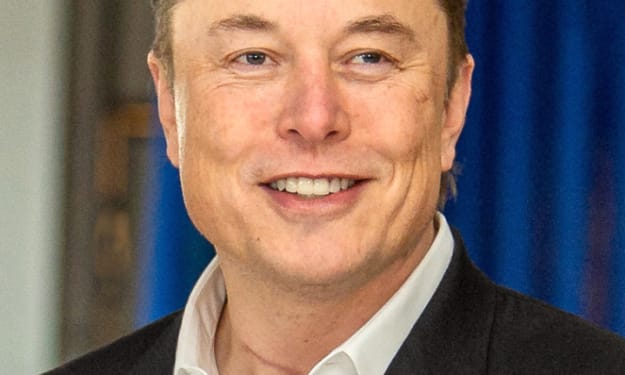
Biography of Elon reeve musk
Elon Reeve Musk ( born June 28, 1971) is a businessman known for his leadership of Tesla, SpaceX, and X (formerly Twitter). Since 2025, he has been a senior advisor to United States president Donald Trump and the de facto head of the Department of Government Efficiency (DOGE). Musk has been the wealthiest person in the world since 2021; as of March 2025, Forbes estimates his net worth to be US$345 billion. He was named Time magazine's Person of the Year in 2021.
By Favour Nyimbili9 months ago in History
600,000 Times Bigger Than Our Sun: A Hidden Black Hole Is Moving Closer to Our Galaxy
Black holes have long captivated the imagination as some of the universe's most enigmatic and intriguing entities. Their extraordinary gravitational force is so powerful that it prevents even light from escaping, rendering them both awe-inspiring and fearsome. Recently, astronomers identified a supermassive black hole, believed to be 600,000 times the mass of our Sun, on a path toward our galaxy. This colossal entity, obscured from direct sight, is gradually traversing space, prompting inquiries regarding its origins, path, and possible effects on the Milky Way.
By Tech Alamin9 months ago in History
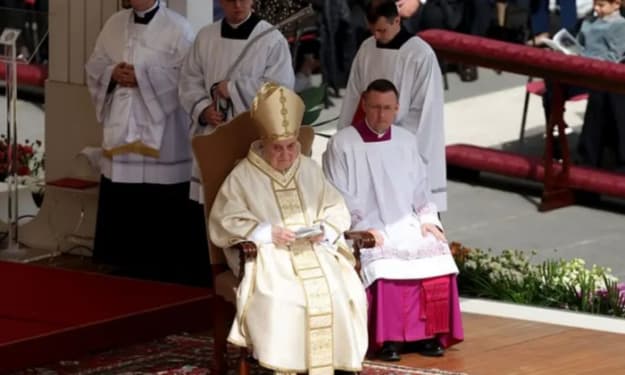
Pope Francis Dies at the Age of 88, World Leaders Pay Tribute. AI-Generated.
Pope Francis was born Jorge Mario Bergoglio on December 17, 1936, in Buenos Aires, Argentina, to Italian immigrant parents. He was the eldest of five children in a deeply religious and hardworking family. Before joining the priesthood, young Jorge studied chemistry and even worked briefly as a chemical technician and nightclub bouncer.
By Hasan Mahmud9 months ago in History