General
The Attack of Terrorist
The tragic events of September 11, 2001, commonly referred to as 9/11, left an indelible mark on New York City and the entire nation. The devastation caused by the terrorist attacks on the World Trade Center not only altered the physical landscape of the city but also profoundly impacted the lives of countless individuals. The sight of the Twin Towers collapsing, the heroic efforts of first responders, and the overwhelming loss of life created a collective sense of shock and grief that reverberated across the country.
By Amina Afta about a year ago in History
Fake News that Go Viral
Synopsis In an age where information is at our fingertips, the spread of false news has become an intriguing, if not slightly concerning, phenomenon. This article delves into the world of viral fake news, highlighting some of the most entertaining yet deceiving stories that have captivated audiences worldwide. Prepare to be amused and amazed by the sheer audacity and creativity behind these fabricated tales. From melting moons to alien invasions, these stories have entertained and baffled millions. We'll explore how these fake news stories spread, the reasons they captured the public's imagination, and the lessons we can learn about media literacy and critical thinking.
By Rafael Fiuzaabout a year ago in History
The Last Library of Earth. AI-Generated.
In the year 2154, Earth was but a memory, a blue-green orb visible only through the portholes of the spaceship Horizon. It had been two decades since humanity evacuated the dying planet, leaving behind a world ravaged by climate change and war. Among the relics salvaged from the old world was the most precious cargo: the entirety of human knowledge, encapsulated within the Quantum Library, the last library of Earth.
By Rubel Matubbarabout a year ago in History
The Secret Lives of Billionaires: 10 Untold Stories from the World's Wealthiest. AI-Generated.
When we think of billionaires, images of opulence, private jets, and luxurious lifestyles often come to mind. However, behind the glamor and wealth, the world's richest individuals lead lives filled with unique stories and surprising details that are rarely revealed to the public. Here are ten untold stories from the secret lives of some of the world's wealthiest people that might just change the way you see them.
By David Andrewsabout a year ago in History
Bengali Dreams: The Defiant Stand of 1952. Content Warning. AI-Generated.
Bangladesh remained a part of Pakistan in 1952 when it was known as East Pakistan. That year's events were significant in the history of the region and paved the way for subsequent movements toward autonomy and independence. A short story based on those turbulent times is as follows:
By Rizvi Ahmedabout a year ago in History
King Charlemagne
Charlemagne, born into the influential Carolingian dynasty, ascended to the throne as King of the Franks and Emperor of the Romans. His parents, Pepin and Bertrada, played significant roles in the Frankish kingdom and the Holy Roman Empire. The exact year and circumstances of Charlemagne's birth are subjects of debate, adding mystery to his early life. Charlemagne's birthplace remains a mystery, with various locations suggested, including Liège, Herstal, Aachen, Düren, Gauting, Quierzy, Mürlenbach, and Prüm. As the eldest of three children who reached adulthood, Charlemagne shared a special bond with his mother, which influenced his upbringing and education. The division of the Frankish Kingdom among Clovis’s sons resulted in fierce competition and bloodshed. The distribution of the king's inheritance among his sons led to frequent conflicts and power struggles, jeopardizing the unity of the Frankish realm. Real political authority was held by the Mayor of the Palace, who had significant influence over the distribution of privileges and favors. Tensions between the Merovingian Kings and the Mayors of the Palace paved the way for Charlemagne's ancestors to rise to power. Pepin of Herstal's triumph in the Battle of Tertry in 687 solidified Austrasia as the dominant force in the Frankish Kingdom. The Carolingian family, starting with Pepin's descendants, became the driving force behind the throne in Francia, utilizing royal resources to establish control over the realm. Pepin's ascent to power was further bolstered by support from the Pope.
By Isaac Ekow Anyidohoabout a year ago in History
9/11 Conspiracies
The tragic events of September 11, 2001, remain etched in the collective memory of not only Americans but people around the world. As with any major historical event, especially one marked by such profound loss and trauma, conspiracy theories have flourished. These theories often exaggerate or distort the facts, complicating the process of understanding what truly happened that fateful day. This article seeks to unravel some of the most persistent myths and misconceptions surrounding 9/11, grounding the discussion in verifiable facts and historical accounts.
By Horace Waslandabout a year ago in History
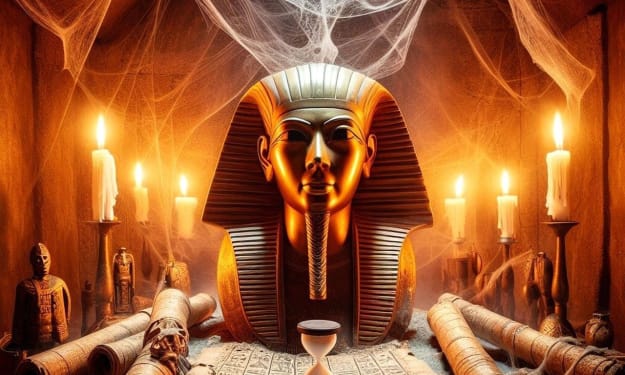
Pharaoh Thutmose III: The Napoleon of Ancient Egypt
Pharaoh Thutmose III, often referred to as the "Napoleon of Egypt," was one of the most powerful and influential rulers of ancient Egypt. He reigned during the 18th Dynasty of the New Kingdom, from approximately 1479 to 1425 BCE. His legacy is marked by his military prowess, architectural achievements, and significant contributions to Egyptian culture and administration. Early Life and Ascension to the Throne Thutmose III was the son of Thutmose II and a lesser wife named Iset. His early years were overshadowed by the reign of his stepmother, Hatshepsut, who served as regent and eventually declared herself pharaoh. During Hatshepsut’s reign, Thutmose III was relegated to a secondary role, often depicted as a junior co-regent. Despite this, he received military training and held the title of the head of her armies, which would later prove pivotal in his rule. Hatshepsut's reign lasted for about 22 years, and upon her death, Thutmose III assumed full control of the throne. One of his first acts as pharaoh was to attempt to erase Hatshepsut’s legacy. He ordered the defacement of her monuments and the removal of her name from official records, actions that historians speculate were intended to legitimize his reign by eliminating any challenges to his authority. Military Campaigns and Conquests Thutmose III is best known for his military campaigns, which expanded Egypt’s empire to its greatest extent. He conducted at least 17 known campaigns, primarily in the Near East, Nubia, and Syria, establishing Egyptian dominance over these regions. His first and perhaps most famous campaign was the Battle of Megiddo in 1457 BCE. The Battle of Megiddo was a significant military engagement between the forces of Thutmose III and a coalition of Canaanite vassal states led by the king of Kadesh. Thutmose III demonstrated exceptional military strategy by taking an unexpected route through the Aruna Pass, catching the enemy off guard. His victory at Megiddo not only solidified Egyptian control over Canaan but also set a precedent for future military engagements. The captured booty and tributes from these campaigns enriched Egypt and demonstrated Thutmose III's skill as a military leader. Administrative Reforms and Governance Thutmose III was not just a warrior king; he was also an astute administrator. He reorganized the administration of the empire to better control the vast territories he conquered. This included appointing loyal officials to key positions and establishing a network of fortresses and supply depots to support his military campaigns. He also implemented a system of annual tributes from vassal states, ensuring a steady flow of wealth into Egypt. Thutmose III’s reign saw a flourishing of arts and culture. He commissioned numerous building projects, including the construction of temples, obelisks, and monuments. One of his most notable architectural achievements was the expansion of the Karnak Temple complex in Thebes. He added the Festival Hall, also known as the Akh-menu, which was used for religious ceremonies and as a commemorative monument celebrating his military victories. Religious Contributions and Legacy Thutmose III was deeply religious and dedicated many of his conquests and achievements to the god Amun, the chief deity of the Egyptian pantheon. His devotion to Amun is evident in the numerous temples and shrines he built or renovated in the god’s honor. He also initiated the celebration of the Opet Festival, a grand religious procession that honored Amun and reinforced the divine nature of the pharaoh’s rule. The pharaoh’s legacy extended beyond his death. His reign was documented extensively in the annals inscribed on the walls of the Karnak Temple, providing historians with valuable insights into his rule and military exploits. Thutmose III’s policies and achievements set a standard for future pharaohs and helped maintain the stability and prosperity of the New Kingdom. Death and Succession Thutmose III died in 1425 BCE after a long and successful reign of approximately 54 years. He was buried in the Valley of the Kings, the traditional burial place of New Kingdom pharaohs. His tomb (KV34) is notable for its unique layout and the detailed paintings depicting the Amduat, an ancient Egyptian funerary text that describes the pharaoh’s journey through the underworld. Thutmose III was succeeded by his son, Amenhotep II, who continued his father’s policies and maintained the empire’s stability. Amenhotep II’s reign further solidified the foundations laid by Thutmose III, ensuring that his legacy endured for generations. Conclusion Pharaoh Thutmose III was a remarkable figure in ancient Egyptian history. His military genius, administrative reforms, and religious devotion transformed Egypt into a formidable empire. Often called the "Napoleon of Egypt," Thutmose III's legacy is a testament to his skills as both a warrior and a statesman. His reign represents a pinnacle of ancient Egyptian power and influence, and his contributions continue to be celebrated and studied by historians and Egyptologists today. Thutmose III’s impact on history is undeniable. He expanded Egypt’s borders, centralized its administration, and enriched its culture. His military campaigns set new standards for strategy and logistics, while his architectural projects left an indelible mark on the landscape of ancient Egypt. As a pharaoh who successfully combined military might with wise governance, Thutmose III remains one of the most iconic and revered figures in the annals of ancient history.
By Al-hassan Emamabout a year ago in History
Mr. Nostradamus
Nostradamus was born in 1503 in the southern region of France to a family that may have had Jewish roots. His father, Jaume or Jacques de Nostredame, worked as a notary, while his mother, Reyniére, was a descendant of a well-known physician. The Nostredame family encountered pressure to convert to Christianity due to the persecution of Jewish individuals in France. Nostradamus was influenced by Kaballah, which had a strong presence in Jewish communities in Spain and southern France during the twelfth and thirteenth centuries. Scholars have observed the impact of Kaballah on Nostradamus's later writings. In his efforts to combat the plague, Michel used 'rose pills' and implemented sanitation practices. The 'rose pills' consisted of a mixture of rose petals, sawdust from green cypress trees, cloves, calamus, and lign-aloes. Additionally, he promoted sanitation measures such as the prompt removal and burial of bodies, maintaining clean surfaces, and ensuring adequate ventilation. Accused of heresy in France, Nostradamus traveled to Italy and established connections in the printing industry. He eventually settled in Salon-de-Provence, married a wealthy widow, and embarked on his writing career by releasing his first publication, an almanac featuring astrological forecasts.
By Isaac Ekow Anyidohoabout a year ago in History
Virtual Reality
Virtual Reality (VR) is no longer just a futuristic concept; it has become a transformative technology reshaping multiple industries, with gaming being its most prominent showcase. From immersive gaming experiences to revolutionary applications in education, healthcare, and beyond, VR is proving to be a game-changer in more ways than one.
By Godugu Tharunabout a year ago in History