
Bengali Dreams: The Defiant Stand of 1952
Bangladesh Language War In 1952

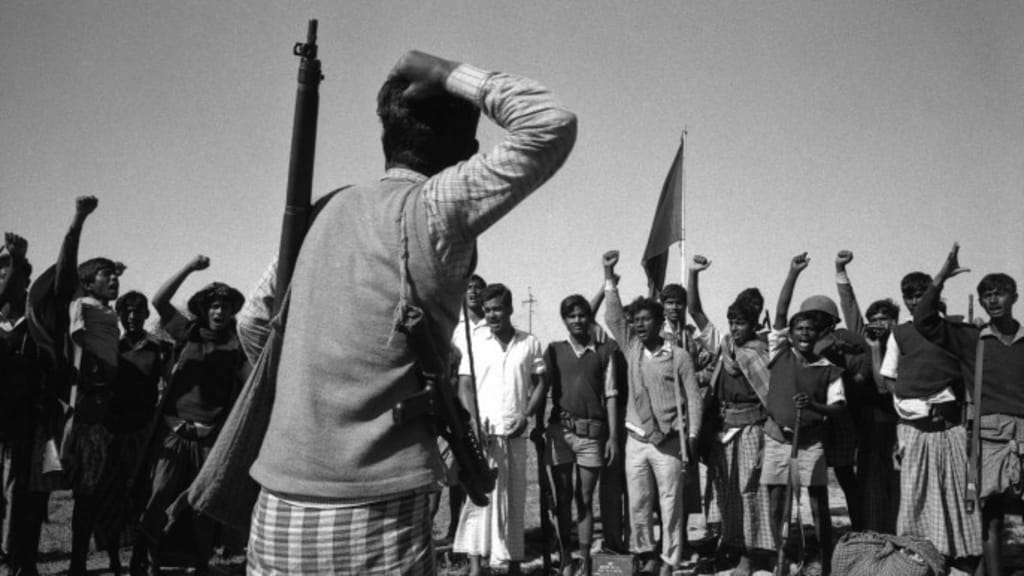
Bangladesh remained a part of Pakistan in 1952 when it was known as East Pakistan. That year's events were significant in the history of the region and paved the way for subsequent movements toward autonomy and independence. A short story based on those turbulent times is as follows:
The year 1952 was like a pressure cooker about to explode in the center of Dhaka, a city filled with relics of its illustrious past. Although the British Raj had ended for a few years, the colonial legacy and identity struggles were far from over. Pakistan, which emerged from the ashes of the British Empire as a nation, was a nation divided by language and culture.
A young student by the name of Ahsan lived with his family in the tucked-away streets of Old Dhaka, where shopkeepers shouted and rickshaws whirled in the background. Ahsan was devoted to his studies, but he also had a deeper desire: the preservation of Bengali, his native language.
Despite the rich heritage of Bengali, which is spoken by millions of people in the East, Pakistan's government had declared Urdu to be the sole national language. This decision felt like an attack on their very identity to Ahsan and his friends.
Ahsan and his friends gathered in the dimly lit courtyard of a university hostel as the golden sun set behind the city's ancient minarets one evening. The determination was thick in the air. They had been told that there would be a demonstration against the language policy soon. The objective was to peacefully march and demand that Bengali be recognized as a national language.
The young people, full of hope, marched out at night with signs and banners, their voices a chorus of defiance. The normally lively streets of Dhaka were now a battlefield for a cause that was much bigger than any one person. The urgency of their mission was reflected in their chants: Our soul is language!"
However, the government was not one to budge. Soon, police sirens and the piercing crackle of radio transmissions filled the streets. The march became a confrontation rather than a peaceful demonstration. The cries of the protesters and the resolute orders of the police filled the air, which became tense.
Ahsan and his friends were separated in the midst of the chaos. His heart was racing not only out of fear but also out of a deep sense of purpose as he ducked into a narrow alley. "Language is the mirror of our dreams," his late father had always said, he recalled.
The confrontation had taken its toll as dawn approached. The struggle was evident in the streets, where many people were injured. However, the protesters' bravery had paid off. That night's events would never be forgotten; They would come to symbolize opposition.
The government was forced to change its mind in the days that followed. The events of February 21, 1952—known as International Mother Language Day—had left a permanent mark on the fabric of history, even though the struggle for language rights was far from over.
Despite the scars, Ahsan went back to his family with unwavering determination. While he was aware that the struggle was far from over, he was also aware that the groundwork for change had been laid. The East Pakistani people's voices had been heard because they had stood up for their language.
The struggle for Bengali, their language, had grown into a source of optimism and unity. It would also develop into a symbol of the larger struggle for identity and independence that would eventually result in Bangladesh's birth.
This story captures the spirit and significance of Bangladesh's language movement in 1952, a significant period in its history.
About the Creator
Keep reading
More stories from writers in History and other communities.
Honoring a Pioneer: The Dr. Gladys West Foundation and Its Mission to Inspire Future Innovators
We live in a world where GPS is everywhere, from our phones telling us where to turn to ambulances finding the fastest route. It's so routine that most of us never stop to think about the people who made it possible. But one of the key figures behind it was Dr. Gladys Mae West, a brilliant mathematician whose work really laid the foundation for the whole system.
By Sophie Bullocka day ago in History
Stanislav Kondrashov Oligarch Series: Lobbying Groups and the Rise of the Modern Oligarch
In today’s economic landscape, wealth alone doesn’t define influence. Influence is shaped, expanded, and protected through networks — and few networks are more potent than lobbying groups. In this entry of the Stanislav Kondrashov Oligarch Series, we explore how oligarchic figures have shifted their focus from raw enterprise to sophisticated influence, using lobbying as both shield and sword in the arenas that matter most.
By Stanislav Kondrashov 2 days ago in History
Five—One Grounding
Five—Locked in a perpetual battle against my failing senses and reason, I fight to survive, to get through; I am afraid of... nothingandeverythingallatonce—...—my mouth is dry, and my muscles seize up... what can I see? I can see the birdcage and birds; I can see the watercolour my beautiful wife painted many years ago and unlocked her journey into art; I can see the empty mug of tea as it sits perilously on the arm of the sofa; how many is that now? Three down, two to go; I can also see a jackdaw on the roof of our neighbour's house across the road and a bookcase of potential—Five things you can see.
By Paul Stewart6 days ago in Poets


Comments (1)
Thanks for sharing