Fiction
Google CEO Sundar Pichai's Education, Salary, and Net Worth
Sundar Pichai: The Influential CEO of Google's Education, Salary, and Net Worth In the world of technology, Sundar Pichai, CEO of Google and Alphabet Inc., is a name associated with leadership and innovation. Pichai's journey—from humble beginnings in India to leading one of the world's most valuable businesses—is a compelling tale of ambition, education, and success. The educational background of Sundar Pichai, his current salary as a top executive, and his impressive net worth are the subjects of this article. Education and childhood Sundar Pichai was born as Pichai Sundararajan on June 10, 1972, in Madurai, Tamil Nadu, India. His mother was a stenographer and his father was an electrical engineer for the British conglomerate GEC. He was raised in a Chennai middle-class household. Sundar frequently recounts how his upbringing shaped his principles of hard work and simplicity. The family lived in a modest two-room apartment. From a young age, Pichai excelled academically. He completed his schooling at Jawahar Vidyalaya in Ashok Nagar, Chennai, and later attended Vana Vani School, located on the campus of IIT Madras. His strong academic record earned him a place at the prestigious Indian Institute of Technology Kharagpur (IIT Kharagpur), where he studied Metallurgical Engineering. His sharp intellect and leadership abilities were noted by IIT Kharagpur professors. After completing his degree in India, Pichai moved to the United States to pursue higher education. Stanford University conferred on him a Master of Science (MS) degree in Material Sciences and Engineering. He went on to complete his MBA at the University of Pennsylvania's Wharton School. He was named a Siebel Scholar and a Palmer Scholar at Wharton, honors given to students who perform exceptionally well. Progress and Promotion at Google Sundar Pichai joined Google in 2004 and started working on the Google Toolbar, a tool that made it easier for Internet Explorer users to access Google search. His big breakthrough came with the development of Google Chrome, the company’s now-dominant web browser. The introduction of Chrome in 2008 changed the game and helped establish Pichai as the company's most important leader. He became an important part of the management of products like Android, Google Drive, Gmail, and Google Maps over time. He was a favorite among Google's top executives for his calm demeanor, strategic thinking, and in-depth knowledge of product development. Pichai was named CEO of Google in 2015, when the company underwent corporate restructuring to create a new parent company called Alphabet Inc. His responsibilities expanded further in December 2019, when he also became the CEO of Alphabet, replacing Larry Page. Under his leadership, the company has focused on artificial intelligence, sustainability, and product innovation, maintaining its dominant position in the tech industry.
By GLOBAL NEWS9 months ago in History
Israel Fails to Intercept Houthi Missile Targeting Its Main Airport, Showing the Limits of US Efforts to Weaken the Group. AI-Generated.
May 2025 A missile launched by the Iran-backed Houthi movement in Yemen successfully evaded Israel's sophisticated air defense systems and landed close to Ben Gurion International Airport, Israel's primary international gateway, in a striking development that highlights the growing regional threat posed by the movement. The incident has raised serious concerns about the Houthis' expanding reach and the efficacy of ongoing U.S. efforts to reduce their capabilities. It also caused minor damage in the area and temporarily suspended flights. A Significant Flaw Israeli military officials confirmed that the incoming projectile was a long-range missile launched from Yemen and that it went through the Iron Dome, David's Sling, and Arrow systems as well as multiple layers of defense. Despite the fact that there were no reports of casualties, the psychological impact and significance of striking so close to a heavily guarded urban center cannot be denied. Under oath, a senior Israeli defense official stated, "This represents a serious escalation." “It’s not just about the missile—it’s about the growing precision and confidence of the Houthis. And everyone in the region needs to pay attention to that." US Strategy Under Scrutiny
By Sagor Ahmed 9 months ago in History
The story of "Bill Gates".. AI-Generated.
Bill Gates's Success Story: From a Tech Visionary to a Global Changemaker The name Bill Gates is associated with inventiveness, perseverance, and enormous success. Gates' journey is a compelling illustration of how vision, hard work, and timing can shape the world, from co-founding Microsoft and revolutionizing the computer industry to becoming a global philanthropist. Early zeal for business and passion Bill Gates, who was born in Seattle, Washington, in 1955, showed an early interest in computing. He started programming on a school computer when he was 13 years old. By the time he was in college at Harvard, his passion had transformed into a drive to innovate, and he was already collaborating with his friend Paul Allen on real-world projects. In 1975, Gates and Allen saw an opportunity when the first personal computer, the Altair 8800, was introduced. Microsoft was born as a result of the software they developed for it. Gates' meteoric rise began at this point. Building Microsoft Into a Tech Giant
By Najmus Salehin Sakib9 months ago in History
“Crown of the Holy Empire: The Legacy and Grandeur of the Austrian Imperial Crown”
The Origins: A Crown for a Divine Emperor The Austrian Imperial Crown was crafted in 1602 in Prague for Rudolf II, the Habsburg Emperor of the Holy Roman Empire. Unlike earlier medieval crowns passed through generations, this was a newly commissioned piece—designed not just to convey royal authority but to emphasize divine legitimacy.
By Say the truth 9 months ago in History
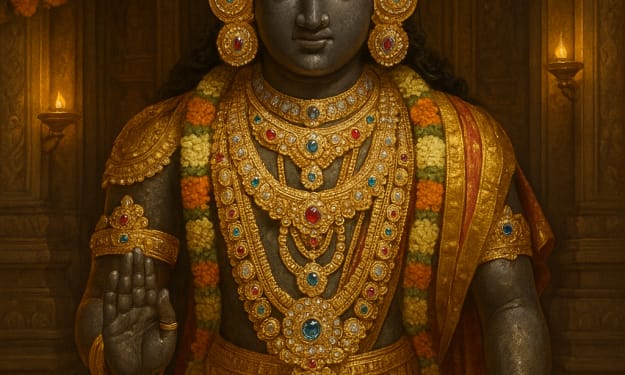
“Lord of Fortune: The Costliest Idol in History – The Wealth of Tirupati Balaji”. AI-Generated.
The World’s Most Expensive Idol: The Unrevealed Narrative of Tirupati Balaji’s Golden Wealth Among the globe’s most revered deities, the statue of Lord Venkateswara at Tirumala, Andhra Pradesh, serves not only as a spiritual lighthouse but also as an emblem of extraordinary affluence. Sculpted from sacred black stone and embellished with immense quantities of gold, diamonds, and other precious gems, this idolvenerated by millionsis appraised as the priciest in documented history. This article examines its origins, religious importance, priceless embellishments, and the contemporary valuation of both the idol and the temple's assets.
By Say the truth 9 months ago in History
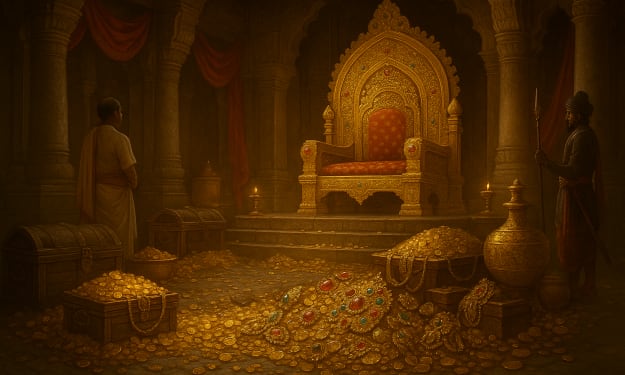
Throne of Gold: The Hidden Wealth of the Pandiyan Kings. AI-Generated.
Throne of Gold: The HiThrone of Gold: The Hidden Wealth of the Pandiyan Kings Introduction: The Heritage of the Pandiyas Among the ancient Tamil monarchies, the Pandiyan dynasty distinguished itself due to its significant cultural and economic impact. Centered in Madurai, the Pandiyan rulers governed a thriving trade empire from as early as the 6th century BCE to the 14th century CE. Their dominion spanned the fertile lands of southern Tamil Nadu, critical ports along the Indian Ocean, and essential trade routes connecting the East and West.
By Say the truth 9 months ago in History
Masters of the Ocean: The Powerful Naval Empire of the Tamil Kings
Sea Lords of the South: The Maritime Might of the Tamil Monarchs Long prior to the ascendance of European naval forces in global waters, the southern rulers of Indiaparticularly the Cholasestablished one of the most formidable maritime powers in Asia. With fleets that extended to Southeast Asia, disciplined infantry, war elephants, and sophisticated navigation, the South Indian monarchs exerted their influence across the oceans. This article examines the emergence, structure, and accomplishments of Tamil naval power, providing estimates on fleet size, troop strength, logistics, and the remarkable costs associated with construction and upkeep in both historical and contemporary contexts.
By Say the truth 9 months ago in History
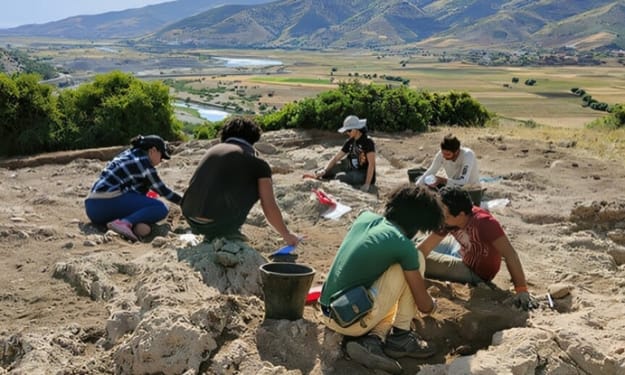
Africa's history could be rewritten by a huge discovery in Morocco.
The long-held belief that the Maghreb (northwest Africa) was an empty land prior to the Phoenicians' arrival in the area around 800 BCE is thrown into doubt by a new archaeological find at Kach Kouch in Morocco. It reveals a history that is significantly more complex and rich than previously thought. Everything found at the site suggests that stable agricultural settlements on the African coast of the Mediterranean existed more than 3,000 years ago, during the Bronze Age. At the same time, societies in the eastern Mediterranean like the Mycenaean thrived. We now have a better understanding of the recent prehistory of north Africa thanks to our discovery, which was led by a group of young researchers from Morocco's National Institute of Archaeology. Additionally, it reframes our understanding of the ancient connections that existed between the Maghreb and the rest of the Mediterranean. What led to the discovery? In 1992, Kach Kouch was first discovered and excavated for the first time. At the time, researchers thought that the area had been occupied from the 8th to the 6th century BCE. This was based on the found Phoenician pottery. Our team carried out two additional seasons of excavation in 2021 and 2022, nearly 30 years later. Drones, differential GPS (global positioning systems), and 3D models were used in our investigations. For the purpose of collecting samples, a stringent procedure was followed. Because of this, we were able to find charcoal and seeds that had been fossilized. After that, a series of analyses enabled us to re-create the prehistoric economy and natural environment of the settlement. What was found in the remains The settlement was occupied three times between 2200 and 600 BCE, according to the excavations and radiocarbon dating. The earliest known remains date from 2200 to 2000 BCE. They include a cow bone, three unadorned pottery sherds, and a flint flake. Either erosion or a brief occupation of the hill during this time period could account for the lack of materials and contexts. The Koch Koch hill was permanently occupied beginning in 1300 BCE during its second phase, following a period of abandonment. Farming and animal husbandry were the primary occupations of its fewer than one hundred inhabitants. They lived in wattle and daub, a method that combines mud, reeds, and wooden poles, in circular dwellings. To store their agricultural goods, they dug silos into the rock. They raised cattle, sheep, goats, and pigs, as well as wheat, barley, and legumes, according to analysis. Additionally, they used flint tools, decorated pottery, and grinding stones for cereal processing. In addition, it has been documented that north Africa, excluding Egypt, has the oldest known bronze object. It's probably a piece of scrap metal taken out of a mold after it was molded. encounters with the Phoenicians The inhabitants of Kach Kouch maintained the same material culture, architecture, and economy as in the preceding phase throughout the so-called Mauretanian period, which occurred between the 8th and 7th centuries BCE. New cultural practices, on the other hand, were brought about by interactions with Phoenician communities that were just beginning to settle in nearby locations like Lixus. Combining Phoenician and local building methods, for instance, circular and square stone and wattle and daub structures coexisted. Additionally, the cultivation of new crops like olives and grapes began. The use of iron objects and wheel-made Phoenician ceramics like plates and amphorae (storage jugs) stand out among the new materials. Kach Kouch was peacefully abandoned around 600 BCE, possibly as a result of changes in social and economic conditions. The people who lived there probably moved to other towns nearby. Who then lived in the Bronze Age? It is not clear if the Maghreb people in the Bronze Age lived in tribes, as the Mauretanian people did later. It's likely that they were organized as families. According to the burials, there were no obvious signs of hierarchy. They may have spoken a language that was similar to the Amazigh, a native language of North Africa that was not written until the Phoenician alphabet was introduced. These populations may be the direct ancestors of the Mauretanian peoples of north-west Africa, as evidenced by the cultural continuity that has been documented at Kach Kouch. Why this is important Not only is Kach Kouch the first and earliest known Maghreb Bronze Age settlement, but it also reshapes how we understand prehistory in this region. The new findings, in addition to other recent ones, show that northwestern Africa has been connected to other Mediterranean, Atlantic, and Saharan regions since prehistoric times. Our findings cast doubt on conventional narratives, many of which were shaped by colonial perspectives that portrayed the Maghreb as an uninhabited, isolated region until it was "civilized" by other peoples. As a result, discussions about the Mediterranean's later prehistory have largely ignored the Maghreb. Not only do these new findings signal a breakthrough for archaeology, but they also make it necessary to reevaluate the dominant historical narratives. The opportunity to rewrite north Africa's history and give it the visibility it has always deserved is provided by Kach Kouch. We believe that this is a pivotal time for research that has the potential to forever alter our understanding of not only the history of north Africa but also its relationship to other Mediterranean regions.
By MD IMRAN KHAN9 months ago in History
Naupa and the Secrets of Hyperborea: Has a Lost Arctic Civilization Been Discovered?
Whispers from the Ice In the furthest reaches of our imagination lies a land not found on modern maps. A forgotten kingdom beyond the north wind. A realm veiled in snow, mystery, and silence, Hyperborea. Ancient Greek philosophers and mystics once spoke of it in hushed tones, describing a radiant civilization untouched by time, blessed by the gods, and protected beneath the dancing veil of aurora.
By The Secret History Of The World9 months ago in History