Events
Historic Kama Sutra Sculptures of Khajuraho Temple India UNESCO world Heritage Site Khajuraho India.
Historic Kama Sutra Sculptures of Khajuraho Temple India UNESCO world Heritage Site Khajuraho India. The Khajuraho Temple complex in India is a remarkable testament to the artistic and cultural achievements of ancient India. Recognized as a UNESCO World Heritage Site these temples are renowned for their intricate and exquisite sculptures particularly those depicting themes from the Kama Sutra. Located in the Chhatarpur district of Madhya Pradesh Khajuraho is a symbol of India's rich heritage and architectural brilliance. The temples built between 950 and 1050 CE during the Chandela dynasty were once part of a larger group of 85 temples of which only 25 survive today. These temples are divided into three groups Western Eastern and Southern and are dedicated to both Hindu and Jain traditions. The most striking feature of the Khajuraho temples is their elaborate and detailed sculptures which adorn the walls pillars and ceilings. Among these the sculptures inspired by the Kama Sutra are the most celebrated. The Kama Sutra an ancient Indian text attributed to Vatsyayana is a treatise on human relationships love and intimacy. While the text itself is often misunderstood as merely a manual on sexual positions it is, in fact, a comprehensive guide to the art of living encompassing ethics relationships and the pursuit of pleasure as one of the four goals of human life Purusharthas. The sculptures at Khajuraho beautifully capture the essence of this philosophy depicting various aspects of human life, including love romance and intimacy, in a highly artistic and sophisticated manner.
By Adnan Rasheed12 months ago in History
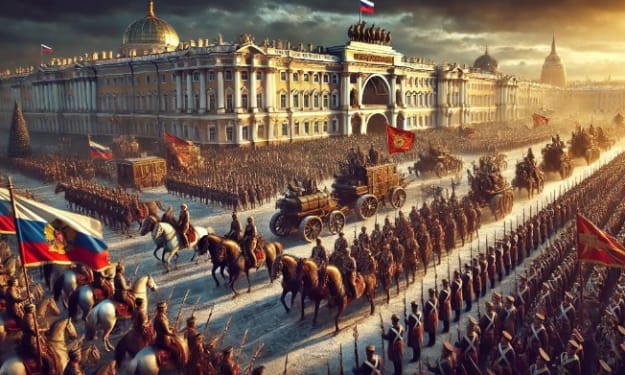
The Golden Age of the Tsar Empire. AI-Generated.
The Golden Period of the Tsar Empire: Power, Wealth, and Expansion The Tsarist Empire, also known as the Russian Empire, was one of the largest and most powerful empires in history. Its golden period, spanning from the late 17th century to the early 20th century, saw immense territorial expansion, military dominance, economic prosperity, and cultural achievements. Under the rule of powerful tsars like Peter the Great and Catherine the Great, Russia transformed into a global superpower. This article explores the factors that led to the empire’s golden period, its military strength, economic development, and eventual decline.
By Say the truth 12 months ago in History
The Tsar Empire: Power, Army, Battles, and Acreage Area
The Tsarist Empire, additionally accepted as the Russian Empire, was one of the best able and all-embracing empires in history. Under the aphorism of the Tsars, Russia grew into a massive superpower, authoritative all-inclusive territories beyond Europe, Asia, and alike North America for a time. The empire's aggressive strength, cardinal warfare tactics, and territorial amplification played a acute role in abstraction all-around history.
By Say the truth 12 months ago in History
Buckingham Palace
Buckingham Palace is one of the most famous buildings in the world. It is the official residence of the British monarch in London, England. The palace is a symbol of the British royal family and has been the center of many important events in British history. Millions of tourists visit Buckingham Palace every year to see its beautiful architecture and experience its rich history.
By Farhan Sayed12 months ago in History
The Hidden Treasures of Ancient China: Wealth, Power, and Mystery
The History of Chinese Treasure: Wealth, Location, Net Worth, and Ownership China, one of the world's oldest civilizations, has a history abounding with immense wealth, allegorical treasures, and hidden riches. From age-old administrative dynasties to avant-garde archaeological discoveries, China’s treasures accommodate all-inclusive hoards of gold, silver, jade, and priceless artifacts. Many of these treasures accept been plundered, lost, or abide hidden in abstruse tombs and palaces. This commodity explores the history of China's wealth, estimates its net worth, identifies its owners, and discusses the locations area these treasures ability still be found.
By Say the truth 12 months ago in History
What Makes Valentine’s Day Special?
What Makes Valentine’s Day Special? Valentine’s Day, celebrated on February 14th, is a day dedicated to love, affection, and meaningful connections. While it is often associated with romantic relationships, its significance extends beyond just couples—it is a day to appreciate all forms of love, including friendships and family bonds.
By Oluwatosin Adesoba12 months ago in History
Valentine's Day
Valentine’s Day: A Celebration of Love and Affection Valentine’s Day, observed on February 14th each year, is a time when people around the world celebrate love, romance, and affection. Though it is often associated with couples, the day has grown to include expressions of love for friends, family, and even self-appreciation. From heartfelt gestures to grand romantic surprises, Valentine's Day is a special occasion that reminds us of the beauty of human connections.
By Oluwatosin Adesoba12 months ago in History
The Enigmatic Cucuteni-Trypillia Culture
Since the dawn of humanity, civilizations have risen and left their marks on history. We are well acquainted with the grandeur of ancient Egypt, the ingenuity of the Sumerians, the wisdom of Chinese dynasties, and the mystery of the Indus Valley civilization. In Europe, we have explored the legacies of the Minoans and the Etruscans. But this time, we venture further back in time to uncover one of the most ancient and enigmatic civilizations of Europe—the Cucuteni-Trypillia culture.
By A História12 months ago in History
The Vatican’s Hidden Treasures: Art, Faith, and the Secrets of a Angelic Legacy. AI-Generated.
I. Origins: Aboriginal Charcoal and Medieval Piety The Vatican’s abundance accession began in antiquity, abiding in aboriginal Christian account of martyrs and relics. As Rome transitioned from agnostic ascendancy to Christian stronghold, the basic of saints, bits of the True Cross, and added angelic altar became symbols of all-powerful authority. By the Middle Ages, pilgrimages to Rome fueled the accession of relics, housed in churches like Old St. Peter’s Basilica (built in the 4th century).
By Say the truth 12 months ago in History
The British Empire in Africa: Trade, Power, and Exploitation
The Acceleration of the British Authority in Africa: Wealth, Exploitation, and Legacy Introduction The British Empire, already the better authority in history, broadcast beyond Africa during the 18th and 19th centuries. This amplification was apprenticed by bread-and-butter ambition, political power, and aggressive superiority. However, the empire’s attendance in Africa was apparent by exploitation, ability extraction, and the adversity of millions. The British looted all-inclusive amounts of wealth, controlled admired accustomed resources, and played a cogent role in the across bondservant trade. This commodity explores the acceleration of the British Authority in Africa, the abundance it extracted, and its abiding appulse on the continent.
By Say the truth 12 months ago in History
The Hidden Wealth of Russia – A Treasure Beyond Imagination
Russia’s Better Treasures: Absent Abundance and Hidden Fortunes Russia, a acreage of all-inclusive resources, administrative grandeur, and actual mysteries, has been home to some of the world’s best allegorical treasures. From the absent abundance of the Romanovs to hidden gold affluence and cultural artifacts, Russia’s abundance extends far above its accustomed resources. Throughout history, wars, revolutions, and political upheavals accept acquired abounding of these treasures to abandon or abide hidden. This commodity explores Russia’s better treasures, estimates their net worth, and examines their actual significance.
By Say the truth 12 months ago in History
Trump: The Contradictions, Achievements, and Challenges of His Presidency
Donald Trump’s presidency stands as one of the most divisive and transformative periods in contemporary American political history. His unexpected rise to power in 2016 sparked intense debates about his governing style, policy priorities, and the broader consequences of his leadership on both the domestic and international stage. While his presidency was marked by a series of bold and often controversial actions, beneath the surface lies a more intricate narrative, where the positive and negative impacts of his tenure overlap in ways that are not always immediately evident but undeniably significant.
By Muhammad Azizov12 months ago in History