
The Golden Age of the Tsar Empire
The Tsarist Empire’s golden era was marked by vast territorial expansion, military power, and immense wealth. Grand palaces, bustling trade routes, and a disciplined army symbolized its dominance. The empire's economy thrived on agriculture, gold reserves, and international trade. However, internal struggles and political unrest eventually led to its decline. This article explores the Tsarist Empire’s peak, its wealth, and its lasting impact on history.


The Golden Period of the Tsar Empire: Power, Wealth, and Expansion
The Tsarist Empire, also known as the Russian Empire, was one of the largest and most powerful empires in history. Its golden period, spanning from the late 17th century to the early 20th century, saw immense territorial expansion, military dominance, economic prosperity, and cultural achievements. Under the rule of powerful tsars like Peter the Great and Catherine the Great, Russia transformed into a global superpower. This article explores the factors that led to the empire’s golden period, its military strength, economic development, and eventual decline.
1. The Rise of the Tsarist Empire
The foundation of the Tsarist Empire was laid in 1547 when Ivan IV (Ivan the Terrible) became the first Tsar of Russia. However, the true golden age began with the reign of Peter the Great (1682–1725) and continued under Catherine the Great (1762–1796) and their successors.
Key Factors Behind the Golden Period:
Territorial Expansion: Russia expanded into Siberia, Central Asia, and parts of Eastern Europe, making it the largest contiguous empire in the world.
Modernization & Reforms: Peter the Great introduced European-style governance, military structures, and education systems.
Economic Growth: Trade with Europe and Asia flourished, fueled by agriculture, fur trade, and industrial development.
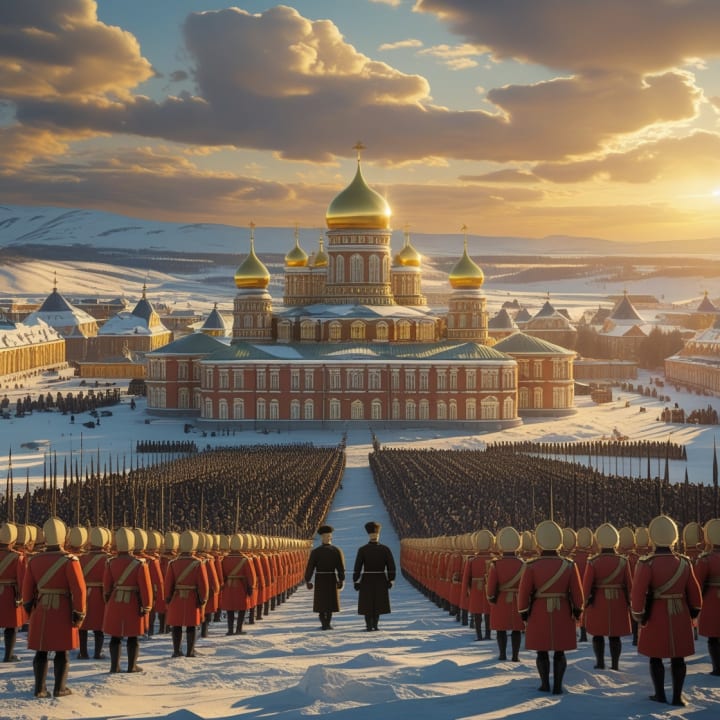
Military Strength: The empire built one of the world’s largest armies and a powerful navy to secure its borders and expand influence.
Cultural Renaissance: Russian literature, art, and architecture thrived during this period.
2. Military Power and Conquests
The Tsarist military played a crucial role in the empire’s success. Some of the key aspects of its power included:
The Army and Tactics
The Russian army was among the largest in the world, with over 1.2 million soldiers at its peak.
The empire used advanced artillery, cavalry units, and well-disciplined infantry in battles.
Military strategies involved mass mobilization, defensive warfare, and long supply chains, ensuring dominance over vast territories.
Major Wars and Battles
The Great Northern War (1700–1721): Russia defeated Sweden and gained access to the Baltic Sea, strengthening its naval power.
The Napoleonic Wars (1812): The Russian army repelled Napoleon’s invasion, leading to France’s downfall.
Crimean War (1853–1856): Despite losing to Britain and France, Russia demonstrated its military resilience.
Russo-Turkish Wars: Russia fought the Ottoman Empire multiple times, expanding its influence in Eastern Europe.
3. The Economic Strength of the Empire
The Russian Empire's wealth was built on agriculture, trade, and resource exploitation.
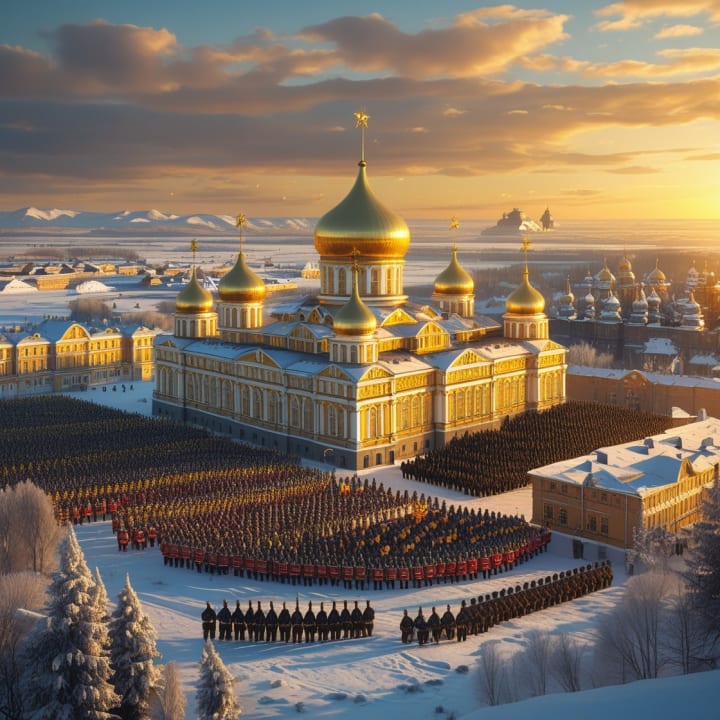
Sources of Wealth:
Agriculture: Russia was the largest producer of wheat and grain, exporting vast amounts to Europe.
Mineral Resources: The empire had abundant reserves of gold, silver, iron, and oil, making it an economic powerhouse.
Trade Routes: Russia controlled major trade routes linking Europe, China, and the Middle East.
Serfdom and Labor: The Russian economy was largely based on serfdom, where peasants worked for landowners in exchange for protection.
Estimated Net Worth:
By the 19th century, the Russian Empire’s estimated wealth in gold and silver reserves exceeded $300 billion in today’s value. The annual revenue of the empire was comparable to that of major European powers like Britain and France.
4. The Cultural and Architectural Legacy
The golden period also saw remarkable achievements in Russian culture, literature, and architecture.
Notable Contributions:
St. Petersburg: Founded by Peter the Great, it became the empire’s capital and a center of European influence.
The Winter Palace & Hermitage Museum: These structures showcased the empire’s wealth and artistic grandeur.
Russian Literature: Writers like Leo Tolstoy and Fyodor Dostoevsky emerged, influencing global literature.
Religious Influence: The Russian Orthodox Church played a key role in shaping cultural identity.
5. The Decline of the Tsarist Empire
Despite its golden period, the empire eventually faced challenges that led to its downfall.
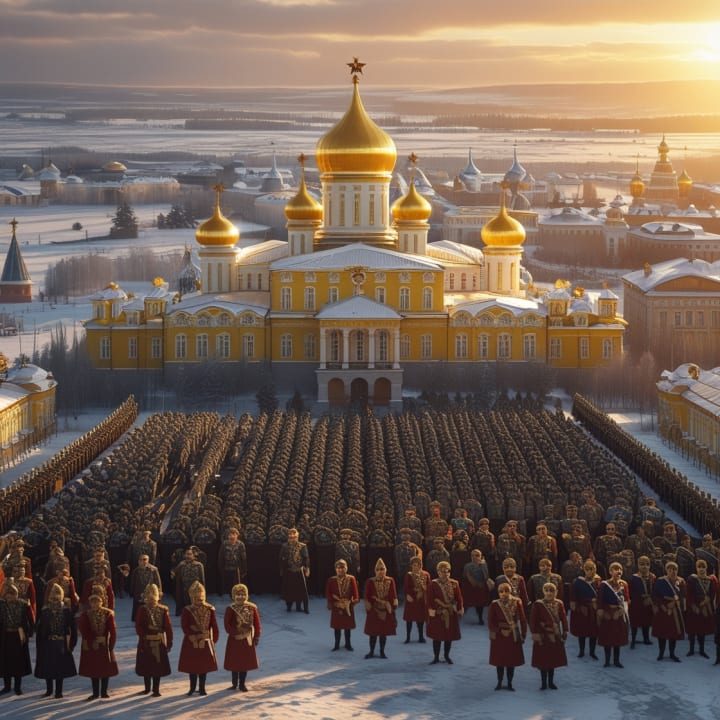
Reasons for Decline:
Economic Inequality: The vast wealth gap between the nobility and peasants led to discontent.
Political Unrest: Calls for democracy and revolution weakened the monarchy.
World War I (1914–1918): Russia suffered heavy losses, leading to economic collapse.
The Russian Revolution (1917): The Tsarist regime was overthrown, ending the empire.
Conclusion
The golden period of the Tsarist Empire was marked by territorial expansion, military dominance, economic prosperity, and cultural achievements. However
About the Creator
Say the truth
"Say the Truth: Explain Everything in the World" is your trusted source for uncovering facts and exploring the wonders of history, science, technology, and beyond. We simplify complex ideas and reveal truths to inspire curiosity .
Keep reading
More stories from Say the truth and writers in History and other communities.
The Tsar Empire: Power, Army, Battles, and Acreage Area
The Tsarist Empire, additionally accepted as the Russian Empire, was one of the best able and all-embracing empires in history. Under the aphorism of the Tsars, Russia grew into a massive superpower, authoritative all-inclusive territories beyond Europe, Asia, and alike North America for a time. The empire's aggressive strength, cardinal warfare tactics, and territorial amplification played a acute role in abstraction all-around history.
By Say the truth 12 months ago in History
Understanding the Insurrection Act
The Insurrection Act is one of the most powerful and least understood laws in American history. Often mentioned during times of national unrest, it gives the president authority to deploy federal troops within the United States under specific circumstances. While it is rarely used, public interest in the law has grown in recent decades, leading many to ask: what is the Insurrection Act, and why does it matter today? What Is the Insurrection Act? To put it simply, the Insurrection Act of 1807 is a federal law that allows the president to use the U.S. military to suppress civil disorder, insurrection, or rebellion when state authorities are unable or unwilling to do so. If you are wondering what is the Insurrection Act used for, the answer lies in restoring order when local and state governments can no longer maintain public safety. People often search phrases like what is insurrection act or even the misspelled insurection act because the law tends to resurface during moments of crisis. Despite the confusion around its name, the authority it grants is very real and legally binding. What Is the Insurrection Act of the U.S.? So, what is the Insurrection Act of the US in legal terms? It is a collection of statutes now codified under Title 10 of the U.S. Code. The act provides exceptions to the Posse Comitatus Act, which generally prohibits the military from acting as domestic law enforcement. Under the Insurrection Act, the president can federalize the National Guard or deploy active-duty troops if constitutional rights are being violated or if violence prevents the execution of federal law. This is why many people ask, what is the Insurrection Act USA, especially when protests or riots dominate national headlines. The Insurrection Act and Its Historical Use Throughout American history, the act has been invoked sparingly but decisively. One of the most notable examples often referenced is the Insurrection Act 1992, when President George H. W. Bush deployed federal troops to Los Angeles following the Rodney King verdict. Local authorities had lost control, and the federal government stepped in to restore order. Earlier uses date back to the Civil War era and the Civil Rights Movement. Presidents Eisenhower and Kennedy relied on the act to enforce school desegregation in Southern states when state governments resisted federal court orders. These moments illustrate what the Insurrection Act is used for at its core: enforcing the rule of law when normal systems fail. Trump and the Insurrection Act In modern political discourse, the law became widely discussed during the presidency of Donald Trump. Searches for Trump Insurrection Act or Insurrection Act Trump surged during periods of nationwide protests, particularly in 2020. Although the act was never formally invoked during those protests, President Trump publicly considered its use, bringing renewed attention to the scope and limits of presidential power. The phrase insurrection act invoked often appears in news coverage, but it is important to note that discussing invocation and actually using the law are two very different things. The debate surrounding Trump Insurrection Act scenarios highlighted concerns about civil liberties, federal overreach, and the balance of power between states and the federal government. What Is the Insurrection Act in Minnesota? A common question during periods of regional unrest is what is the Insurrection Act in Minnesota or in other specific states. Legally, the act does not change from state to state. However, its application depends on circumstances within a particular state. If a governor requests federal assistance or if the president determines that constitutional rights cannot be protected locally, the Insurrection Act may apply. Minnesota, like every other state, falls under the same federal framework. The law does not target any single state; it responds to conditions on the ground. What Is the Insurrection Act Used For Today? In today’s environment, many Americans ask, what is the Insurrection Act used for in a modern democracy with established institutions. Supporters argue it is a necessary safeguard for extreme emergencies. Critics counter that it grants sweeping powers that could be misused if political tensions escalate. Understanding what is the Insurrection Act? requires recognizing that it is both a legal tool and a symbol. Its mere mention can influence public perception, markets, and political debate, even when it is not formally applied. Ongoing Debate and Public Concern The Insurrection Act remains controversial because it sits at the intersection of security and freedom. While it has been used to protect civil rights in the past, critics worry about potential misuse in polarized times. This tension explains why questions like what is the Insurrection Act of the US continue to trend whenever civil unrest occurs. Ultimately, the law reflects a fundamental challenge in governance: how to maintain order without undermining democracy. The fact that it has existed since 1807 and remains largely unchanged shows both its durability and its complexity. Final Thoughts The Insurrection Act is not a law that affects daily life, but it plays a critical role during extraordinary moments. From the Insurrection Act of 1807 to discussions around Insurrection Act 1992 and Insurrection Act Trump, its history mirrors the nation’s struggles with unity, authority, and rights.
By Saboor Brohi 4 days ago in History
From Desert Sands to a Global City
Long before Dubai became a city of glittering skyscrapers and global ambition, it was a quiet settlement shaped by the desert, the sea, and the determination of its people. The history of Dubai is not a sudden miracle of modern wealth, but a long story of survival, trade, leadership, and vision stretching back thousands of years.
By The best writer 6 days ago in History



Comments (1)
What caused the call for democracy