
Trump: The Contradictions, Achievements, and Challenges of His Presidency
An analysis of Donald Trump's political legacy and its impact on the U.S. economy, democracy, and foreign policy
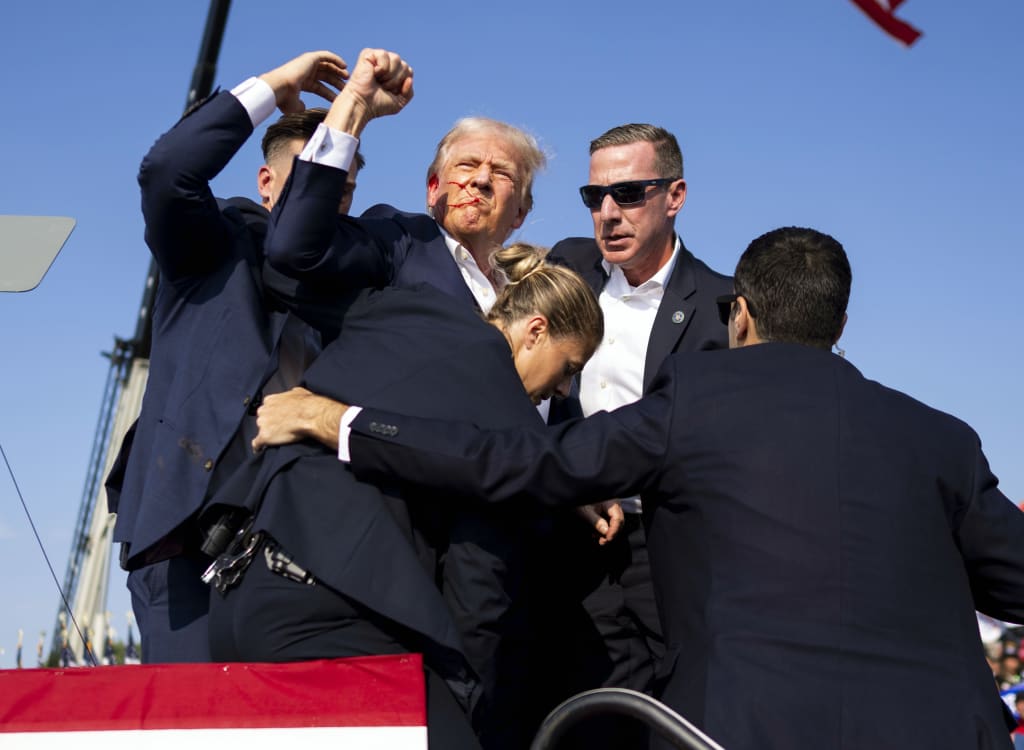
Donald Trump’s presidency stands as one of the most divisive and transformative periods in contemporary American political history. His unexpected rise to power in 2016 sparked intense debates about his governing style, policy priorities, and the broader consequences of his leadership on both the domestic and international stage. While his presidency was marked by a series of bold and often controversial actions, beneath the surface lies a more intricate narrative, where the positive and negative impacts of his tenure overlap in ways that are not always immediately evident but undeniably significant.
Economic Policies and Domestic Reforms:
Trump’s ascent to the presidency was accompanied by a promise to restore economic vitality and bring manufacturing jobs back to the U.S. Central to this vision was a sweeping tax reform, which significantly reduced corporate tax rates with the intention of stimulating business investment and creating jobs. While critics argue that the tax cuts disproportionately benefited corporations and the wealthy, proponents contend that these measures contributed to an economic boom during the early years of his presidency, particularly prior to the outbreak of the COVID-19 pandemic.
In addition to his tax policy, Trump aggressively pursued an "America First" trade agenda, emphasizing the need to reduce the United States’ dependence on foreign markets. This led to a series of high-stakes trade negotiations, notably with China, and a more protectionist approach to international commerce. While many feared that these actions would destabilize global trade relationships, Trump’s supporters viewed them as necessary to safeguard American workers and national security.
However, the economic gains of Trump’s early presidency came with significant trade-offs. The national debt swelled due to the tax cuts, which contributed to a growing budget deficit, a problem exacerbated by the economic downturn triggered by the pandemic. Moreover, many of his promised economic reforms—such as the revitalization of manufacturing—remained elusive, calling into question the long-term effectiveness of his policies.
Political Polarization and Democratic Integrity:
One of the most enduring legacies of Trump’s presidency is the dramatic intensification of political polarization in the United States. His confrontational communication style, coupled with inflammatory tweets and regular attacks on political opponents, created a political climate where public discourse became increasingly fractured and emotionally charged. Throughout his four years in office, Trump deepened the ideological divide between Republicans and Democrats, and between his supporters and detractors.
Rather than fostering national unity, Trump’s rhetoric often inflamed existing social tensions, particularly around issues of immigration, race, and national security. His political base—largely composed of working-class white Americans—clashed with vocal resistance from racial minorities, leading to widespread protests, most notably in response to the killing of George Floyd in 2020. These events underscored the deepening racial and cultural divides in the nation, which were amplified by Trump’s policies and public statements.
Trump’s approach to democracy also raised alarm about the erosion of trust in U.S. institutions. His repeated claims of widespread voter fraud following the 2020 election and his subsequent refusal to concede the results became emblematic of a broader crisis of confidence in democratic processes. This culminated in the storming of the U.S. Capitol on January 6, 2021, an unprecedented event that marked a stark moment in American history, signaling an existential threat to the very foundations of the democratic system.
Foreign Policy and International Relations:
On the international stage, Trump’s foreign policy can be characterized as erratic and largely driven by pragmatic nationalism. One of his most controversial actions was withdrawing the U.S. from the Paris Climate Agreement, a decision that drew sharp criticism from global leaders and environmental advocates, but which was justified by Trump as a necessary step to protect American interests. Similarly, his “America First” stance led to a series of trade disputes, most notably with China, where his administration imposed tariffs that disrupted global supply chains and stoked tensions between the two largest economies in the world.
Trump’s foreign policy was also marked by a noticeable shift in his approach to traditional alliances. He frequently chastised NATO members for not meeting defense spending commitments, which strained relations within the alliance and raised questions about America’s role as a global leader. Despite his rhetoric, Trump’s administration refrained from significant military interventions, even as his decisions on Syria and Iran reflected an often unpredictable and, at times, dangerous approach to international relations.
Healthcare and Education:
Trump’s attempts to reform healthcare were largely unsuccessful. His administration made several efforts to repeal and replace the Affordable Care Act (Obamacare), but ultimately, these attempts failed to materialize into substantial policy changes. While he succeeded in reducing certain healthcare regulations, his efforts fell short of delivering on his promise to provide Americans with a better, more affordable healthcare system.
In the realm of education, Trump championed private school vouchers and pushed for reforms aimed at reducing government involvement in higher education. While his administration argued that such policies would increase competition and improve educational outcomes, they were met with significant resistance from those who feared these changes would erode public education systems, particularly in underserved communities.
Trump as a Leader:
Central to Trump’s political identity was his unapologetic, often abrasive style of leadership. To his supporters, he embodied a form of pragmatism and political incorruptibility, a figure unafraid to challenge the status quo and speak his mind, regardless of the political consequences. He resonated with a large segment of the American public who felt alienated by the political elite, positioning himself as a champion of populist causes and the voice of the disaffected working class.
However, his leadership style also provoked widespread criticism. His penchant for manipulating public discourse, making misleading statements, and launching personal attacks on political rivals often crossed ethical lines. Far from reinforcing the norms of political civility, Trump’s presidency appeared to erode them, leaving behind a legacy marked by divisions that would take years to heal.
Conclusion:
Trump’s presidency defies easy categorization. It was a period defined by economic achievements overshadowed by controversial foreign policy moves, and a political environment marked by deepening divisions within American society. While Trump was undeniably a product of an era marked by dissatisfaction with the political establishment and a desire for dramatic change, his approach to governance left a complicated and often contradictory legacy. His time in office revealed the frailties of U.S. democratic institutions and illuminated the tensions that continue to shape the nation’s political landscape. The challenges of his presidency, both seen and unseen, will likely continue to reverberate in American political life for years to come.
The information is taken from the following sources:
- "Trump's Economic Policies and Their Impact" — The Wall Street Journal, 2020
- "The Political Polarization of America under Trump" — Pew Research Center, 2020
- "Foreign Relations during Trump's Presidency" — The Guardian, 2019
- "Trump’s Healthcare Policies and Reforms" — Health Affairs, 2020
- "Trump and the Paris Climate Agreement" — BBC News, 2017
- "The Legacy of Donald Trump's Presidency: A Complex Legacy" — The Atlantic, 2021
- "Election Integrity and the Crisis of Trust in Democracy" — The New York Times, 2021
- "Trump and the Breakdown of Political Ethics" — Politico, 2020
- "America First: Trump's Foreign Policy" — Foreign Affairs, 2020
About the Creator
Keep reading
More stories from Muhammad Azizov and writers in History and other communities.
Lounge style Interior
Relax style in the inside is an individual island of wellbeing and unwinding The parlor style in the inside is a quiet and estimated inside style for the people who need to make a unique, loosening up comfort and a climate of peaceful rest in the house. Relax style in the inside is a forerunner in the plan of public spots: cafés and bistros, corridors and lodgings, salons and gathering rooms, as well as different foundations where an individual ought to have a good sense of security and serene.
By Muhammad Azizov2 years ago in Journal
The Last Door
The Last Door In the oldest part of the city, there stood a building people whispered about. It was said to exist outside of time. Its walls were cracked, its stairs creaked with every step, and its hallway stretched endlessly with rows of doors. Each door was different—painted in strange colors, echoing with faint sounds. But at the very end stood one door that was plain, colorless, and silent.
By Premier Local Media,a day ago in History
Rachel Reviews: The Spiral Archive by Pieter Hendrik
It's difficult for me to know where to start with a review of this book as it was, for me, an entirely unique experience and one that I'll probably never have again. I don't want that to be interpreted as unenjoyable but it has left me scratching my head a little and ruminating on its content, its themes and its characters.
By Rachel Deeming6 days ago in BookClub



Comments (1)
Кхун чисто символически нохчи маттахь комментарий йит ез